
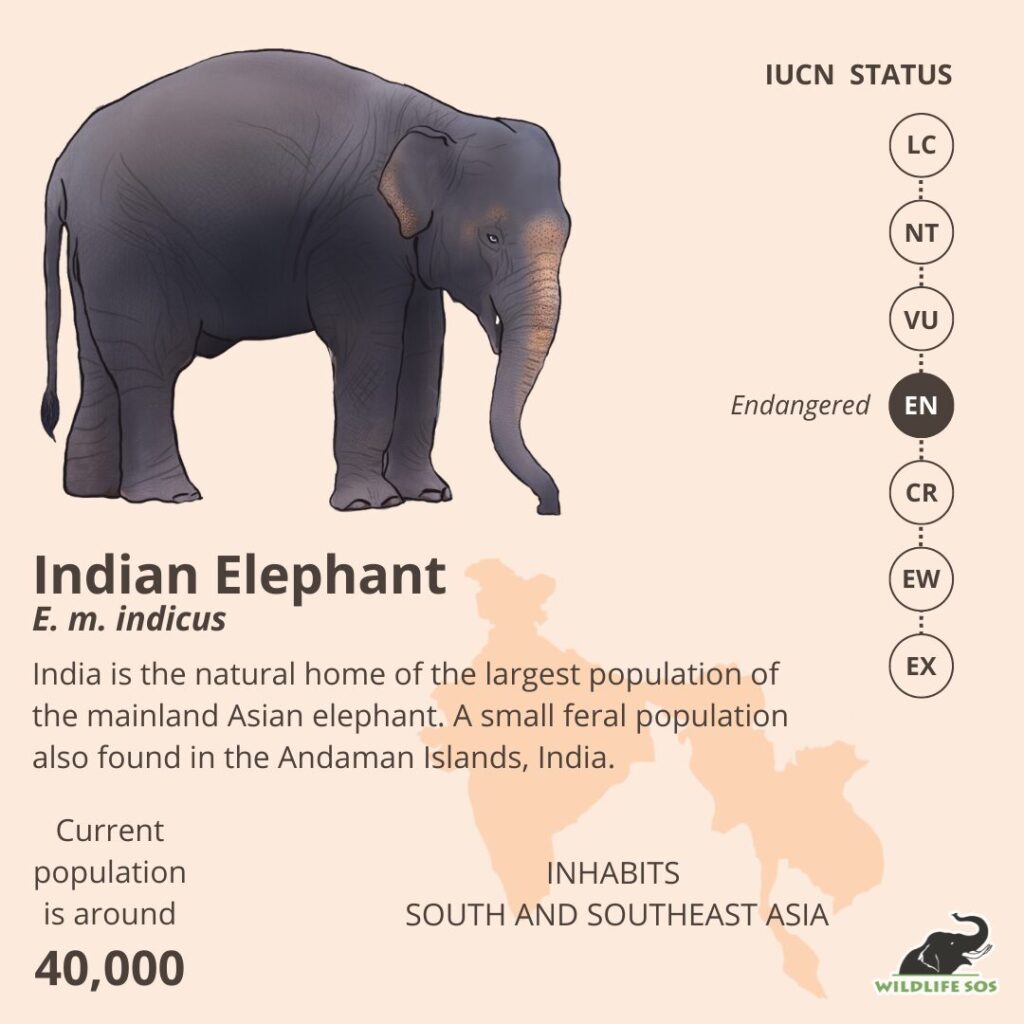
The Indian Elephant: Characteristics and Significance
Have you ever wondered about the second-largest land animal? Despite its massive size, the Indian elephant is often overlooked. In this article, we’ll delve into the fascinating world of these gentle giants and explore their characteristics, diet, social behavior, and cultural significance.
What is an Indian Elephant?
The Indian elephant, also known as Elephas maximus indicus, is a subspecies of the Asian elephant (Elephas maximus). With four living subspecies and two extinct ones, this majestic creature has been roaming the earth for millions of years. Let’s take a closer look at these incredible animals.
Characteristics
To understand the Indian elephant, it’s essential to compare them with their African counterparts. Although they share similar body structures, there are significant differences in size, shape, and features. Here are some key characteristics:
Size: Indian elephants are smaller than African ones, with males reaching up to 5.5 meters (18 feet) in height and weighing between 3,900-4,700 kilograms (8,600-10,400 pounds).
Cranial shape: The Indian elephant’s skull has two prominent ridges and an internal crest, while the African elephant’s skull is more rounded.
Ears: Indian elephants have smaller ears than African ones, which helps them conserve heat in colder climates.
Tail: Both species have long tails, but Indian elephants’ tails are slightly shorter.
Teeth: Indian elephants’ teeth are smaller and more pointed than those of African elephants.
Diet
Indian elephants are herbivores and feed on a variety of plants, including fruits, leaves, and bark. They can eat up to 150 kilograms (330 pounds) of food per day! Their diet is quite diverse, reflecting their adaptability to different environments.
Food sources: Indian elephants primarily eat grasses, leaves, and fruits, but they also consume bark, roots, and other vegetation.
Water intake: Elephants need a lot of water to stay hydrated. They often gather at watering holes or rivers to quench their thirst.
Social behavior: Although Indian elephants are social creatures, they don’t live in large groups like some African elephant species. Instead, they tend to form smaller herds.
Conservation Status
Indian elephants face numerous threats due to habitat loss, poaching, and human-wildlife conflict. Conservation efforts are underway to protect these magnificent creatures and their habitats.
Habitat loss: Indian elephants’ natural habitats are being destroyed or fragmented due to deforestation, urbanization, and agriculture.
Poaching: Elephants are hunted for their ivory tusks, which is a major threat to their survival.
Human-wildlife conflict: As human settlements expand, they encroach upon elephant habitats, leading to conflicts between humans and elephants.
Cultural Significance
Indian elephants hold great cultural significance in many Asian countries. They’re revered as symbols of strength, wisdom, and good fortune.
Ganesha: In Hindu mythology, the god Ganesha is often depicted with an elephant head. He’s a popular deity, especially during festivals like Diwali.
Elephant symbolism: Elephants are associated with good luck, prosperity, and happiness in many Asian cultures.
Conservation efforts: Efforts to protect Indian elephants also focus on preserving their cultural significance and promoting coexistence between humans and elephants.
Conclusion
The Indian elephant is an incredible creature that deserves our respect, admiration, and protection. By understanding their characteristics, diet, social behavior, and cultural significance, we can work towards conserving these magnificent animals for future generations.
Frequently Asked Questions (FAQs)
- What is the average lifespan of an Indian elephant?
In the wild, Indian elephants typically live between 50-70 years.
- How much do Indian elephants weigh?
Adult males can weigh up to 4,700 kilograms (10,400 pounds), while females typically weigh between 3,900-4,000 kilograms (8,600-8,800 pounds).
- What is the main threat to Indian elephant populations?
Habitat loss and fragmentation, poaching for ivory, and human-wildlife conflict are major threats.
- Can Indian elephants be found in captivity?
Yes, many zoos and sanctuaries around the world have Indian elephant populations, providing a safe haven for these majestic creatures.
- How can I help protect Indian elephants?
Supporting conservation efforts, spreading awareness about elephant conservation, and respecting their habitats can all contribute to protecting these incredible animals.
- What is the role of Ganesha in Hindu mythology?
Ganesha is a beloved deity revered for his wisdom, prosperity, and good fortune, often depicted with an elephant head.
- How do Indian elephants adapt to different environments?
They’re highly adaptable, adjusting their diet and social behavior to suit various habitats and climates.
- Can I see Indian elephants in the wild?
Yes, although it’s essential to visit reputable tour operators or conservation organizations that work to protect these magnificent creatures and their habitats.
By working together, we can ensure the long-term survival of the Indian elephant.


