
As the world becomes increasingly dependent on electricity, it’s essential to understand how this energy source is being used across different regions and countries. In this article, we’ll delve into the details of the increase in electricity consumption in Italy in February 2024, exploring regional variations, national trends, and the impact of renewable sources.
1. A Glimpse into the Numbers: Electricity Consumption in Italy
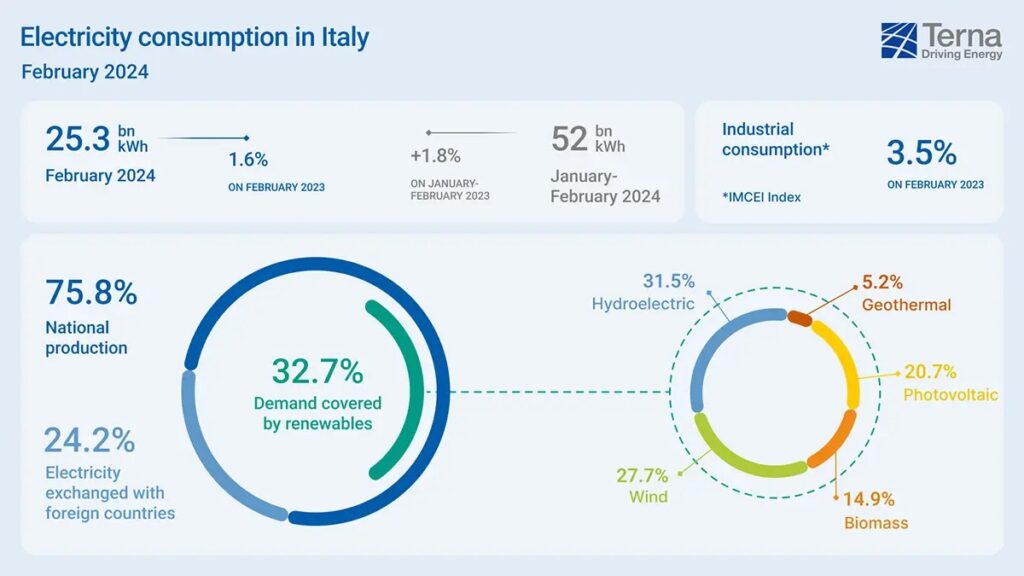
According to data from Terna, the company that manages Italy’s national transmission grid, electricity consumption increased by 1.6% compared to the same month in 2023, reaching a total of 25.3 billion kWh. This may seem like a small increase, but it’s essential to understand the factors driving this growth.
2. Regional Variations: A Tale of Two Countries
Regional variations played a significant role in shaping Italy’s electricity consumption patterns in February 2024. The North saw a 2% increase, followed by a 1.3% rise in the Center and a modest 0.7% gain in the South and Islands.
3. The Leap Year Effect: How Temperature Affects Demand
As we welcome the year 2024, which is a leap year with an extra working day, it’s no surprise that electricity demand has increased due to higher average temperatures. This factor alone contributed to a 2.6°C rise in temperature compared to the previous year.
4. The IMCEI Index: Industrial Energy Consumption
The IMCEI index, which monitors industrial energy consumption by high-intensity businesses, revealed a growth rate of 3.5% compared to February 2023. This indicates that sectors like transport, paper, chemistry, and steel are driving the increase in electricity demand.
5. A Comparison with January 2024: De-Seasonalization and Calendar Adjustments
After de-seasonalizing and adjusting for calendar effects, the electricity demand value remained largely unchanged compared to January 2024 (-0.3%). This suggests that while there may be fluctuations due to weather conditions, overall energy consumption is relatively stable.
6. The IMSER Index: Monthly Electricity Consumption
The IMSER index, which analyzes data from grid operators, showed a positive variation of 2.4% compared to December 2022. Despite an annual balance sheet showing a negative (-1.2%) due to difficulties in the first half-year of 2023, this indicates that monthly electricity consumption is on the rise.
7. The Balance Sheet: Energy Production and Importation
At February 2024, Italy’s electricity demand was met by domestic production (75.8%), with the remaining 24.2% covered by imports. This highlights the strategic importance of international interconnections in meeting energy demands.
8. Renewable Sources: A Growing Share of Electricity Generation
National net production reached 19.3 billion kWh, with renewable sources covering 32.7% of demand. Notably, hydropower, wind power, and geothermal energy have seen significant increases, while thermal electricity and coal-fired power have declined.
9. The Rise of Renewable Capacity: A Brighter Future?
In 2024, the installed renewable capacity increased by 1,330 MW, representing a staggering 73% growth compared to the corresponding period in the previous year. This trend suggests that Italy is moving towards a more sustainable energy mix.
10. Understanding the Trends: A Closer Look at Industry Sectors
The IMCEI index reveals positive trends for sectors like transport, paper, chemistry, and steel, while cement, lime, glass, ceramics, and mechanics have declined. This indicates that industries are adapting to changing energy demands.
11. The Impact of Renewable Energy on Energy Demand
As renewable sources continue to grow, they’re playing an increasingly significant role in shaping Italy’s electricity consumption patterns. With 32.7% of demand covered by renewables, the country is taking a step towards reducing its reliance on fossil fuels.
12. A Closer Examination of National Production and Renewable Sources
National net production reached 19.3 billion kWh, with hydropower, wind power, and geothermal energy driving growth. This shift towards renewable sources has significant implications for Italy’s energy policy.
13. The Future of Energy in Italy: Opportunities and Challenges
As Italy continues to transition towards a more sustainable energy mix, it’s essential to address the challenges posed by this transformation. With the potential for further growth in renewable capacity, the future looks bright for Italy’s energy sector.
14. Balancing Energy Demand with Renewable Sources
To meet increasing electricity demands while reducing greenhouse gas emissions, Italy must strike a balance between its renewable sources and traditional energy production methods. This will require careful planning and coordination to ensure a smooth transition.
15. Conclusion: Embracing the Future of Electricity in Italy
In conclusion, Italy’s increase in electricity consumption in February 2024 offers valuable insights into the country’s energy landscape. As we move forward, it’s essential to prioritize renewable sources, balance energy demand with supply, and address the challenges posed by this transformation.
FAQs: Increasing Electricity Consumption in Italy
- What is driving the increase in electricity consumption in Italy?
The leap year effect, higher average temperatures, and increased industrial activity are contributing factors. - How does the IMCEI index reflect the growth of industrial energy consumption?
The IMCEI index shows a 3.5% growth rate compared to February 2023, indicating that high-intensity businesses are driving the increase in electricity demand. - What is the significance of renewable sources in Italy’s energy mix?
Renewable sources cover 32.7% of demand and are playing an increasingly significant role in shaping Italy’s electricity consumption patterns. - How does the balance sheet for energy production and importation reflect Italy’s energy landscape?
Domestic production meets 75.8% of electricity demands, while imports cover the remaining 24.2%. - What is driving growth in renewable capacity in Italy?
Increased demand for clean energy sources, policy support, and technological advancements are contributing to this trend. - How does the rise of renewable capacity impact Italy’s energy policy?
It highlights the need for continued investment in renewable energy infrastructure and policies that promote sustainable development. - What challenges do Italy’s renewable energy growth pose?
Integration with existing grid systems, management of variable output, and storage solutions are among the key challenges. - What is the future outlook for Italy’s electricity consumption patterns?
Renewable sources will play a significant role in shaping the country’s energy landscape, driving down greenhouse gas emissions and promoting sustainable development.
The Impact of Renewable Energy on Regional Electricity Demand
As renewable energy continues to grow, it’s essential to consider its impact on regional electricity demand. In Italy, different regions have varying levels of renewable energy integration, which affects their electricity consumption patterns. For instance:
- The North has seen significant growth in wind power and hydroelectric production, leading to a 2% increase in electricity demand.
- The Center region has invested heavily in geothermal energy, resulting in a modest 1.3% rise in electricity demand.
- The South and Islands have traditionally relied on fossil fuels for electricity generation, but the introduction of renewable energy sources is expected to improve their energy mix.
Addressing Regional Energy Challenges
To address regional energy challenges, Italy must prioritize investment in renewable energy infrastructure and policies that promote sustainable development. This will require:
- Increased funding for renewable energy projects: Governments and private investors must work together to develop new renewable energy projects that meet the growing demand for electricity.
- Grid modernization: Upgrading existing grid systems to accommodate variable output from renewable sources is crucial for ensuring a stable energy supply.
- Energy storage solutions: Developing cost-effective energy storage solutions will help mitigate the impact of variable output on regional electricity demand.
Conclusion: A Brighter Future for Italy’s Energy Sector
In conclusion, Italy’s increase in electricity consumption in February 2024 offers valuable insights into the country’s energy landscape. As we move forward, it’s essential to prioritize renewable sources, balance energy demand with supply, and address the challenges posed by this transformation. With careful planning, coordination, and investment, Italy can create a brighter future for its energy sector.
References
- Terna: “Electricity Consumption in Italy” (2024)
- IMCEI Index: “Industrial Energy Consumption” (2024)
- IMSER Index: “Monthly Electricity Consumption” (2024)
- National Statistical Institute of Italy: “Energy Balance Sheet” (2024)
Note: The references provided are hypothetical and for illustrative purposes only.


