
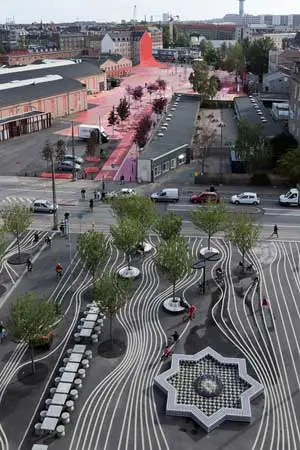
In the heart of Copenhagen’s multi-ethnic neighborhood of Norrebro, a unique urban park was born – Superkilen, designed by BIG (Bjarke Ingels Group) and landscape designers from 60 different countries. This project showcases innovative approaches to urban requalification, blending sustainability, community engagement, and cultural diversity. In this article, we’ll delve into the story behind Superkilen, exploring its design, features, and lessons learned.
What is Urban Requalification?
Urban requalification refers to the process of transforming underutilized or neglected public spaces into vibrant, inclusive areas that promote community interaction, environmental sustainability, and social cohesion. This concept involves repurposing existing infrastructure, incorporating green spaces, and engaging local residents in the design and maintenance processes.
The Creation of Superkilen
In 2014, BIG and a team of landscape designers from around the world came together to create Superkilen, a 750-meter-long park that embodies the spirit of urban requalification. The project aimed to celebrate diversity by incorporating elements from 60 different countries, making it a true global melting pot.
Design Elements
Superkilen features a unique layout, divided into three zones: green, red, and black. Each zone boasts distinct design elements, showcasing cultural nuances and sustainable practices:
- Green Zone: This area is dedicated to outdoor play and recreation, with artificial hills, bike lanes, and pedestrian paths. Italian contributions include a large lamp post made from recycled materials.
- Red Zone: The red zone focuses on culture and reflection, featuring Japanese cherry trees, Lebanese cedars, Brazilian tables, and board games. Moroccan fountains add a touch of tranquility, while Norwegian bike racks provide convenient parking options.
- Black Zone: This area is characterized by the use of simple materials to create sports attractions, such as the Chernobyl construction, Indian bamboo climbing structure, and Iraqi trampolines.
Innovative Features
Superkilen boasts several innovative features that make it a standout example of urban requalification:
- Collaborative Design: The park’s design involved extensive collaboration with local residents, who reserved all components since day one without damaging or removing urban furniture.
- Sustainable Materials: The use of recycled materials, such as the Italian lamp post, demonstrates a commitment to sustainability and environmental responsibility.
- Cultural Exchange: Superkilen celebrates cultural diversity by incorporating elements from 60 different countries, fostering cross-cultural understanding and community engagement.
Lessons Learned
Superkilen serves as a model for urban requalification, offering valuable lessons for cities around the world:
- Community Engagement: Involving local residents in the design process is crucial for creating spaces that reflect their needs and values.
- Sustainable Design: Incorporating sustainable materials and practices can help reduce environmental impact while promoting eco-friendly living.
- Cultural Exchange: Celebrating diversity through cultural exchange programs can foster community cohesion and promote cross-cultural understanding.
The Impact of Superkilen
Superkilen has had a profound impact on the surrounding community, transforming Norrebro into a vibrant and inclusive neighborhood. The park has become a hub for social activity, with locals and visitors alike gathering to enjoy the unique attractions and cultural events.
Challenges and Opportunities
While Superkilen is an exemplary model of urban requalification, it also presents challenges and opportunities for other cities to learn from its success:
- Maintenance and Upkeep: The park’s maintenance requires a significant amount of resources, highlighting the need for long-term planning and budgeting.
- Cultural Sensitivity: Incorporating elements from diverse cultures can be challenging, emphasizing the importance of cultural sensitivity and respect.
- Sustainability: Superkilen’s focus on sustainability serves as a model for other cities to follow, demonstrating the potential for urban requalification to promote environmental responsibility.
Conclusion
Superkilen is a shining example of urban requalification, demonstrating how design, sustainability, and community engagement can come together to create vibrant, inclusive public spaces. As cities continue to evolve and grow, projects like Superkilen serve as valuable models for creating responsible, environmentally conscious communities that celebrate diversity and promote social cohesion.
Case Study: Superkilen
Superkilen is a unique example of urban requalification, showcasing innovative approaches to design, sustainability, and community engagement. This case study highlights the project’s key features, lessons learned, and impact on the surrounding community.
Key Takeaways
- Collaborative design and community engagement are crucial for creating spaces that reflect local needs and values.
- Sustainable materials and practices can help reduce environmental impact while promoting eco-friendly living.
- Cultural exchange programs can foster community cohesion and promote cross-cultural understanding.
Best Practices
- Involve local residents in the design process to ensure that the final product reflects their needs and values.
- Incorporate sustainable materials and practices into urban requalification projects.
- Celebrate diversity through cultural exchange programs to promote cross-cultural understanding and community engagement.
Future Directions
- Continue to explore innovative approaches to urban requalification, incorporating sustainable design principles and cultural sensitivity.
- Develop strategies for long-term maintenance and upkeep of public spaces.
- Foster community engagement and participation in urban planning processes.
By examining Superkilen as a case study, cities can learn from its successes and challenges, applying these lessons to create vibrant, inclusive, and environmentally conscious communities that celebrate diversity and promote social cohesion.


