
As we explore the surface of our planet, we encounter a vast array of natural wonders – rocks. These aggregates of mineral particles have been shaped by millions of years of geological processes, resulting in an incredible diversity of textures, colors, and compositions.
But what exactly are rocks? In a broader sense, they include not just solid minerals but also less cohesive materials like sand, mud, and clay. Within this broad category, rocks can be broadly classified based on their chemical and physical properties, the genetic process that formed them, and their age.
In this article, we’ll delve into the fascinating world of igneous rock formations, exploring their characteristics, types, and uses.
What are Igneous Rocks?
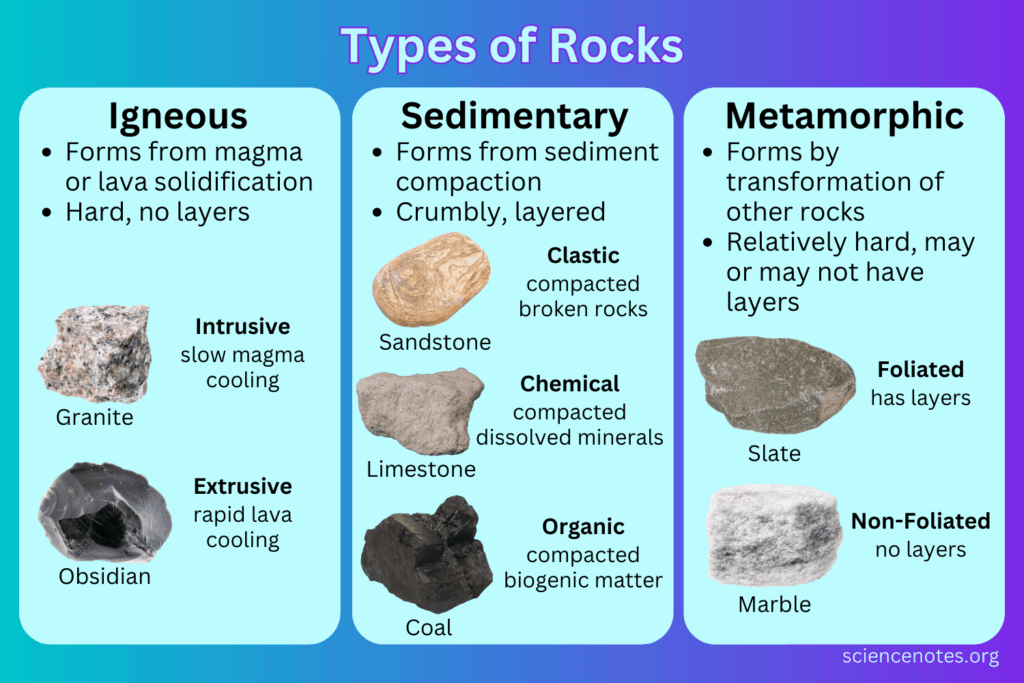
Igneous rocks are created through the cooling and solidification of magma or lava. This process can occur either beneath the Earth’s surface (intrusive) or above ground as a result of volcanic eruptions (effusive). The term “igneous” comes from the Latin word for fire, reflecting their origin from molten rock.
Types of Igneous Rocks
Igneous rocks can be broadly categorized into two main groups: intrusive and effusive. Each type has distinct characteristics shaped by its formation process.
Intrusive Igneous Rocks
Intrusive rocks form when magma cools slowly beneath the Earth’s surface, resulting in coarse-grained crystals. This slow cooling process allows for the growth of larger crystals, which can be several millimeters or even centimeters in size.
Examples of intrusive igneous rocks include:
- Granite: characterized by its coarse-grained texture and high quartz content
- Diorite: a mixture of plagioclase and pyroxene minerals, often with a speckled appearance
- Gabbro: a dark-colored rock with a coarse-grained texture and high iron and magnesium content
Effusive Igneous Rocks
Effusive rocks, on the other hand, form when magma erupts onto the surface as lava. This rapid cooling process results in fine-grained crystals, which are difficult to see without a microscope.
Examples of effusive igneous rocks include:
- Basalt: a dark-colored rock with a fine-grained texture
- Andesite: an intermediate-composition rock with a speckled appearance
- Rhyolite: a light-colored rock with a coarse-grained texture and high silica content
Classification of Igneous Rocks
Igneous rocks can be further divided into five main families based on their chemical and physical properties.
1. Granite
Granite is an intrusive igneous rock characterized by its coarse-grained texture and high quartz content. It’s often pink or gray in color, with a speckled appearance.
Properties and Uses of Granite
- Hardness: granite has a high hardness, making it resistant to wear and tear
- Durability: its durability makes it an ideal material for construction and architectural purposes
- Purposes: used as building material, decorative stone, and dimensional stone
2. Sienite
Sienite is an intrusive igneous rock with a coarse-grained texture and high feldspar content. It’s often pink or gray in color, similar to granite.
Properties and Uses of Sienite
- Hardness: sienite has a medium hardness, making it suitable for construction purposes
- Durability: its durability makes it an ideal material for architectural features
- Purposes: used as building material, dimensional stone, and decorative stone
3. Diorite
Diorite is an intermediate-composition intrusive igneous rock with a speckled appearance. It’s often dark-colored, with a mix of plagioclase and pyroxene minerals.
Properties and Uses of Diorite
- Hardness: diorite has a medium hardness, making it suitable for construction purposes
- Durability: its durability makes it an ideal material for architectural features
- Purposes: used as building material, dimensional stone, and decorative stone
4. Gabbro
Gabbro is a coarse-grained intrusive igneous rock with a dark-colored appearance. It’s often rich in iron and magnesium minerals.
Properties and Uses of Gabbro
- Hardness: gabbro has a high hardness, making it resistant to wear and tear
- Durability: its durability makes it an ideal material for construction purposes
- Purposes: used as building material, decorative stone, dimensional stone
5. Peridotite
Peridotite is a fine-grained effusive igneous rock with a greenish-gray color.
Properties and Uses of Peridotite
- Hardness: peridotite has a low hardness, making it less suitable for construction purposes
- Durability: its durability is limited, making it more prone to weathering
- Purposes: used as decorative stone and dimensional stone
Formation Processes
Igneous rocks can be formed through various processes, including:
- Magmatic differentiation: the process of magma cooling and solidifying beneath the Earth’s surface
- Magma mixing: the process of different magmas mixing together to form a new igneous rock
- Volcanic eruptions: the process of lava erupting onto the surface as rocks cool and solidify
Geological Significance
Igneous rocks play a crucial role in understanding geological processes and events. They provide valuable information about:
- Tectonic plate movements: igneous rocks can be used to determine tectonic plate boundaries and movement patterns
- Volcanic activity: igneous rocks can indicate areas of volcanic activity and potential hazards
- Geothermal energy: igneous rocks can be used to harness geothermal energy
Conservation and Preservation
Igneous rocks require special care and preservation to maintain their integrity. This includes:
- Protection from weathering: protecting igneous rocks from wind, rain, and other environmental factors that can cause erosion
- Conservation of minerals: conserving minerals within igneous rocks to prevent degradation
- Maintenance of geological sites: maintaining geological sites and preserving the natural environment
Conclusion
Igneous rocks are a fascinating topic in geology, with their unique characteristics and formation processes. From intrusive to effusive, these rocks offer insights into geological history and provide valuable information about Earth’s internal structure.
In this article, we’ve explored the world of igneous rock formations, covering types, classification, properties, and uses. We’ve also touched on geological significance, conservation, and preservation to maintain these natural wonders for future generations.
Whether you’re a geologist, architect, or simply an enthusiast, understanding igneous rocks can deepen your appreciation for our planet’s incredible diversity of textures, colors, and compositions.
Frequently Asked Questions
-
What is the difference between intrusive and effusive igneous rocks?
Intrusive rocks form when magma cools slowly beneath the Earth’s surface, while effusive rocks form when magma erupts onto the surface as lava. -
What are the main characteristics of granite?
Granite has a coarse-grained texture, high quartz content, and is often pink or gray in color. -
Can peridotite be used for construction purposes?
Due to its low hardness, peridotite is not suitable for construction purposes but can be used as decorative stone and dimensional stone. -
What are the properties of gabbro?
Gabbro has a high hardness, durability, and is often rich in iron and magnesium minerals. -
How do I clean granite surfaces?
Granite surfaces can be cleaned using bicarbonate of soda and soap or detersive agents specifically designed for granite surfaces. -
Can diorite be used as building material?
Due to its medium hardness, diorite is suitable for construction purposes but may require additional support structures. -
How do I maintain the appearance of a granite countertop?
Regularly clean and seal your granite countertops using recommended products to protect against stains and etching. -
What are some common uses of granite in architecture and design?
Granite is often used as building material, decorative stone, dimensional stone, and for architectural features due to its durability and aesthetic appeal. -
How do I identify igneous rocks in the field?
To identify igneous rocks, look for characteristics such as texture, color, and composition. Use hand lenses and other tools to examine the rock’s details. -
Can I collect igneous rocks from geological sites?
Yes, but be sure to follow local regulations and guidelines when collecting rocks. Always obtain permission and respect the environment when collecting geological specimens.


