
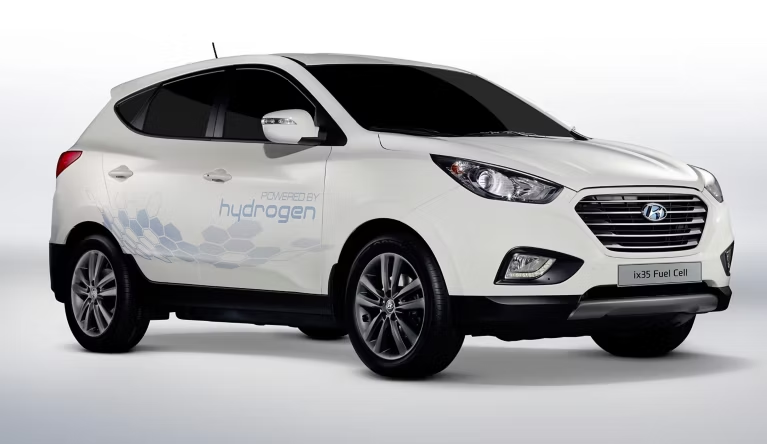
In an effort to reduce greenhouse gas emissions and mitigate climate change, car manufacturers have been increasingly investing in alternative fuel sources. One such source is hydrogen, which offers a promising solution for long-distance travel without emitting any CO2. In this article, we will explore the Hyundai ix35 Fuel Cell, a pioneering model that showcases the potential of hydrogen-powered vehicles.
The Importance of Hydrogen Cars
Why are hydrogen cars so important? The answer lies in their ability to eliminate range anxiety, a common concern for electric vehicle owners. Most electric cars are designed for urban use due to their limited range, whereas hydrogen cars can travel significant distances without needing to refuel. This makes them ideal for long-distance driving.
Hydrogen cars also have the potential to reduce emissions from transportation, which accounts for a significant portion of greenhouse gas emissions worldwide. By using renewable energy sources to produce hydrogen, it is possible to generate fuel that is carbon-neutral or even negative-emissions.
How Hydrogen Cars Work
Hydrogen cars use chemical batteries that combine hydrogen and oxygen to produce energy. Unlike electric cars, which rely on batteries charged by an external power source, hydrogen cars harness the energy stored in the fuel itself. This eliminates the need for lengthy charging sessions, making them more convenient for drivers.
The process of producing hydrogen involves splitting water molecules into hydrogen and oxygen using electricity from renewable sources such as solar or wind power. The resulting hydrogen is then purified and stored, ready to be used in a fuel cell or combined with air to produce electricity.
The Network of Refueling Stations
One of the key challenges facing hydrogen cars is the lack of refueling stations. In Europe, there are only 27 public hydrogen refueling stations, with many more private ones available in countries like Germany and Denmark. However, this network is still far from comprehensive, making it difficult for drivers to find suitable refueling points.
To address this challenge, many governments are investing in the development of refueling infrastructure. In Europe, for example, the European Union has set a target of having 1,000 public hydrogen refueling stations by 2025.
Hyundai ix35 Fuel Cell: A European Debut
The Hyundai ix35 Fuel Cell made its European debut at a price of around €58,000. Although the initial price may seem steep, production costs are expected to decrease as the technology becomes more widespread. In the US, the ix35 Fuel Cell is paired with the Hyundai Tuscon and sold for $80,000.
Hyundai ix35 Fuel Cell Technical Specifications
To give you a better understanding of this pioneering vehicle, here are its key technical specifications:
- Electric motor: 100 kW, 136 CV
- Maximum torque: 300 Nm immediately available
- Emissions: 0 grams CO2 per km
- Class emissions: A
- Automatic transmission with 6 gears
- Front-wheel drive
- Top speed: 160 km/h
- Fuel consumption: 105.2 km per kg of H2 (hydrogen)
- Dimensions: Length: 442 cm, Width: 182 cm, Height: 167 cm.
- Weight: 1,830 kg.
A Vehicle with a Long Range
One of the most impressive features of the Hyundai ix35 Fuel Cell is its range. With a full tank, this vehicle can travel approximately 600 km. While it may not be enough for long-distance road trips, it’s an encouraging start for drivers who want to explore Europe without worrying about running out of fuel.
A More Agile and Direct Driving Experience
Those who have had the chance to drive the Hyundai ix35 hydrogen car have praised its handling, describing it as more direct and agile than its diesel sister model. This is likely due to the lightweight design and the electric motor’s instant torque.
The Hyundai ix35 Fuel Cell also features a unique driving experience, with the ability to adjust the power output of the electric motor to suit different driving conditions. This makes it an ideal vehicle for drivers who want to optimize their fuel efficiency and minimize emissions.
Conclusion
The Hyundai ix35 Fuel Cell represents a significant step forward in the development of zero-emission mobility. Its ability to travel long distances without emitting any CO2 makes it an attractive option for drivers who want to reduce their environmental impact. While there are still challenges to overcome, such as the lack of refueling stations and higher production costs, this pioneering vehicle shows promise for a more sustainable future.
Frequently Asked Questions
Q: What is the price of the Hyundai ix35 Fuel Cell in Europe?
A: The initial price of the Hyundai ix35 Fuel Cell in Europe is around €58,000. However, prices are expected to decrease as production increases.
Q: How far can the Hyundai ix35 Fuel Cell travel on a full tank?
A: With a full tank, the Hyundai ix35 hydrogen car can travel approximately 600 km.
Q: What is the difference between hydrogen cars and electric cars in terms of range?
A: Hydrogen cars eliminate range anxiety due to their ability to travel long distances without needing to refuel. Electric cars, on the other hand, are limited by the capacity of their batteries.
Q: How does the Hyundai ix35 Fuel Cell compare to its diesel sister model in terms of handling?
A: The hydrogen version is described as more direct and agile than the diesel due to its lightweight design and electric motor’s instant torque.
Q: Are there any public hydrogen refueling stations available in Europe?
A: Yes, there are 27 public hydrogen refueling stations in Europe. However, this network is still far from comprehensive.
Q: How much does it cost to produce a Hyundai ix35 Fuel Cell?
A: The exact production costs of the Hyundai ix35 Fuel Cell are not publicly disclosed. However, prices are expected to decrease as the technology becomes more widespread.
Q: Can you drive a hydrogen car in the US?
A: Yes, the Hyundai ix35 Fuel Cell is available for purchase in the US and paired with the Hyundai Tuscon.
Q: What is the future of hydrogen-powered vehicles?
A: The future of hydrogen-powered vehicles looks promising, with many manufacturers investing in this technology. However, there are still challenges to overcome, such as the lack of refueling stations and higher production costs.
Q: Can I buy a Hyundai ix35 Fuel Cell in Europe?
A: Yes, the Hyundai ix35 Fuel Cell is available for purchase in Europe. However, prices may be steep initially, and production costs are expected to decrease over time.
Hydrogen Refueling Stations
The development of hydrogen refueling stations is crucial for the widespread adoption of hydrogen-powered vehicles. These stations can be powered by renewable energy sources such as solar or wind power, reducing greenhouse gas emissions even further.
There are several types of hydrogen refueling stations, including:
- High-pressure fueling stations: These stations use high-pressure compressors to store and dispense hydrogen at a pressure of up to 10 MPa.
- Low-pressure fueling stations: These stations use low-pressure compressors to store and dispense hydrogen at a pressure of up to 1 MPa.
- Hydrogen fuel cell electric vehicles (FCEVs) refueling stations: These stations are specifically designed for FCEVs, which require high-purity hydrogen to operate.
Government Support
Governments around the world are investing in the development of hydrogen refueling infrastructure and supporting the production of hydrogen-powered vehicles. In Europe, for example, the European Union has set a target of having 1,000 public hydrogen refueling stations by 2025.
In the US, the government is providing incentives for the adoption of FCEVs through tax credits and grants. Additionally, many states are offering rebates and other forms of support to encourage the purchase of FCEVs.
Conclusion
The Hyundai ix35 Fuel Cell represents a significant step forward in the development of zero-emission mobility. Its ability to travel long distances without emitting any CO2 makes it an attractive option for drivers who want to reduce their environmental impact. While there are still challenges to overcome, such as the lack of refueling stations and higher production costs, this pioneering vehicle shows promise for a more sustainable future.
The Future of Hydrogen-Powered Vehicles
The future of hydrogen-powered vehicles looks promising, with many manufacturers investing in this technology. However, there are still challenges to overcome, such as the lack of refueling stations and higher production costs.
To address these challenges, it is essential to continue investing in the development of refueling infrastructure and supporting the adoption of FCEVs through incentives and other forms of support.
As the demand for zero-emission vehicles continues to grow, it is likely that hydrogen-powered vehicles will play a significant role in reducing greenhouse gas emissions from transportation. With continued investment and innovation, we can create a more sustainable future for generations to come.


