
Hysteresis is a term often used in physics to describe a system’s response to changes in its state. However, this concept extends beyond the physical realm and can be found in various fields, including biology, economics, medicine, and law. In this article, we will delve into the world of hysteresis, exploring its cycle, significance, and applications across different disciplines.
What is Hysteresis?
Hysteresis refers to a phenomenon where a system exhibits a lag in response to changes in its state. This lag can occur due to various factors, such as memory effects, external influences, or internal dynamics. In essence, hysteresis describes the behavior of a system that cannot immediately return to its original state after being perturbed.
The Hysteresis Cycle
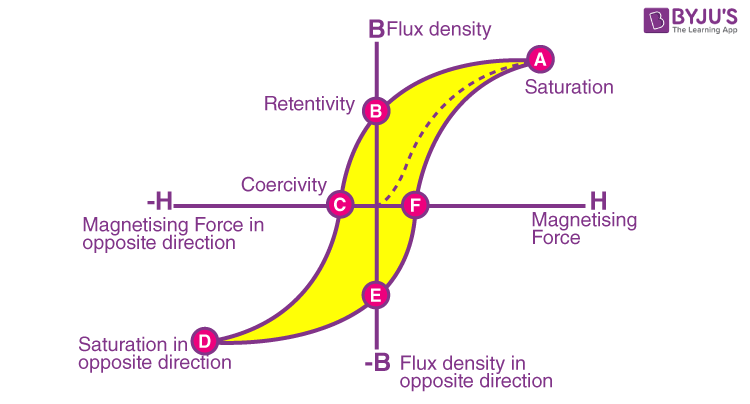
To understand hysteresis, it’s essential to grasp the concept of a cycle. A cycle is a repetitive pattern that emerges when a system undergoes changes in its state. In the context of hysteresis, this cycle is characterized by a closed curve on a graph, indicating the relationship between the input and output of the system.
Hysteresis in Physics
In physics, hysteresis is often associated with magnetic materials, such as ferromagnets. When a ferromagnetic material is exposed to an external magnetic field, it can exhibit a memory effect, retaining its magnetization even after the field is removed. This phenomenon is known as hysteretic behavior.
Hysteresis in Other Fields
Beyond physics, hysteresis can be observed in various fields, including:
- Biology: Hysteresis can occur in biological systems, such as the behavior of neurons or the immune response to pathogens.
- Economics: Hysteresis is often used to describe the impact of economic shocks on employment rates and the labor market.
- Medicine: Hysteresis can be observed in medical devices, such as pacemakers or defibrillators, which require a memory effect to function properly.
- Law: Hysteresis can refer to the difficulty in adapting laws to new technologies or societal changes.
Examples of Hysteresis
To illustrate hysteresis, consider the following examples:
- Thermoelectric cooling: This technology relies on a phase change material that exhibits hysteretic behavior, allowing it to maintain a stable temperature despite changes in its surroundings.
- Magnetic hard drives: These storage devices use magnetic fields to store data, but they also exhibit hysteresis due to the memory effect of the ferromagnetic material used.
- Economic downturns: A recession can lead to a period of high unemployment, which can have long-lasting effects on the labor market and the economy as a whole.
The Hysteresis Model
The hysteresis model is a mathematical representation of a system’s response to changes in its state. This model assumes that the system exhibits a lag in response to changes, characterized by a closed curve on a graph. The hysteresis model can be used to predict and analyze the behavior of complex systems.
Applications of Hysteresis
Hysteresis has numerous applications across various fields, including:
- Control systems: Hysteresis is used in control systems to design feedback loops that take into account the lagging effect of changes in the system’s state.
- Sensors and actuators: Hysteresis can affect the performance of sensors and actuators, requiring careful design and calibration to ensure accurate measurement and control.
- Materials science: Hysteresis is used to understand the behavior of materials under different conditions, such as temperature or pressure.
Mitigating Hysteresis
While hysteresis cannot be completely eliminated, researchers are working on developing techniques to predict and mitigate its effects. Some strategies for mitigating hysteresis include:
- Modeling: Using mathematical models to simulate the behavior of complex systems and identify areas where hysteresis is most significant.
- Design optimization: Optimizing system design to minimize the impact of hysteresis, such as using more efficient control algorithms or adjusting material properties.
- Experimentation: Conducting experiments to test and validate the effectiveness of mitigation strategies.
Conclusion
Hysteresis is a complex phenomenon that can be observed in various fields. Understanding its cycle and significance is crucial for developing effective solutions to complex problems. By recognizing hysteresis, we can design systems that take into account the lagging effect of changes in their state, leading to more efficient and reliable outcomes.
Frequently Asked Questions
Here are some key questions related to hysteresis:
- What is the main difference between hysteresis and other memory effects?
Hysteresis is characterized by a lag in response to changes in its state, whereas other memory effects may occur more quickly or have different underlying mechanisms. - How does hysteresis impact system design?
Hysteresis can lead to the development of systems that take into account the lagging effect of changes in their state, resulting in more efficient and reliable outcomes. - Can hysteresis be predicted or prevented?
While it may not be possible to completely eliminate hysteresis, researchers are working on developing techniques to predict and mitigate its effects.
Understanding Hysteresis: The Cycle and Significance
Hysteresis is a ubiquitous phenomenon that can be observed in various fields. Understanding its cycle and significance is crucial for developing effective solutions to complex problems.


