
The Evolution of Densimetry: A Journey Through Time
Densimetry, the measurement of density, has been around for centuries. The first densimeter was reportedly invented by Archimedes in ancient Greece (287-212 BC), although some sources also attribute its creation to the mathematician and astronomer Hypatia (c. 350-415 AD). Fast forward to the 17th century, where Galileo Galilei described a similar device in his letters.
What is a Densimeter?
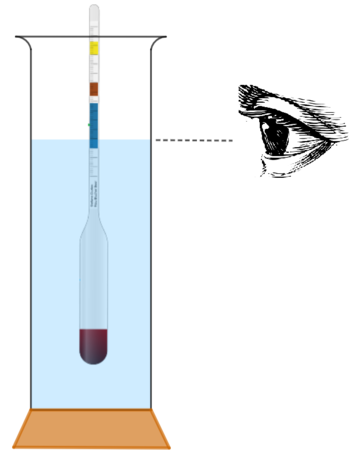
A densimeter, also known as an areometer, measures the density of a liquid by utilizing the principle of buoyancy. This means that it relies on the concept of Archimedes’ Principle, which states that any object partially or fully submerged in a fluid will experience an upward force equal to the weight of the fluid displaced.
To understand how this works, imagine a floating device (like a boat) being immersed in a liquid. As the device displaces a volume of liquid, it experiences an upward force, allowing us to measure its density. This process is similar to weighing the device and comparing it to the weight of the displaced liquid.
Types of Densimeters
Densimeters come in various shapes and sizes, depending on their intended use and era of creation. We can categorize them into two main types based on their principle of operation: weight-based or volume-based densimeters.
-
Weight-Based Densimeters
These densimeters have a weighted bottom that displaces liquid when submerged. The weight is then measured against the volume of the displaced liquid, allowing us to calculate density. -
Volume-Based Densimeters
These densimeters use an enclosed container with a known volume and a movable part (e.g., a piston) that rises or falls based on changes in pressure. By measuring the movement of this part, we can determine the weight of the displaced liquid and subsequently calculate its density.
A Brief History of Densimetry
Throughout history, densimeters have been developed to suit specific applications. For instance:
- In the 17th century, French scientists created densimeters for measuring the density of liquids in various industries.
- By the late 18th century, Antoine Baumé and William Nicholson had designed densimeters with greater precision, paving the way for modern applications.
Modern Applications of Densimetry
Today, densimetry plays a crucial role in various fields, including:
- Quality Control: Densitometers are used to measure the density of materials in industrial processes.
- Scientific Research: Densimeters aid scientists in studying the properties of liquids and understanding phenomena such as surface tension.
Some notable examples of modern applications include:
- Determining the purity of water samples by measuring their density
- Monitoring the density of fuels and oils in vehicles
- Analyzing the texture and consistency of food products
Common Types of Densimeters
Some common types of densimeters include:
- Density Meters for Liquids: Used to measure the density of liquids in various applications, including brewing and chemical industries.
- Densitometers with Thermometry: Combining density measurement with temperature control, these devices are ideal for monitoring water quality in aquariums.
- Digital Densimeters: Modern digital densimeters offer high precision and accuracy, making them suitable for a wide range of applications.
Conductivity-based Density Measurement
Another method of measuring density is by using conductivity. This approach involves measuring the electrical conductivity of a solution to determine its density. The principle behind this method is based on the idea that the ionic concentration in a solution affects its conductivity. By comparing the conductivity of different solutions, we can infer their respective densities.
Types of Conductivity-based Densimeters
There are several types of conductivity-based densimeters available, including:
- Electrolytic Density Meters: These devices measure the density of electrolytes by measuring the current flowing through a cell.
- High-Temperature Conductivity Meters: Suitable for measuring high-temperature fluids and gases.
Advantages and Limitations of Densimetry
Densimetry offers several advantages over other methods of measuring properties, including:
- High accuracy: Modern densimeters can provide accurate measurements with a high degree of precision.
- Flexibility: Densimeters can be used to measure a wide range of properties, from temperature to density.
However, there are also some limitations associated with densimetry, such as:
- Sensitivity: Densimeters may require careful calibration and maintenance to ensure accuracy.
- Interference: Electrical noise and other interference sources can affect the measurement process.
Conclusion
The evolution of densimetry has been a long and fascinating journey. From its ancient roots to modern-day applications, this technique has become an essential tool in various industries. By understanding the principles of densimetry, scientists and engineers can unlock new insights into the behavior of liquids and develop innovative solutions for real-world problems.
Frequently Asked Questions
- What is the primary principle behind densimetry?
The primary principle of densimetry is based on Archimedes’ Principle, which states that any object partially or fully submerged in a fluid will experience an upward force equal to the weight of the fluid displaced.
- How do densimeters measure density?
Densimeters measure density by utilizing the principle of buoyancy and comparing the weight of a floating device to the weight of the displaced liquid.
- What are some common applications of densimetry?
Common applications of densimetry include quality control, scientific research, brewing, and chemical industries.
- What is the difference between weight-based and volume-based densimeters?
Weight-based densimeters rely on the displacement of a weighted bottom, while volume-based densimeters use an enclosed container with a movable part to measure density.
- Can densimeters be used for measuring other properties besides density?
Yes, some densimeters come equipped with thermometry, allowing for the simultaneous measurement of temperature and density.
Additional Resources
For more information on densimetry and its applications, please follow us on social media platforms such as Twitter, Facebook, Google+, and Instagram.


