
Introduction
Hydrogeological disasters are a devastating consequence of human activities that disrupt the natural balance of our planet. In this article, we will delve into the definition, causes, effects, and solutions to these catastrophic events. Understanding hydrogeological disasters is crucial in mitigating their impact and saving lives.
What is Hydrogeological Disaster?
Hydrogeological disaster refers to a chain of processes that have a destructive effect on the soil, causing erosion, landslides, floods, and other devastating consequences. These disasters can be triggered by natural factors such as heavy rainfall, earthquakes, and soil instability or human activities like deforestation, urbanization, and infrastructure development.
Causes of Hydrogeological Disaster
Hydrogeological disasters are a complex phenomenon with multiple causes. The effects of climate change, soil degradation, and infrastructure development contribute to the increasing risk of these disasters. Here are some of the main causes:
- Natural Causes: Weather patterns, geological factors, and natural events like earthquakes can trigger hydrogeological disasters.
- Artificial Causes: Human activities such as deforestation, urbanization, infrastructure development, and pollution can exacerbate soil erosion, landslides, and floods.
Causes of Hydrogeological Disaster: Natural Factors
Natural factors play a significant role in triggering hydrogeological disasters. These include:
- Heavy rainfall: Prolonged or intense rainfalls can cause soil erosion, landslides, and flooding.
- Earthquakes: Seismic activities can trigger landslides, soil instability, and floods.
- Soil instability: Soils with low stability, such as clay soils, can be prone to landslides and soil erosion.
- Geological formations: The presence of underlying geological formations like faults or fractures can increase the risk of hydrogeological disasters.
The effects of climate change on weather patterns can increase the risk of these disasters.
Causes of Hydrogeological Disaster: Artificial Factors
Artificial factors contribute to the increasing risk of hydrogeological disasters. These include:
- Deforestation: Removing trees and vegetation can lead to soil erosion, landslides, and floods.
- Urbanization: The expansion of urban areas can increase the risk of flooding, landslides, and soil erosion.
- Infrastructure development: Building infrastructure without considering its impact on the surrounding environment can exacerbate hydrogeological disasters.
- Pollution: Human activities like agriculture, mining, or industrial activities can pollute soil, air, and water, leading to hydrogeological disasters.
These human activities can exacerbate soil erosion, landslides, and floods.
Solutions to Hydrogeological Disaster
To mitigate the impact of hydrogeological disasters, it is essential to implement preventive measures. Here are some solutions:
- Prevention: Implementing preventive measures such as land use planning, soil conservation, and flood control can help reduce the risk of hydrogeological disasters.
- Early Warning Systems: Establishing early warning systems for natural disasters can provide timely alerts, allowing people to evacuate or take necessary precautions.
- Infrastructure Development: Developing infrastructure that can withstand extreme weather conditions and soil instability can help minimize damage from hydrogeological disasters.
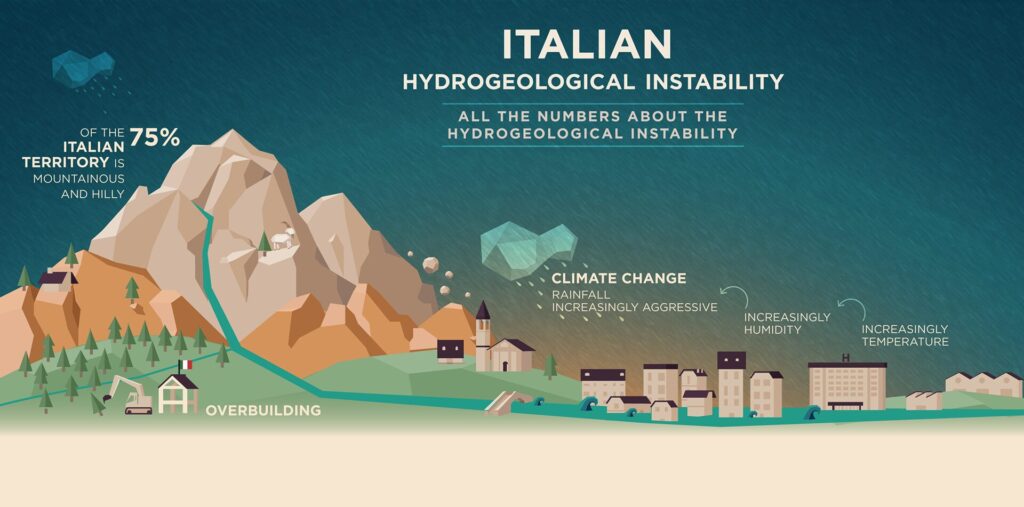
Hydrogeological Disaster in Italy
Italy is highly vulnerable to hydrogeological disasters due to its unique geography and climate. The country’s fertile soil, mountainous terrain, and proximity to the Mediterranean Sea make it prone to landslides, floods, and soil erosion.
The recent increase in temperature has exacerbated this vulnerability, making Italy one of the most susceptible countries to hydrogeological disasters.
Conclusion
Hydrogeological disasters are a pressing concern worldwide. Understanding their causes, effects, and solutions is crucial in mitigating their impact. By implementing preventive measures, establishing early warning systems, and developing infrastructure that can withstand extreme weather conditions, we can reduce the risk of these devastating events.
Frequently Asked Questions (FAQs)
- What is a hydrogeological disaster?
- A hydrogeological disaster refers to a chain of processes that have a destructive effect on the soil.
- What causes hydrogeological disasters?
- Hydrogeological disasters can be triggered by natural factors such as weather patterns, geological events, or human activities like deforestation and urbanization.
- How can we mitigate the impact of hydrogeological disasters?
- Implementing preventive measures such as land use planning, soil conservation, and flood control can help reduce the risk of hydrogeological disasters.
- What role does climate change play in triggering hydrogeological disasters?
- Climate change can increase the risk of hydrogeological disasters by altering weather patterns and contributing to soil degradation.
- How can early warning systems help mitigate the impact of hydrogeological disasters?
- Early warning systems provide timely alerts, allowing people to evacuate or take necessary precautions, reducing the risk of injury or loss of life.
- What is the most effective way to develop infrastructure that can withstand extreme weather conditions?
- Developing infrastructure that is designed to withstand extreme weather conditions and soil instability can help minimize damage from hydrogeological disasters.
By understanding these causes, effects, and solutions, we can take proactive steps to reduce the risk of hydrogeological disasters and save lives.


