
Introduction
In the world of sustainable energy, there are few solutions that have garnered as much attention as hydrogen fuel cell technology. One vehicle in particular has been making waves in the automotive industry: the Toyota Mirai. As the first mass-produced hydrogen fuel cell car, the Mirai represents a significant step forward in the transition to cleaner transportation.
The Mirai’s debut marked a turning point for hydrogen fuel cell technology, which had previously struggled to gain traction. Projections and pilot projects had been announced, but few had seen concrete results. Toyota’s commitment to the technology was a bold move that paid off with the Mirai’s successful launch in Japan on December 15, 2014.
A Brief History of Hydrogen Fuel Cell Technology
Hydrogen fuel cell technology has its roots in the early 20th century, when scientists first explored the potential of hydrogen as an energy source. However, it wasn’t until the 1980s that the first commercial hydrogen fuel cell systems were developed.
In recent years, hydrogen fuel cell technology had faced several challenges, including high production costs, limited infrastructure, and concerns over safety and efficiency. Despite these challenges, there was a growing recognition of the potential benefits of hydrogen fuel cells, particularly in reducing greenhouse gas emissions and dependence on fossil fuels.
The Mirai’s launch marked an important milestone in the history of hydrogen fuel cell technology, as it demonstrated the feasibility of mass-producing a hydrogen fuel cell vehicle. This achievement paved the way for future developments in the field, including improvements to efficiency, cost, and scalability.
European Launch: A New Era for Hydrogen Fuel Cell Vehicles
Following a successful launch in Japan, the Mirai made its European debut in September 2015. This marked an important milestone for the vehicle, as it signaled a new era of adoption for hydrogen fuel cell technology on the continent.
The European launch was significant not only because of the Mirai’s introduction but also because it highlighted the growing interest in alternative energy solutions. As governments and consumers increasingly sought ways to reduce their carbon footprint, the Mirai offered a promising solution.
What Makes the Toyota Mirai Unique?
So, what sets the Mirai apart from other vehicles on the market? For starters, its production process is noteworthy. Unlike other vehicles, which rely on specialized manufacturing facilities, the Mirai was produced in a traditional factory with advanced technology.
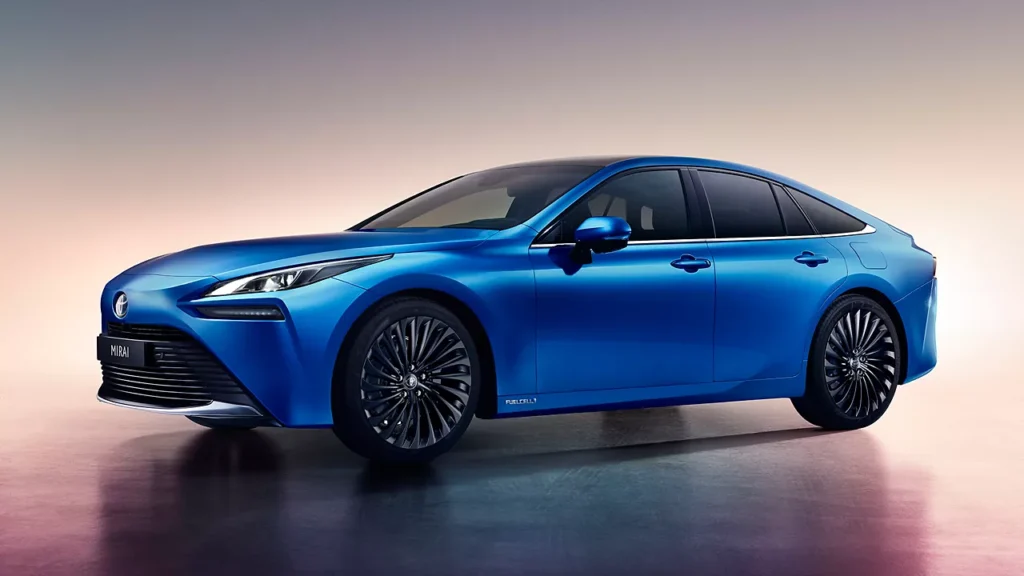
This approach allowed Toyota to leverage existing manufacturing infrastructure while still achieving the necessary levels of quality and efficiency for a high-performance vehicle. The Mirai’s design also reflects its hydrogen fuel cell powertrain, featuring aerodynamic bodywork and a lightweight construction that minimizes weight and maximizes performance.
The Toyota Fuel Cell System (TFCS)
At the heart of the Mirai’s innovation lies the Toyota Fuel Cell System (TFCS). This system utilizes hydrogen fuel cells to convert hydrogen into electricity, providing a clean and efficient source of power. The TFCS is notable for its simplicity and effectiveness, boasting a high energy density that outperforms traditional battery technology.
The TFCS consists of three main components: the hydrogen tank, the fuel cell stack, and the electric motor. Hydrogen is stored in a separate tank and fed into the fuel cell stack, where it reacts with oxygen to produce electricity and water vapor as byproducts. The resulting electricity powers an electric motor that propels the vehicle forward.
Challenges and Limitations
While the Mirai represents a significant leap forward in hydrogen fuel cell technology, there are still challenges to be addressed. One major concern is the logistical challenge of storing and transporting hydrogen, which is highly flammable and requires specialized equipment.
Additionally, the Mirai’s infrastructure is limited compared to other vehicles on the market, with fewer charging stations available for hydrogen fueling. However, Toyota has committed to expanding its hydrogen fueling network in Japan and Europe, paving the way for increased adoption of the Mirai.
Performance and Efficiency
Despite these challenges, the Mirai delivers impressive performance and efficiency. With a power output of 114 kW (155 horses), the vehicle offers remarkable acceleration and responsiveness. Additionally, the TFCS ensures super-efficient energy production, thanks to cutting-edge 3D flow channels that optimize electricity output.
The Mirai’s fuel economy is also noteworthy, with an estimated range of up to 500 miles on a single fill-up. This makes it an attractive option for long-distance driving, particularly in regions with limited access to charging infrastructure.
Comfort and Handling
But the Mirai is not just about performance; it’s also designed for comfort and handling. With advanced features such as smooth suspension and ergonomic design, the vehicle provides an exceptional driving experience.
The Mirai’s interior features a modern and minimalist design, with premium materials and attention to detail that sets it apart from other vehicles in its class. The exterior design is equally impressive, featuring sleek lines and a aerodynamic body that minimizes wind resistance.
Safety Features
As with any vehicle, safety is a top priority for the Mirai. Toyota has equipped the vehicle with advanced safety features such as lane departure warning, adaptive cruise control, and automatic emergency braking.
Additionally, the Mirai’s fuel cell system meets or exceeds all relevant regulatory standards for hydrogen fuel cell vehicles, providing an added layer of protection for occupants in the event of a collision.
Conclusion
In conclusion, the Toyota Mirai represents a significant milestone in the transition to cleaner transportation. As the first mass-produced hydrogen fuel cell car, it sets a new standard for efficiency, performance, and sustainability.
While challenges remain, the Mirai’s innovative technology and design make it an exciting prospect for those seeking a more environmentally friendly driving experience. With its impressive performance, comfort, and safety features, the Mirai is poised to become a leader in the automotive industry.
Frequently Asked Questions
Q: What is the Toyota Mirai?
A: The Toyota Mirai is the first mass-produced hydrogen fuel cell car, designed to provide a clean and efficient source of power.
Q: How does the Toyota Fuel Cell System (TFCS) work?
A: The TFCS converts hydrogen into electricity using fuel cells, providing a high energy density that outperforms traditional battery technology.
Q: Is the Mirai available in Europe?
A: Yes, the Toyota Mirai was launched in Europe in September 2015, marking an important milestone for hydrogen fuel cell adoption on the continent.
Q: How much does the Mirai cost?
A: The exact pricing of the Mirai is not publicly disclosed, but it’s expected to be competitive with other vehicles on the market.
Q: Is the Mirai only available as a prototype?
A: No, the Toyota Mirai is a production vehicle designed for mass market availability.
Q: What are the potential benefits of hydrogen fuel cell technology?
A: Hydrogen fuel cell technology offers several benefits, including zero greenhouse gas emissions, high energy density, and improved efficiency.


