
The Hydrogen Bond: Understanding Its Strength and Importance
As the weakest of the chemical bonds, the hydrogen bond has a surprising impact on the physical properties of substances like water. In this article, we’ll delve into the world of hydrogen bonding, exploring its definition, properties, and significance in various biological and chemical contexts.
What is a Hydrogen Bond?
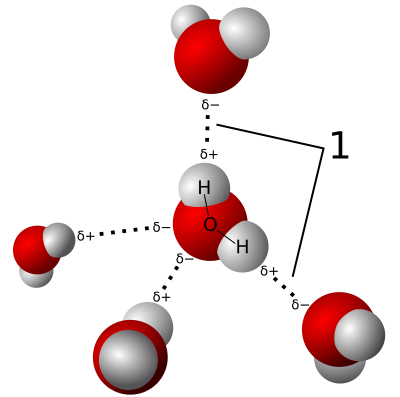
A hydrogen bond is an electrostatic attraction between a partially positive hydrogen atom bonded to a highly electronegative atom (such as oxygen, nitrogen, or sulfur) and another electronegative atom bearing a partial negative charge. This type of bonding is relatively weak compared to other chemical bonds but plays a crucial role in the structure and properties of molecules.
The Hydrogen Bond: A Definition
In essence, a hydrogen bond occurs when an atom with a high electronegativity (such as oxygen or nitrogen) pulls electrons away from its bonded partners, leaving behind a partial positive charge on the hydrogen atom. This positively charged hydrogen ion is then attracted to another electronegative atom bearing a partial negative charge, resulting in a weak electrostatic interaction.
The Strength of Hydrogen Bonds
Hydrogen bonds are more significant when the atoms involved form a straight line, allowing for maximum attraction between the partially positive and negatively charged ends. However, in complex molecules or structures, this alignment may not always occur, leading to weaker hydrogen bonds.
The Hydrogen Bond in Water: A Case Study
Water is an excellent example of how hydrogen bonding contributes to its remarkable physical properties, such as high boiling and freezing points. The water molecule’s (H2O) two hydrogen atoms are attracted to the partially negative oxygen atom, forming three hydrogen bonds per molecule. This results in a substantial amount of intermolecular attraction between water molecules, making it difficult for them to escape their liquid state or turn into vapor.
The Dynamic Nature of Hydrogen Bonds
One key aspect of hydrogen bonding is its dynamic nature: most molecular interactions involving hydrogen bonds have a lifetime measured in picoseconds or even nanoseconds. This means that the bonds are constantly breaking and reforming, giving water its unique fluidity and adaptability to changing conditions.
Hydrogen Bonding in Proteins and DNA
In biological contexts, hydrogen bonding plays a vital role in the structure and stability of molecules such as proteins and nucleic acids (DNA). In proteins, hydrogen bonds help maintain the alpha-helix shape by forming dipole-dipole interactions between charged groups on adjacent amino acid residues. Similarly, in DNA, hydrogen bonds facilitate the double helix structure by forming attractive forces between the negatively charged phosphate groups and positively charged nitrogenous bases.
Hydrogen Bonding in Other Molecules
Hydrogen bonding is not limited to water or biological molecules. It also plays a crucial role in various chemical reactions, such as the formation of esters and alcohols, and in the synthesis of complex compounds like pharmaceuticals and polymers.
Applications of Hydrogen Bonding
The understanding of hydrogen bonding has led to numerous applications across various fields:
- Materials Science: Hydrogen bonding is used in the development of materials with specific properties, such as self-healing materials or hydrogels.
- Pharmaceuticals: Hydrogen bonds are essential for the stability and efficacy of certain drugs, like antibiotics and vaccines.
- Biotechnology: Understanding hydrogen bonding helps researchers develop new bioproducts and biomaterials with improved performance and biocompatibility.
FAQs
- What is the difference between a hydrogen bond and an ionic bond?
A hydrogen bond is an electrostatic attraction between two partially charged atoms, whereas an ionic bond involves the transfer of electrons between atoms to form ions with opposite charges. - How strong are hydrogen bonds compared to other chemical bonds?
Hydrogen bonds are relatively weak compared to covalent bonds but play a crucial role in determining the physical properties of substances like water. - Can hydrogen bonds be broken or altered under certain conditions?
Yes, hydrogen bonds can be affected by factors such as temperature, pressure, and solvent composition, leading to changes in their strength and stability. - What is the significance of hydrogen bonding in biological systems?
Hydrogen bonding plays a vital role in maintaining protein structure and DNA stability, facilitating interactions between molecules, and enabling life’s intricate processes. - Can hydrogen bonds be created synthetically or artificially?
While it’s challenging to create stable hydrogen bonds under standard laboratory conditions, researchers have developed methods for manipulating hydrogen bonding in controlled environments.
Conclusion
In conclusion, the hydrogen bond is a fascinating phenomenon that plays a crucial role in determining the physical properties of substances like water and biological systems. By understanding its definition, strength, and importance, we can gain insight into the intricate workings of our natural world. The study of hydrogen bonding has far-reaching implications for various fields, from materials science to pharmaceuticals, and continues to inspire innovative research and applications.
Future Directions
As research in hydrogen bonding continues to advance, future studies may focus on:
- Understanding the molecular mechanisms: Further investigation into the detailed mechanisms underlying hydrogen bonding could lead to improved models and simulations.
- Developing new materials and technologies: Harnessing the power of hydrogen bonding for material design and development could create innovative solutions for various industries.
- Synthesizing complex compounds: Elucidating methods for creating stable hydrogen bonds under controlled conditions may pave the way for novel chemical reactions and synthesis pathways.
The Significance of Hydrogen Bonding in Our Daily Lives
Hydrogen bonding plays a vital role in many aspects of our daily lives, from:
- Water purification: Understanding hydrogen bonding helps engineers develop efficient methods for removing impurities from water.
- Food preservation: Hydrogen bonding influences the texture and stability of food products, such as cheese and jam.
- Biomedical applications: The study of hydrogen bonding contributes to the development of new bioproducts and biomaterials.
In conclusion, the hydrogen bond is a complex phenomenon that deserves attention from researchers across various disciplines. By expanding our knowledge of this fundamental force, we can unlock innovative solutions for many challenges facing science, technology, engineering, and mathematics (STEM) fields.


