
Hydraulic fracturing, commonly known as fracking, is a controversial energy extraction technique used to release oil and gas from shale rock formations. In this article, we’ll delve into the world of fracking, exploring its history, mechanics, environmental impacts, and the connection between fracking and earthquakes.
What is Fracking?
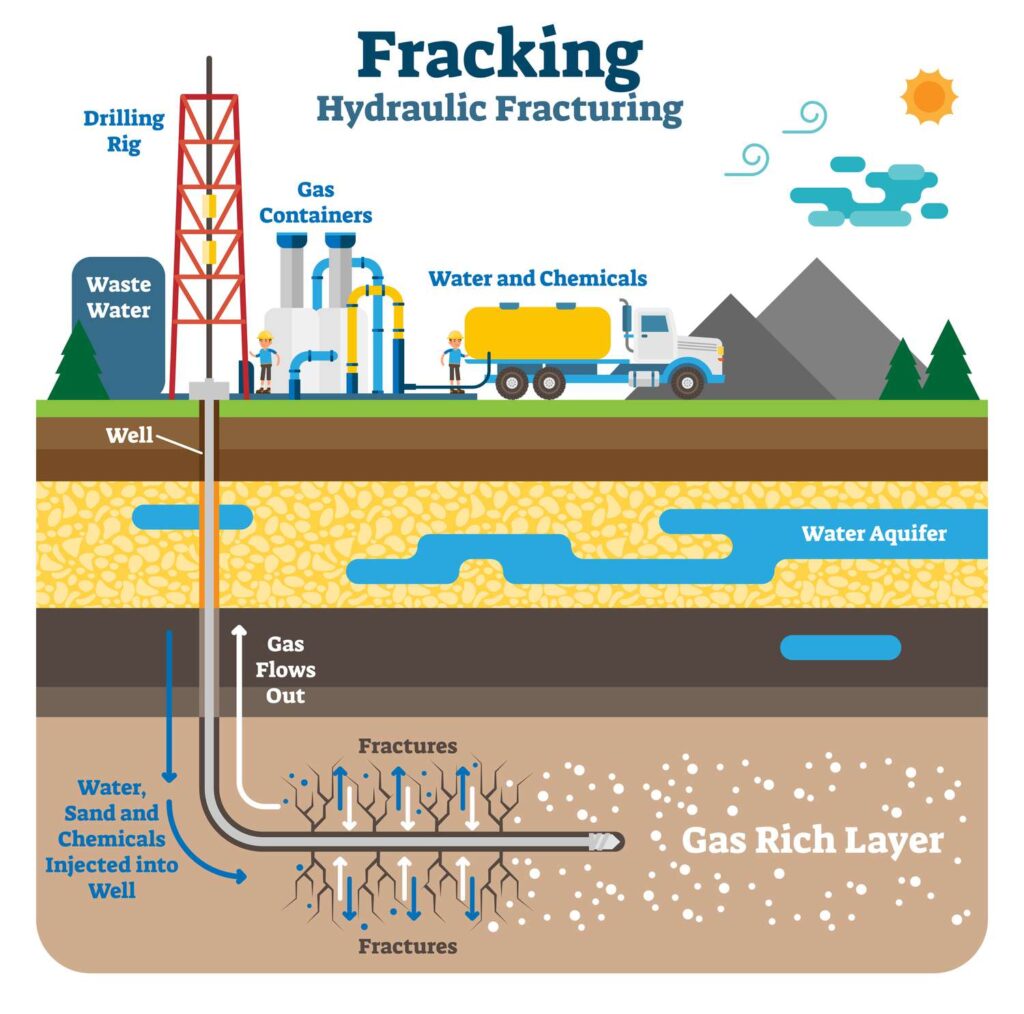
Fracking involves creating and propagating fractures in rock formations to access hydrocarbons. The process begins with drilling a well into a shale formation containing oil or gas. A high-pressure fluid, often a mixture of water, sand, and chemicals, is then injected into the well to create and maintain fractures. This allows for more efficient extraction of oil and gas from the shale rock.
History of Fracking
The concept of fracking dates back to the early 20th century, but it wasn’t until the 2000s that the technology gained widespread use in North America. In 1999, the first commercial-scale fracking operation was conducted in Colorado, USA. Since then, fracking has become a global phenomenon, with operations taking place in numerous countries, including the United States, Canada, Australia, and China.
Why Fracking?
Fracking is used primarily when extracting oil and gas from low-permeability rocks like compacted terrains, arenaceous formations, or clays. When hydrocarbons are trapped in non-permeable rocks, traditional extraction methods become economically unfeasible, making fracking an attractive alternative.
For instance, shale bituminous formations present significant challenges for gas extraction due to their extreme impermeability. By inducing fractures, the permeability of surrounding rock increases, allowing more gas to flow into production wells.
How Does Fracking Work?
The process begins with drilling a well into the shale formation, followed by injecting high-pressure fluid to create and maintain fractures. The fluid contains components like sand and ceramic microspheres, which help keep the fracture open as pressure decreases. This creates an opening for gas or oil to flow into production wells.
The fracking process typically involves several stages:
- Well drilling: A well is drilled into the shale formation using a combination of horizontal and vertical drilling techniques.
- Fracture creation: A high-pressure fluid, often a mixture of water, sand, and chemicals, is injected into the well to create fractures in the rock.
- Proppant placement: Sand or ceramic microspheres are added to the fracking fluid to help keep the fracture open as pressure decreases.
- Fracture stimulation: The fracking operation continues for several days or weeks, allowing the fractures to stabilize and gas or oil to flow into production wells.
Environmental Concerns
The use of fracking has sparked significant environmental concerns due to its substantial water requirements, chemical usage, and potential contamination of groundwater sources. Fracking operations demand enormous amounts of water, often sourced from local aquifers, which can lead to resource depletion and altered ecosystems.
Moreover, the chemicals used in fracking fluid can be harmful to human health and contaminate local water supplies if not properly disposed of or contained. The resulting effluent may also damage aquatic life due to the discharge of fluids containing toxic substances.
Earthquakes: A Complicated Connection
Fracking has been linked to increased seismic activity, sparking debates about its impact on earthquakes. While some studies suggest a direct correlation between fracking and quakes, others argue that the relationship is more complex, with multiple factors contributing to seismic events.
In Oklahoma, USA, a 5.7-magnitude earthquake in November 2011 was blamed on fluid injection into underground wells, which may have triggered nearby faults. However, other studies have found no conclusive evidence linking fracking directly to earthquakes in other regions.
Fracking in Italy and Earthquakes in Emilia
In Italy, the issue of fracking is largely non-existent due to strict environmental regulations, with the Italian government banning the practice nationwide. While shale gas reserves are present in several regions, including Emilia, no fracking operations have taken place there. During a significant earthquake event in 2012, Emilia’s geothermal energy plants were operating at full capacity, but their activities did not trigger the quakes.
The Role of Earthquakes in Fracking
While some studies suggest a direct correlation between fracking and quakes, others argue that the relationship is more complex. Multiple factors contribute to seismic events, including:
- Fault migration: The movement of faults over time can lead to increased seismic activity.
- Reservoir pressure: Changes in reservoir pressure can cause earthquakes.
- Hydraulic stimulation: The injection of fluids into wells can alter stress fields and trigger nearby faults.
Conclusion
Fracking is a complex and contentious issue, with both environmental benefits and drawbacks to consider. While it offers a potential means of extracting oil and gas from shale formations, concerns about water usage, chemical contamination, and seismic activity persist. As we move forward in this energy landscape, addressing these challenges will be crucial for the long-term sustainability of fracking operations.
Frequently Asked Questions
- What is fracking?
Fracking, also known as hydraulic fracturing, is a process used to extract oil and gas from shale rock formations by creating fractures that allow hydrocarbons to flow into production wells. - Is fracking safe for the environment?
The environmental impacts of fracking are a subject of debate, with concerns about water usage, chemical contamination, and seismic activity being paramount. - Can fracking cause earthquakes?
While some studies suggest a direct correlation between fracking and quakes, others argue that the relationship is more complex, with multiple factors contributing to seismic events. - Has fracking been banned in Italy?
Yes, fracking operations are prohibited nationwide due to strict environmental regulations in place by the Italian government. - Can fracking be done safely near existing fault lines?
It is possible to perform fracking near existing faults, but the risks and consequences must be carefully assessed before proceeding with such operations. - What about the long-term sustainability of fracking?
The future of fracking will depend on addressing concerns around environmental impacts while continuing to develop new technologies and practices that minimize harm to ecosystems and human health. - Can fracking still be used in regions where earthquakes are common?
In some areas, fracking might continue despite earthquake risks; however, this should only occur under strict regulatory oversight and rigorous safety protocols to mitigate potential consequences. - Is fracking worth the environmental costs?
Fracking poses significant environmental challenges, which must be weighed against its benefits for energy security and economic development.
Future of Fracking
As the world continues to grapple with the challenges posed by fracking, it’s essential to develop new technologies and practices that minimize harm to ecosystems and human health. Some potential solutions include:
- Improved safety protocols: Developing more effective safety protocols can help mitigate risks associated with fracking operations.
- Environmental monitoring: Implementing robust environmental monitoring programs can help identify potential impacts on local ecosystems and water sources.
- Alternative energy sources: Exploring alternative energy sources, such as renewable energy, can reduce dependence on fossil fuels and alleviate pressure on shale formations.
- Regulatory frameworks: Establishing clear regulatory frameworks can help ensure that fracking operations are conducted safely and responsibly.
Ultimately, the future of fracking will depend on our ability to address these challenges while continuing to develop new technologies and practices that minimize harm to ecosystems and human health.


