
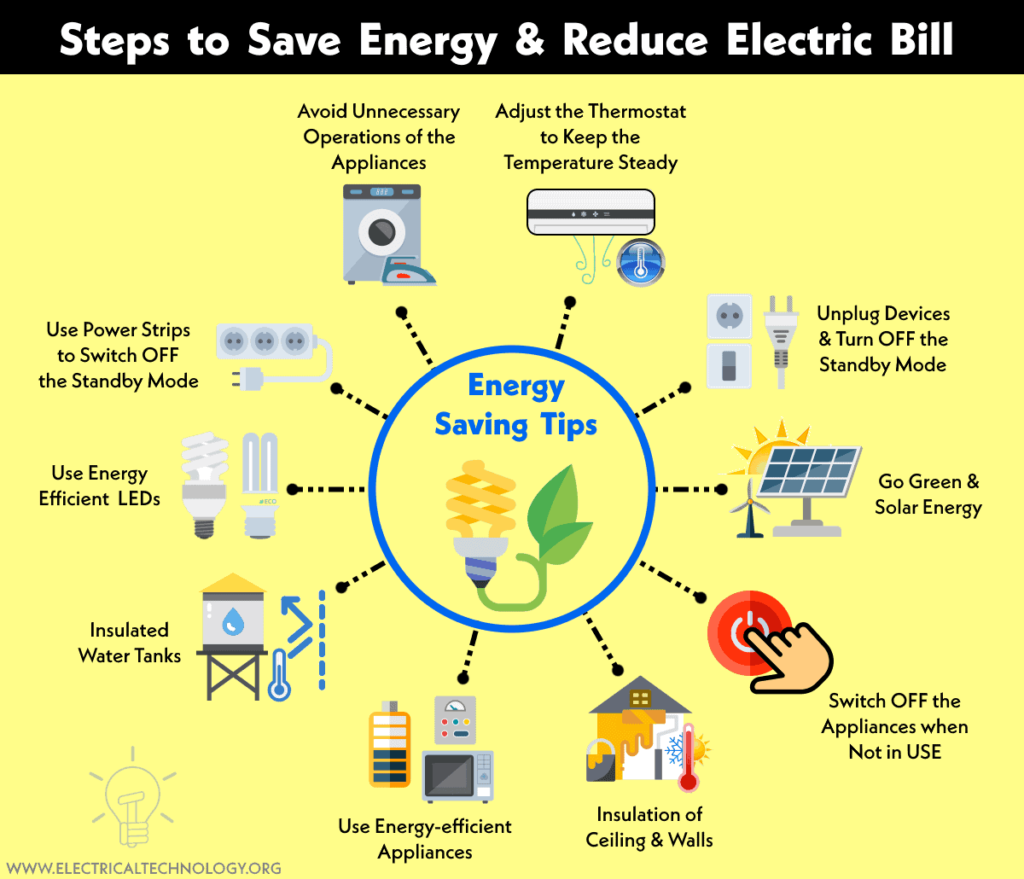
Are you looking for ways to save energy and reduce your electricity bill without making drastic changes to your lifestyle? You’re in luck because we’ve got some simple yet effective tips to help you achieve this goal.
In addition to adopting good energy-saving habits, having a tailored electricity plan that suits your needs can also make a significant difference. Our tariff comparison tool allows you to choose the most suitable plan and operator for your requirements.
Energy-Saving Tips: A Step-by-Step Guide
STAND-BY
Don’t leave your TV, videorecorder, HI-FI, decoder, or other devices in standby mode for extended periods. Not only do they consume a significant amount of electricity, but they are also a major cause of household fires. Similarly, avoid plugging batteries into electrical outlets.
In addition to turning off your computer entirely, ensure that the screen is also turned off, as it consumes more energy than the rest of the device. When it comes to home electronics, remember that even small amounts of standby power consumption can add up over time.
To give you a better idea, here are some approximate standby power consumption values for common household appliances:
- TV: 10-20 watts
- Computer monitor: 15-30 watts
- HI-FI player: 5-10 watts
- Video recorder: 2-5 watts
By turning off these devices in standby mode, you can save up to $100 per year on your electricity bill.
WASHING MACHINES
Avoid washing clothes at temperatures above 60°C. A good rule of thumb is to program your washing machine or dryer between 40°C and 60°C. Consider only using these appliances during off-peak hours (usually late evening, weekends, and holidays) when energy consumption is lower.
When it comes to laundry drying, avoid the centrifugal option whenever possible, as it can damage clothes and fabric softener sheets. Instead, hang-dry your clothes or use a line dryer. If you must use a dryer, ensure that it’s full before turning it on.
Here are some approximate energy consumption values for different washing machine cycles:
- Cold wash cycle: 5-10 kilowatt-hours (kWh)
- Warm wash cycle: 15-20 kWh
- Hot wash cycle: 30-40 kWh
By choosing the correct temperature and using off-peak hours, you can save up to $50 per year on your electricity bill.
LIGHTING
Replace traditional incandescent bulbs with energy-efficient LED bulbs, which last up to ten times longer and consume 1/5 less energy. Consider installing timers and dimmers for your lighting systems to only illuminate when needed.
When it comes to decorating your home, opt for lighter-colored walls and use mirrors strategically to reflect natural light. This not only saves energy but also creates a more welcoming atmosphere.
Here are some approximate energy consumption values for different types of lighting:
- Incandescent bulb: 60 watts
- LED bulb: 9 watts
- Halogen bulb: 20-30 watts
By switching to LED bulbs, you can save up to $200 per year on your electricity bill.
HOME APPLIANCES
When buying new appliances, look for the Energy Star label, which indicates their energy efficiency. Choose products with an A, A+, or A++ rating, as they offer significant energy savings without increasing your upfront costs.
Place your refrigerator away from heat sources and ensure it’s at a safe distance from walls. Regularly defrost your fridge to prevent ice buildup, which can increase energy consumption.
Here are some approximate energy consumption values for different home appliances:
- Refrigerator: 200-400 kWh per year
- Freezer: 100-200 kWh per year
- Dishwasher: 150-300 kWh per year
By choosing energy-efficient appliances and maintaining them properly, you can save up to $300 per year on your electricity bill.
NATURAL LIGHT AND RENEWABLE ENERGY
Harness as much natural light as possible by opening curtains and blinds during daylight hours. If you have a sunny outdoor space, consider installing solar panels to generate renewable energy for your home.
If solar panels aren’t feasible, look into alternative solutions like heat pumps or biomass boilers that can provide both heating and cooling while reducing your reliance on traditional fossil fuels.
Here are some approximate energy consumption values for different natural light sources:
- Incandescent light bulb: 60 watts
- Halogen light bulb: 20-30 watts
- LED light bulb: 9 watts
By harnessing natural light, you can save up to $100 per year on your electricity bill.
AIR CONDITIONING
Adjust your thermostat settings to maintain a modest temperature difference between the inside and outside environments (less than 5-6 degrees Celsius). The ideal temperature range for optimal energy efficiency and human comfort is between 26-27°C.
Make sure to use the dehumidification feature on your air conditioning system to optimize its performance.
Here are some approximate energy consumption values for different air conditioning settings:
- High setting: 500-800 kWh per year
- Medium setting: 300-500 kWh per year
- Low setting: 150-300 kWh per year
By adjusting your thermostat settings, you can save up to $200 per year on your electricity bill.
FAQS
Q: What’s the most effective way to save energy and money?
A: By adopting simple habits like turning off appliances in standby mode, using natural light, and choosing energy-efficient lighting options. Additionally, choose energy-efficient appliances and consider installing solar panels or renewable energy systems.
Q: Can I really make a difference with small changes?
A: Absolutely! Small actions can add up over time, leading to significant energy savings and cost reductions.
Q: What’s the best way to choose an energy-efficient appliance?
A: Look for products with the Energy Star label or rating of A, A+, or A++. Consider factors like energy consumption, price, and durability when making your decision.
Q: How often should I defrost my fridge?
A: Regularly defrost your fridge to prevent ice buildup and maintain optimal performance. Aim to defrost your fridge every 3-6 months.
Q: Can I reduce my gas bill by changing appliances?
A: Not always. While new appliances can be more energy-efficient, the best approach is to assess your specific situation and consider professional advice from a qualified expert.
By following these simple yet effective tips, you’ll not only save money on your electricity bill but also contribute to a more sustainable future for our planet.
Conclusion
Reducing your electricity bill doesn’t have to be complicated or time-consuming. By adopting good energy-saving habits and making small changes to your daily routine, you can significantly reduce your energy consumption and lower your bills. Remember to choose energy-efficient appliances, harness natural light, and consider installing solar panels or renewable energy systems.
Start making a difference today by implementing these simple tips into your daily life. You’ll be amazed at the savings you can make without sacrificing comfort or convenience.


