
Relaxing Before Bedtime: Expert Tips and Exercises for a Good Night’s Sleep
As we wind down before bed, our minds and bodies need to relax in order to get a good night’s sleep. But how can we make that happen? In this article, we’ll explore the best tips and exercises to help you relax before bedtime and improve the quality of your sleep.
Understanding Sleep Needs
Before we dive into relaxation techniques, let’s talk about how much sleep our bodies need. The amount of sleep varies across age groups. For example:
- Neonates: 18-20 hours per day
- Infants: 15 hours per day
- Toddlers: 11 hours per day
- School-age children: 10-13 hours per day
- Adults: 7-9 hours per day
- Older adults: 7-8 hours per day
Research suggests that getting adequate sleep is essential for physical and mental health. During sleep, our bodies repair and regenerate tissues, build bone and muscle, and strengthen our immune systems. Additionally, sleep plays a critical role in cognitive function, including memory consolidation, learning, and problem-solving.
Diet and Lifestyle
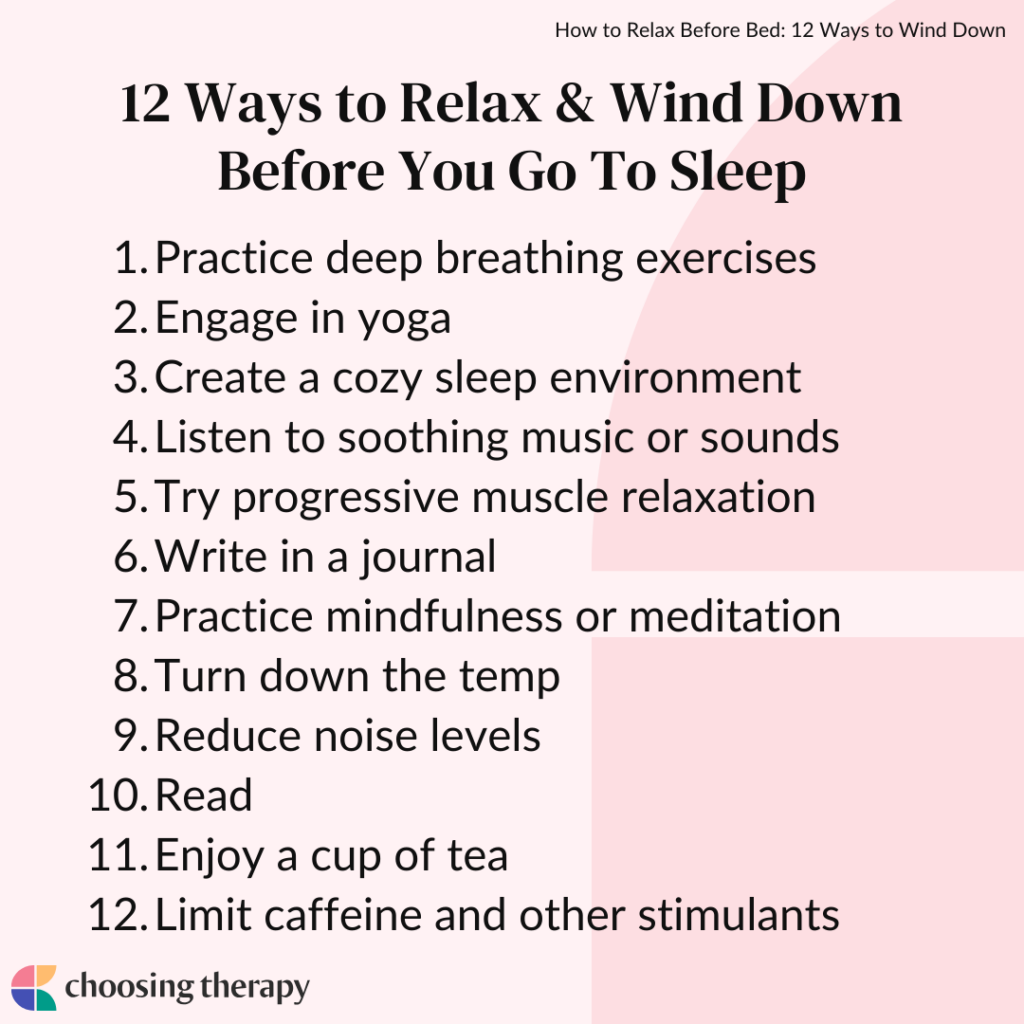
In addition to sleep needs, our diet and lifestyle can also impact our ability to relax before bed. Here are some tips:
- Avoid screens for at least 30 minutes before bedtime: The blue light emitted by smartphones, tablets, and computers can suppress melatonin production, making it harder to fall asleep.
- Drink a warm cup of herbal tea, such as chamomile or lavender, which can help calm the mind and body. Chamomile, in particular, has been shown to have a calming effect on the nervous system.
- Take a relaxing bath with calming essential oils like lavender or bergamot. This can help reduce stress and anxiety, promoting relaxation and sleepiness.
- Wear comfortable pajamas to signal to your brain that it’s time for sleep. Choose soft, breathable fabrics that won’t irritate your skin or distract you from falling asleep.
- Keep the bedroom cool, dark, and quiet: A cooler room temperature (around 60-67°F) can help regulate body temperature, which is essential for sleep. Use blackout curtains, earplugs, or a white noise machine to create an ideal sleep environment.
Relaxation Exercises
In addition to these tips, there are many relaxation exercises you can try before bed:
- Progressive muscle relaxation: Tense and then relax different muscle groups in your body, starting with your toes and moving up to your head. This technique can help reduce physical tension and promote relaxation.
- Deep breathing exercises: Focus on slow, deep breaths to calm the mind and body. Try inhaling for a count of four, holding your breath for a count of seven, and exhaling for a count of eight. Repeat this cycle several times.
- Visualization techniques: Imagine yourself in a peaceful, relaxing environment, such as a beach or a forest. Use all of your senses to create a vivid mental picture, including sights, sounds, smells, tastes, and textures.
- Yoga and meditation: Practice gentle stretches and breathing exercises to relax your mind and body. You can find yoga and meditation classes online or in-person, or download an app like Headspace or Calm.
Mindfulness Techniques
Mindfulness practices can also help you relax before bed:
- Body scan meditation: Lie down or sit comfortably, and bring your attention to different parts of your body, starting at your toes and moving up to the top of your head. Notice any areas of tension or discomfort, and try to release them.
- Loving-kindness meditation: Focus on sending kindness and compassion to yourself and others. Repeat phrases like “May I be happy, may I be healthy, may I be at peace” and extend them to friends, family members, and even those you may have difficulty with.
Q&A
Here are some frequently asked questions about relaxing before bed:
- Q: What’s the best way to relax before bed?
A: The best way to relax before bed is to create a calming pre-sleep routine that works for you, such as reading a book or taking a warm bath. Experiment with different activities until you find what helps you feel most relaxed and sleepy. - Q: Can I use melatonin to help me fall asleep faster?
A: Yes, melatonin can be a helpful supplement in conjunction with relaxation exercises and good sleep hygiene practices. However, it’s always best to consult with a healthcare professional before starting any new supplements. Additionally, establish a consistent sleep schedule and create a relaxing bedtime routine to improve the quality of your sleep. - Q: How long does it take for my body to adjust to a new sleep schedule?
A: It can take anywhere from a few days to several weeks for your body to fully adjust to a new sleep schedule. Be patient and consistent, and you’ll start to see improvements in the quality of your sleep.
Conclusion
Relaxing before bed is an essential part of achieving good sleep hygiene practices. By following these tips and exercises, you can improve the quality of your sleep and wake up feeling refreshed and rejuvenated. Remember to be patient and consistent, as it may take some time for your body to adjust to a new sleep schedule.
Incorporating relaxation techniques into your daily routine can have numerous benefits, including:
- Improved sleep quality
- Reduced stress and anxiety
- Increased productivity and focus
- Enhanced overall well-being
By making relaxation a priority before bed, you can take the first step towards achieving better sleep, improved mental clarity, and a healthier lifestyle.


