
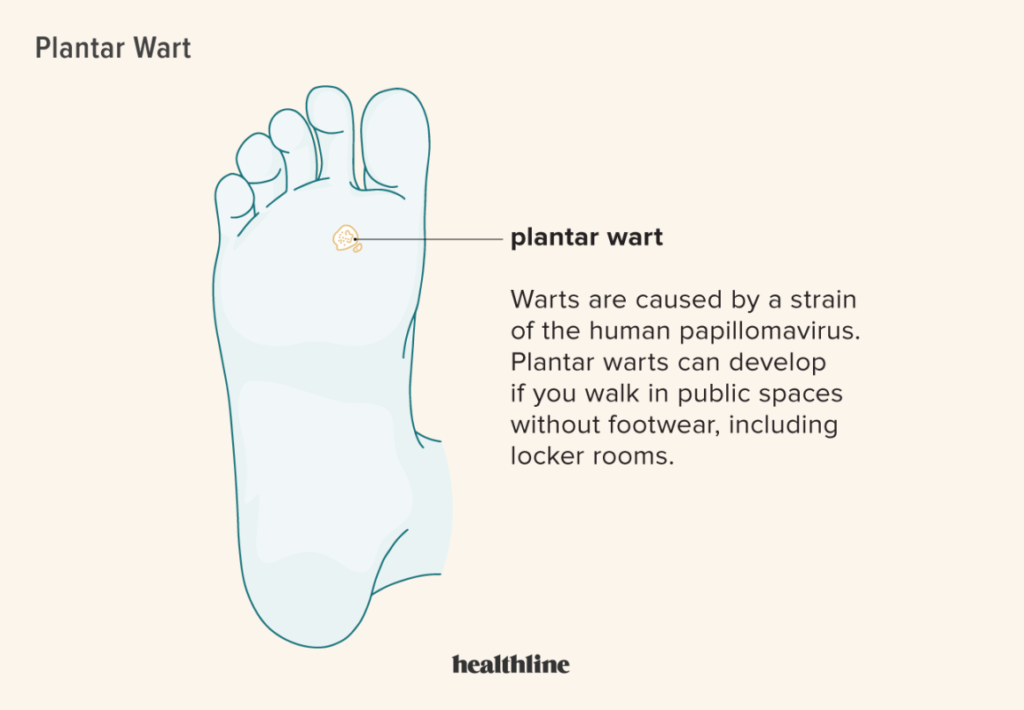
Warts on the foot can appear as small, flat growths of skin. They can be hard or just slightly rigid, depending on their size and level of keratinization. They are caused by an infection from the Human Papilloma Virus (HPV) and it’s not always easy to eliminate them completely, as they may reform in the same area or nearby areas.
The opening photo of this article shows what a wart looks like.
In most cases, warts are harmless but can cause discomfort over time and even painful enough to prevent wearing certain shoes and limiting one’s choices to unsightly footwear that is not always suitable for work contexts.
Causes of Warts
Warts are benign growths consisting of a central core of tissue, covered with blood vessels and epithelial cells. As mentioned earlier, warts are caused by a virus that infects the skin’s epidermis, the Papilloma Virus (HPV). The virus causes excessive cell replication, leading to the formation of a wart.
The risk of infection can occur due to contact with an infected surface. Locations at high risk include gyms, pools, showers, public saunas, Turkish baths, and spas where warm and humid conditions favor the survival of the active virus in cutaneous layers. The presence of small cuts or abrasions on the foot increases the likelihood of contracting the virus through contact with the contaminated surface.
Identifying Warts on the Foot
There are several types of warts that can appear on the foot, and it’s not always easy to identify them immediately. Let’s look at some common types:
- Common Warts
- Plantar Warts
Common Warts
These are the most common type of wart that humans experience, and they can occur on various parts of the body, including hands and other areas of the body.
They appear as small, flat growths with a diameter usually less than one centimeter. They may be red or brownish in color with black dots visible above or beneath their surface. They are painless unless they become infected, which can cause discomfort, especially if they occur on sensitive areas such as toes. Despite being small and not causing pain, these warts have the potential to multiply.
Plantar Warts
Similar to common warts but darker in color, these plantar warts appear flat, rough, and sometimes squamose. They usually occur on the ball of the foot or heel and can be painful.
The American Academy of Dermatology recommends treating warts by removing them with a cryotherapy device that freezes the wart, thereby killing the virus inside it.
Are Warts Contagious?
Warts are highly contagious and can spread quickly through contact with an infected surface. They thrive in warm and humid environments, making public places like gyms, pools, showers, and saunas high-risk zones for contracting warts. The presence of small cuts or abrasions on the foot increases the likelihood of contracting the virus through contact with the contaminated surface.
However, it’s worth noting that not everyone who contracts a wart will develop one. Some people may be more resistant to infection than others due to various factors such as a healthy immune system or good hygiene practices.
Removing Warts
The best way to remove warts is by using a combination of treatments and lifestyle changes. Here are some common methods:
- Cryotherapy: This involves freezing the wart with liquid nitrogen, which kills the virus inside it.
- Salicylic Acid: A chemical peel that can be applied to the wart to dissolve the keratin protein that makes up the wart tissue.
- Cantharidin: A blistering agent that can be applied to the wart to cause a blister that eventually falls off, taking the wart with it.
Natural Remedies for Warts
While these remedies may not work as well as medical treatments, they are non-invasive and can provide relief from symptoms. Here are some common natural remedies:
- Tea Tree Oil: A topical application of tea tree oil has been shown to reduce the size of warts.
- Castor Oil: Applying castor oil directly to the wart can help stimulate healing and promote growth.
- Duct Tape: The “duct tape method” involves covering the wart with duct tape for an extended period, which can help remove it.
Chemical Peeling for Wart Removal
Chemical peels are a common treatment for warts, especially for large or stubborn ones. A solution is applied to the skin to remove the top layers and allow new skin to grow underneath. The process usually takes several weeks to complete, during which time the wart will be covered with a protective bandage.
The American Academy of Dermatology recommends chemical peels as a first-line treatment for warts because they are effective in removing most warts without scarring or leaving any open sores behind.


