
Strawberries are an essential part of any garden, requiring minimal care, space, and yet providing a bountiful harvest. In the kitchen, they’re a versatile ingredient that can be used to make delicious salads, smoothies, and even homemade jam. But did you know that strawberries are also one of the most nutritious fruits, packed with antioxidants that can provide numerous health benefits? To help you grow these delicious treats, we’ll explore the best time to plant strawberries, how to prepare your soil, and a step-by-step guide on how to plant and care for them.
The Best Time to Plant Strawberries
When it comes to planting strawberries, spring is the ideal season. The warmer weather and longer days provide the perfect conditions for strawberry plants to thrive. Before we dive into the nitty-gritty of planting, let’s talk about acquiring healthy strawberry plants. For optimal growth, look for young plants grown using organic farming methods.
Preparing Your Soil
Strawberries love full sun and well-draining soil that’s rich in organic matter. To create an ideal growing environment, follow these steps:
- Choose a sunny spot: Strawberries need direct sunlight to produce delicious fruit, so choose a location that receives at least 6 hours of direct sunlight per day.
- Soil pH: Strawberries prefer a slightly acidic to neutral soil pH (5.5-6.5). If your soil is too alkaline or acidic, consider amending it with organic matter or lime.
- Remove debris: Before planting, clear the area of any debris, weeds, and rocks that could compete with your strawberry plants for water and nutrients.
Planting Your Strawberries
Now that you have a suitable location and soil prepared, it’s time to plant your strawberries. Follow these steps:
- Acquire healthy plants: Buy young strawberry plants from an organic farm or nursery.
- Remove the plants from containers: Gently take the plants out of their pots and inspect the roots for any damage.
- Soak the roots: Place the plant’s roots in a sink or container filled with water for about an hour to help them adjust to their new environment.
- Create holes for planting: Use a small shovel or trowel to create holes for each plant, spacing them about 35-40 cm apart and 90 cm between rows.
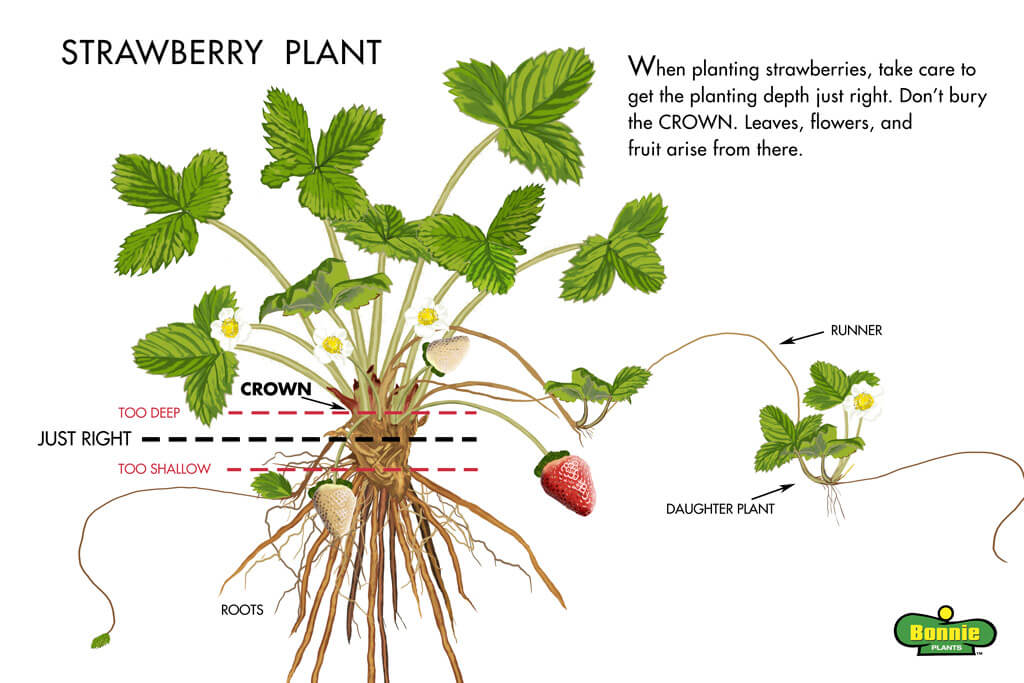
- Plant the strawberries: Place the strawberry plants in the holes, leaving the crown (where the leaves meet the roots) above the soil surface.
- Fill the holes with soil: Fill the holes with a mixture of soil and organic matter, making sure to cover the roots completely.
Watering and Caring for Your Strawberries
To keep your strawberries happy and healthy, follow these watering tips:
- Regular watering: Water your strawberries regularly, especially during hot and dry weather.
- Avoid overhead watering: Water at the base of the plants to prevent fungal diseases that thrive in moist environments.
- Mulch around the plants: Mulching helps retain moisture, suppress weeds, and regulate soil temperature.
Tips for a Successful Strawberry Harvest
Now that you’ve planted your strawberries, it’s time to enjoy their delicious fruit. Here are some tips for harvesting your berries at their peak ripeness:
- Check regularly: Keep an eye on your strawberry plants as they ripen.
- Harvest in the morning: Pick your strawberries when they’re still dewy and bright red for optimal flavor and texture.
Common Strawberry Diseases
While growing strawberries, it’s essential to be aware of common diseases that can affect your plants. Some of these include:
- Powdery mildew: A fungal disease that causes white, powdery patches on leaves and stems.
- Leaf spot: A fungal infection that results in small, circular spots on the leaves.
Pest Control
Strawberries can be susceptible to pests like aphids, slugs, and snails. To protect your plants from these pests:
- Use natural pest control methods: Spray your strawberry plants with a mixture of water and soap to repel pests.
- Install physical barriers: Use fine mesh or copper tape around the plants to deter slugs and snails.
Strawberry Varieties
There are many different varieties of strawberries, each with its unique characteristics and growing requirements. Some popular types include:
- Albion: A sweet and flavorful variety that produces large fruits.
- Camarosa: A hybrid strawberry that combines high yields with excellent disease resistance.
Conclusion
Growing strawberries is a rewarding experience that requires minimal care but provides a bountiful harvest. By following these steps, you’ll be on your way to enjoying delicious homegrown strawberries all season long. Happy gardening!
Frequently Asked Questions (FAQs)
Q: What’s the best soil pH for strawberry plants?
A: Strawberries prefer a slightly acidic to neutral soil pH (5.5-6.5).
Q: Can I plant strawberries in partial shade?
A: While strawberries love full sun, they can tolerate some shade. However, the yield will be lower.
Q: How often should I water my strawberry plants?
A: Water your strawberries regularly, especially during hot and dry weather.
Q: Can I use chemical fertilizers on my strawberry plants?
A: It’s best to avoid using chemical fertilizers, as they can harm the environment and contaminate soil and water.
Q: How do I protect my strawberry plants from pests and diseases?
A: Regularly inspect your plants for signs of pests or diseases, and take action promptly if you notice any issues.
Q: Can I grow strawberries in containers?
A: Yes, you can grow strawberries in containers using a well-draining potting mix and regular watering.
Q: How long does it take for strawberry plants to produce fruit?
A: Strawberry plants typically take 60-90 days to produce their first crop after planting.


