
Are you ready to discover the secret to making delicious tortellini at home? Look no further! With a little patience and some basic cooking skills, you can create these iconic Italian pasta rings filled with your favorite ingredients. In this article, we’ll take you through a traditional recipe and share some creative variations to inspire your culinary journey.
The Joy of Homemade Pasta
Making tortellini at home is easier than you think, and it’s a great way to enjoy fresh, high-quality ingredients in every bite. Unlike store-bought tortellini, which can be dry and lacking in flavor, homemade pasta is made with love and care, ensuring that every spoonful is packed with flavor.
One of the main reasons why making tortellini at home is so rewarding is the sense of tradition and connection to Italian cuisine. Tortellini have been a staple in Italian cooking for centuries, and each region has its own unique variations and secrets. By making your own tortellini, you’ll be able to experience this rich culinary heritage firsthand.
The Perfect Dough
To start, we’ll need to create the perfect dough for our tortellini. The traditional recipe calls for 400 grams of all-purpose flour, 2 large eggs, a pinch of salt, and 1 tablespoon of olive oil. You can also experiment with different types of flour or add extra flavorings to your dough.
When choosing the right flour for your tortellino dough, keep in mind that the type of flour you use will affect the texture and flavor of your pasta. All-purpose flour is a good all-around choice, but you may want to consider using “00” flour (caputo or semolina) for a more traditional Italian taste.
Kneading and Resting the Dough
Once we’ve combined our ingredients, it’s time to knead the dough until it becomes smooth and elastic. This is where patience comes in – take your time and work that dough! After about 10 minutes of kneading, we’ll let the dough rest for at least 30 minutes to allow the gluten to relax.
The resting period is crucial because it allows the gluten in the flour to relax, making the dough easier to roll out. If you don’t give your dough enough time to rest, it may become too sticky or even develop a slightly tough texture.
Rolling Out the Dough
Now it’s time to roll out our rested dough into thin sheets, perfect for cutting out our tortellini shapes. Use a pasta machine or a rolling pin to achieve the right consistency, and then cut your tortellino into small squares.
When rolling out your dough, be sure to keep it at room temperature and use a light touch to avoid developing too much tension in the gluten. You want your dough to remain smooth and pliable, not stiff and firm.
Filling and Folding the Tortellini
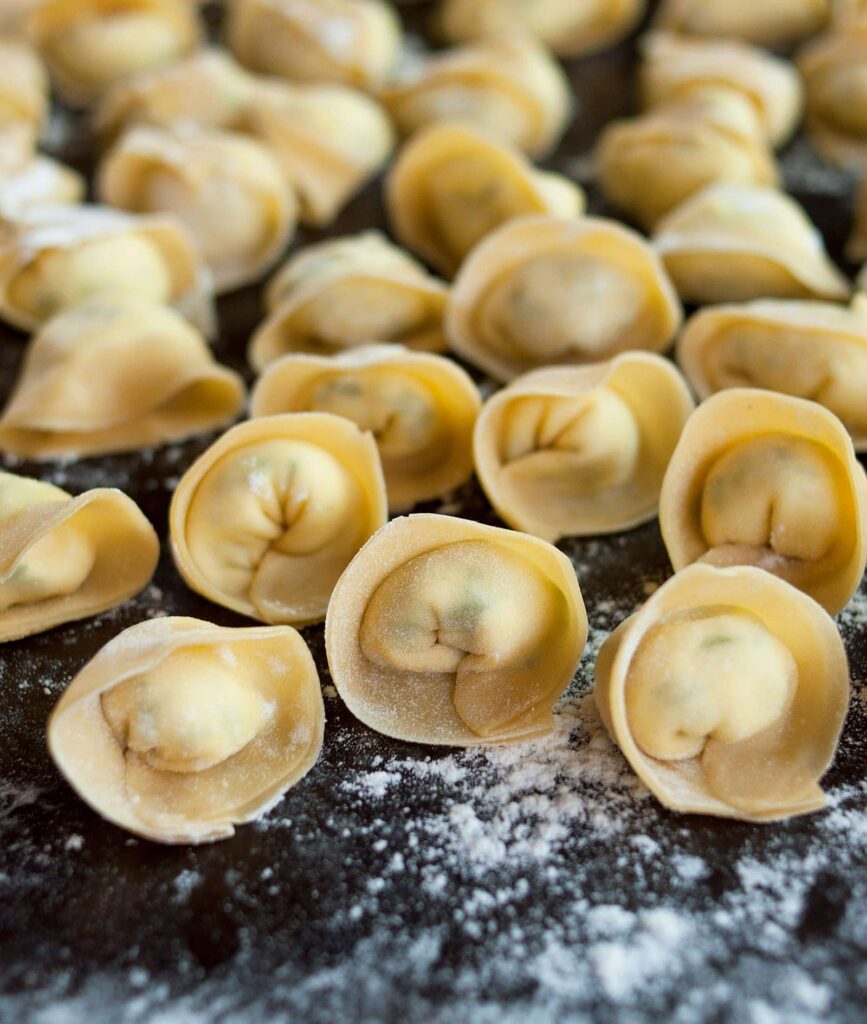
The fun part! Choose your favorite filling ingredients – meat, cheese, vegetables, or a combination of all three. Then, place a spoonful of filling in the center of each square and fold the dough over to create your tortellino shape. Press the edges together to seal the filling inside.
When it comes to filling your tortellini, the possibilities are endless! Traditional fillings like prosciutto and Parmesan cheese or beef and mushroom duxelles are always popular choices, but you can also experiment with more unique ingredients like sweet potatoes, spinach, or even fruit (yes, fruit!).
Variations and Traditions
Tortellini can be filled with an incredible range of ingredients, from traditional pork and beef mixtures to vegetarian delights like spinach, ricotta, and Parmesan cheese. Feel free to experiment with different combinations to create your own unique flavors!
For a classic Bolognese-style tortellino, use a combination of ground meat, Parmesan cheese, and spices. Alternatively, try making tortellini filled with mushroom duxelles, asparagus, or sweet potatoes for a delicious vegetarian option.
Regional Italian Variations
Tortellini have their own unique regional variations across Italy, each with its own special ingredients and traditions. Here are a few examples:
- Emilia-Romagna-style Tortellini: These tortellini are typically filled with meat and served in a rich broth made with pork bones, vegetables, and herbs.
- Tuscany-style Tortellini: Tuscany’s tortellini are often filled with cheese and herbs like thyme and rosemary. They’re also typically served in a light, creamy sauce made with Parmesan cheese and olive oil.
- Liguria-style Tortellini: Ligurian tortellini are known for their delicate flavors and intricate shapes. They’re often filled with ingredients like anchovies and cherry tomatoes.
Cooking the Tortellini
Finally, it’s time to cook our homemade tortellini! Gently place them in boiling salted water or broth, making sure not to overcrowd the pot. Cook for 10-15 minutes, or until the pasta is al dente and slightly firm to the bite.
When cooking your tortellini, be sure to check on them frequently to avoid overcooking. You want your pasta to retain its texture and flavor, not become mushy or soggy.
Tips and Tricks
To achieve perfect tortellini every time:
- Use a variety of flour types to create different textures and flavors.
- Experiment with herbs, spices, and other seasonings to add depth to your filling.
- Don’t overfill your tortellini – you want room for the sauce to cling!
- Practice makes perfect! Don’t be discouraged if your first batch doesn’t turn out exactly as expected.
Common Mistakes
When making tortellini at home, it’s easy to encounter a few common mistakes that can affect the final result. Here are some of the most common errors and how to avoid them:
- Overworking the dough: This can lead to a tough or chewy texture in your pasta.
- Not resting the dough long enough: Insufficient resting time can cause the gluten to remain tense, making the dough difficult to roll out.
- Filling too much tortellini: Overfilling can result in a messy or broken tortellino.
Conclusion
Making tortellini at home is a fun and rewarding experience that can elevate your pasta game. With this traditional recipe and some creative variations, you’ll be well on your way to creating delicious homemade pasta rings that will impress family and friends alike. So why not give it a try? Your taste buds (and your kitchen) will thank you!
Frequently Asked Questions
- What is the best flour for making tortellini dough?
Answer: All-purpose flour or “00” flour works well for traditional tortellino dough. - Can I use store-bought pasta instead of making my own?
Answer: While you can, homemade pasta will always be more flavorful and enjoyable than store-bought versions. - How do I store leftover tortellini?
Answer: Store them in airtight containers or ziplock bags to keep fresh for up to 2 days. You can also freeze them for longer storage. - Can I use other types of filling besides meat and cheese?
Answer: Absolutely! Try using vegetables, herbs, spices, or even sweet potatoes as creative fillings. - What is the best way to cook tortellini?
Answer: Boil in salted water or broth for 10-15 minutes, then top with your favorite sauce and enjoy! - Can I make tortellini ahead of time?
Answer: Yes! Prepare the dough and filling up to a day in advance. Assemble and cook just before serving. - How do I prevent my tortellino shapes from becoming misshapen?
Answer: Use a gentle touch when shaping, and ensure your pasta machine or rolling pin is at the right temperature. - Can I make gluten-free tortellini?
Answer: Yes! Use a combination of gluten-free flours and adjust the ratio to achieve the perfect consistency.
Happy cooking!


