
Are you looking for a natural remedy to soothe your skin issues? Look no further than calendula oil, a potent and gentle oil extracted from the flowers of the calendula plant. With its anti-inflammatory and antimicrobial properties, calendula oil is an excellent choice for treating various skin problems, including acne, eczema, and psoriasis.
In this article, we’ll explore the benefits of calendula oil, its uses, and how to make it at home using two simple methods: cold pressing and hot infusion. We’ll also cover the importance of storing and conserving your homemade calendula oil to ensure its effectiveness.
What is Calendula Oil?
Calendula oil is a type of oleolitic extract, which means it’s extracted from the plant material (in this case, calendula flowers) using a solvent, such as carrier oils like olive or coconut oil. The resulting oil contains a concentration of bioactive compounds, including triterpenoids and flavonoids, that provide its therapeutic benefits.
Benefits of Calendula Oil
Calendula oil has several benefits for the skin, including:
- Anti-inflammatory properties to soothe redness and irritation
- Antimicrobial properties to prevent infections and promote healing
- High emollient properties to moisturize and soften the skin
- Ability to reduce inflammation and alleviate pain in articular and muscular areas
Making Calendula Oil at Home
To make calendula oil at home, you’ll need two ingredients: dried calendula flowers and a carrier oil. You can use either cold pressing or hot infusion methods.
Cold Pressing Method
This method is gentler on the plant material and results in a higher-quality oil.
- Ingredients:
- 500 ml of carrier oil (olive, coconut, or jojoba)
- 80 grams of dried calendula flowers
- Instructions:
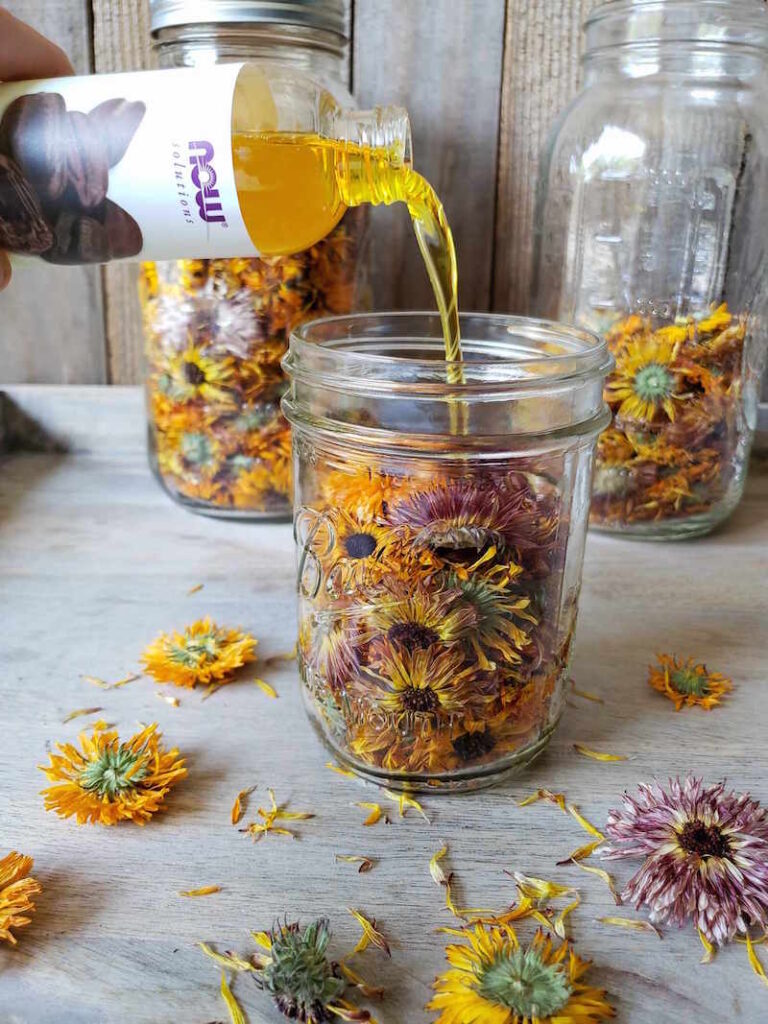
- Place the dried calendula flowers in a clean glass jar.
- Pour the carrier oil over the flowers, making sure they’re completely submerged.
- Seal the jar and store it in a cool, dark place for 4 weeks.
- Shake the jar daily to help the infusion process.
Hot Infusion Method
This method is faster than cold pressing but may result in a lower-quality oil.
- Ingredients:
- 500 ml of carrier oil (olive, coconut, or jojoba)
- 80 grams of dried calendula flowers
- Instructions:
- Place the dried calendula flowers in a clean glass jar.
- Pour the carrier oil over the flowers, making sure they’re completely submerged.
- Heat the mixture over low heat for 4-6 hours or until the oil has absorbed most of the flower material.
- Strain the oil through a cheesecloth or coffee filter and discard the solids.
Conserving and Storing Calendula Oil
To ensure your homemade calendula oil remains effective, follow these storage tips:
- Store it in a clean glass bottle with a tight-fitting lid.
- Keep it away from direct sunlight, heat sources, and moisture.
- Use a dark glass bottle to protect the oil from light degradation.
- Label the bottle with the date of production and any relevant instructions.
Using Calendula Oil
Calendula oil is versatile and can be used for various skin issues. Here are some common uses:
- Skincare: Apply a few drops to soothe redness, irritation, or dryness on your face or body.
- Massage oil: Use calendula oil as a massage oil to alleviate muscle tension and pain.
- First aid: Apply calendula oil to minor cuts, scrapes, or burns to promote healing.
Combining Calendula Oil with Other Skincare Products
Calendula oil can be mixed with other natural oils or lotions to create a customized skincare blend. Some popular combinations include:
- Mix 10% calendula oil with 90% coconut oil for a soothing and moisturizing face mask.
- Blend 5% calendula oil with 95% olive oil for a nourishing skin serum.
- Combine 20% calendura oil with 80% jojoba oil for a lightweight and non-greasy moisturizer.
How to Make Calendula Oil from Fresh Flowers
If you have access to fresh calendula flowers, you can make calendula oil using the same method as before. However, keep in mind that fresh flowers may not be as potent as dried ones due to their water content.
- Ingredients:
- 500 ml of carrier oil (olive, coconut, or jojoba)
- 1 cup of fresh calendula flowers
- Instructions:
- Rinse the fresh calendula flowers with cold water and pat them dry with a paper towel.
- Place the fresh flowers in a clean glass jar.
- Pour the carrier oil over the flowers, making sure they’re completely submerged.
- Seal the jar and store it in a cool, dark place for 1-2 weeks.
- Strain the oil through a cheesecloth or coffee filter and discard the solids.
Precautions When Using Calendula Oil
While calendula oil is generally safe to use, there are some precautions to be aware of:
- Allergic reactions: Some people may be allergic to calendula flowers or carrier oils. Perform a patch test before using calendula oil extensively.
- Skin conditions: If you have sensitive skin or allergies, consult with a healthcare professional before using calendula oil.
- Pregnancy and breastfeeding: Calendula oil is generally considered safe during pregnancy and breastfeeding, but it’s always best to consult with a healthcare professional.
Where to Buy Calendula Oil
If you’re not comfortable making your own calendula oil, you can purchase it from online retailers like Amazon. Look for high-quality products with a concentration of 100% calendula flowers and minimal additives.
FAQs
- What are the benefits of using calendula oil?
Calendula oil has anti-inflammatory, antimicrobial, and emollient properties that make it an excellent natural remedy for various skin issues. - How do I store calendula oil to keep it fresh?
Store your homemade calendula oil in a clean glass bottle with a tight-fitting lid, away from direct sunlight, heat sources, and moisture. - Can I use calendula oil on children?
While calendula oil is generally safe for adults, consult with a healthcare professional before using it on children under 12 years old. - How do I make sure my calendula oil is effective?
Use high-quality ingredients, follow proper storage and conservation techniques, and ensure your homemade oil has not been contaminated or degraded over time.
In conclusion, calendula oil is a natural and effective remedy for various skin issues. By making it at home using two simple methods, you can enjoy the benefits of this potent oil while saving money and ensuring its quality.


