
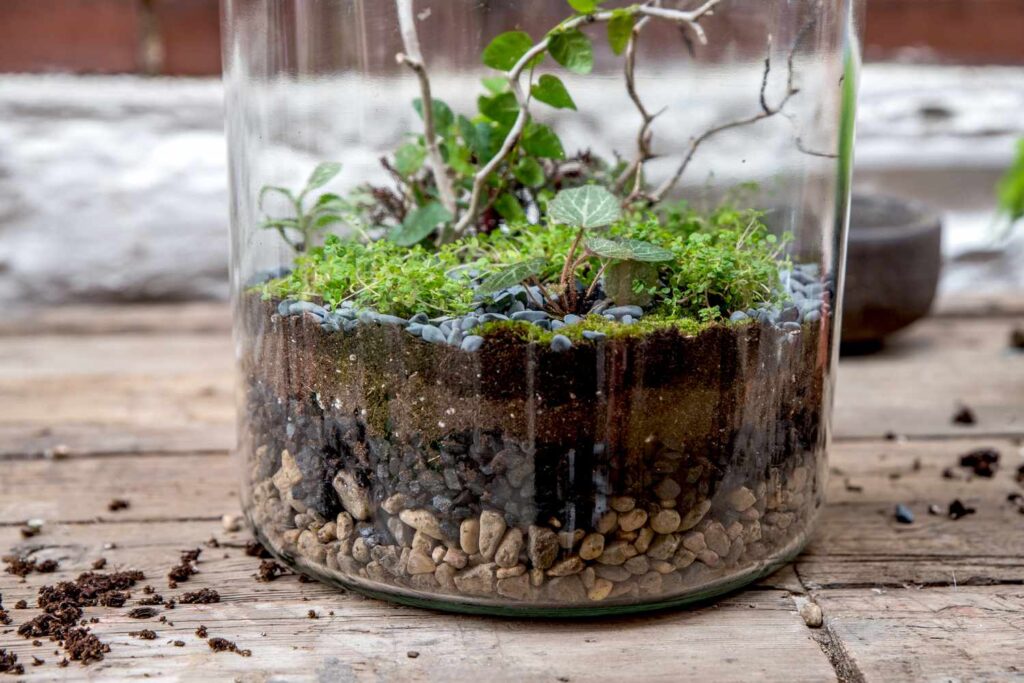
Creating a Terrarium: A Step-by-Step Guide
Many people believe that creating a terrarium is a complicated process reserved for experts. However, in reality, it’s surprisingly easy and fun! With the right materials and a little creativity, you can create your own unique and thriving mini-garden.
Getting Started: What You Need to Know
Before diving into the world of terrariums, there are a few things to keep in mind. First, make sure you understand that all plants inside your terrarium should have similar environmental needs. If you’re planning to create an open terrarium, choose plants that love sunlight. For those that thrive in high humidity, a closed container is the way to go.
It’s also essential to select the right soil and plants for your terrarium. Consider slow-growing plants to prevent overcrowding and read up on how to protect your plants during autumn and winter.
What You’ll Need
To create your very own terrarium, you’ll need the following ingredients:
- A clean glass container with adequate drainage holes
- Small rocks, pebbles, sand, or other decorative materials
- Soil for planting
- Plants of your choice
- Gardening accessories (optional)
- An optional water reservoir or spray bottle
Step-by-Step Guide to Creating a Terrarium
Now that you have all the necessary materials, it’s time to start creating!
Step 1: Prepare the Container
Start by cleaning the container thoroughly and removing any labels or residue. Use a soft brush to remove any dust or debris from the container.
Use a mixture of water and white vinegar to clean the container. Dip a cloth into the solution, wring it out thoroughly, and wipe down the container. Rinse the container with warm water and let it air dry completely before proceeding.
Step 2: Add Drainage Material
If your terrarium will be closed with a lid, add a thin layer of activated carbon to help maintain moisture levels. This is especially important for plants that are prone to root rot.
Next, sprinkle some small rocks or pebbles at the bottom of the container to improve drainage. These rocks or pebbles can also provide additional insulation and prevent soil from becoming waterlogged.
Step 3: Add Soil and Plants
Create layers of soil and plants in the following order:
- A layer of small rocks or pebbles (about 1-2 cm deep)
- A thin layer of moistened soil (about 2-3 cm deep)
- Plant your selected plants, starting with the largest ones and working your way down to the smallest
Use a well-draining potting mix specifically designed for terrariums. Avoid using regular garden soil as it can retain too much water and cause root rot.
Plant the tallest plant first, followed by smaller plants that prefer lower light conditions. Keep in mind that some plants may require more or less light depending on their specific needs.
Step 4: Add Decorative Materials (Optional)
If desired, add decorative materials such as small rocks, pebbles, or sand around the plants. These can help with drainage and provide a visually appealing touch.
Avoid using too much decorative material, as this can create a mess and prevent air circulation within the terrarium.
Step 5: Water and Maintain Your Terrarium**
Congratulations! You’ve created your very own terrarium!
To keep your mini-garden thriving:
- Water your terrarium once a week to maintain humidity levels. Use distilled or rainwater, as tap water may contain too many minerals that can harm plants.
- Avoid overwatering and ensure that the soil never becomes completely dry or waterlogged. This can lead to root rot and other problems for your plants.
- Keep your terrarium away from direct sunlight, as this can cause plants to overheat. If you live in a sunny area, consider placing your terrarium near an east- or west-facing window.
- Use a spray bottle to mist the terrarium every day, maintaining optimal humidity levels.
Tips and Tricks for Creating a Thriving Terrarium
Here are some additional tips to help you create a thriving terrarium:
- Avoid overcrowding the terrarium. This can lead to reduced air circulation and increased risk of disease.
- Keep an eye on temperature fluctuations within your terrarium. Some plants may prefer warmer or cooler temperatures, so ensure that your terrarium is not too hot or cold for its inhabitants.
- Be mindful of pests such as spider mites, mealybugs, and scale. Use organic pest control methods whenever possible to avoid harming beneficial insects.
Common Mistakes to Avoid When Creating a Terrarium
Here are some common mistakes to watch out for when creating your very own terrarium:
- Overwatering: This is one of the most common mistakes people make when creating a terrarium. Make sure to water sparingly and monitor soil moisture levels closely.
- Underwatering: On the other hand, underwatering can also cause problems. Be cautious not to allow the soil to become too dry for an extended period.
- Inadequate drainage: Failing to provide adequate drainage can lead to waterlogged soil and root rot.
Conclusion
With these simple steps, you can create your own unique and thriving terrarium. Don’t be afraid to experiment with different materials and designs – the possibilities are endless!
Feel free to share your creations on social media or send us pictures of your mini-gardens for a chance to feature them in our next post!
Frequently Asked Questions
Q: What type of plants should I choose for my terrarium?
A: Choose plants that thrive in similar environmental conditions and are suitable for low-light areas. Some popular options include ferns, mosses, succulents, and air plants.
Q: How often should I water my terrarium?
A: Water your terrarium once a week to maintain humidity levels, but avoid overwatering. Monitor soil moisture levels closely and adjust your watering schedule accordingly.
Q: Can I use artificial materials in my terrarium?
A: Yes, you can incorporate small decorative items such as rocks, shells, or miniature figurines to add visual interest. However, be cautious not to include any materials that may harm your plants or create a mess.
Q: How do I prevent pests from infesting my terrarium?
A: Avoid using pesticides and maintain good air circulation within the container to keep pests at bay. Regularly inspect your terrarium for signs of pests and take action promptly if necessary.
Q: Can I create a living roof for my home?
A: Yes, but you’ll need to use a specialized membrane and ensure proper drainage before creating your living roof. Consult with experts or research local building codes and regulations before embarking on this project.
Q: Are there any specific plants that are well-suited for terrariums?
A: Choose plants such as ferns, mosses, succulents, or air plants that thrive in low-light conditions and require minimal watering. These plants are perfect for creating a thriving mini-garden in your terrarium.


