
As an apiarist, I’ve spent years studying the fascinating world of bees. My father was also an apiarist, as were my grandfather and his father before him – it’s in my blood! I know how to treat bees, but I also understand their importance in maintaining ecological balance. That’s why I want to share with you tips on how to deter bees naturally.
The Important Difference Between Bees and Wasps
Before we dive into the world of natural repellents, let’s clarify the difference between bees and wasps. Honeybees (Apis mellifera) are not related to wasps. Bees are noble insects that play a vital role in maintaining ecological balance, while wasps are carnivorous and can be seen as simple predators.
In this article, we’ll explore how to deter bees naturally using smoke, citronella, essential oils, cucumber skins, and more. We’ll also cover the importance of remaining calm around bees.
Natural Predators of Bees
Before we dive into the tips and strategies for deterring bees, let’s take a look at their natural predators. Several bird species feed on bees, including owls, thrushes, and kingbirds (Tyrannus). Insects like wasps and certain types of flies also prey on bees.
While it’s essential to understand how bees are defended against by nature, we can’t rely solely on this method for deterring them in our own gardens or balconies.
How to Deter Bees Naturally
Smoke
Smoke is the natural repellent of choice for deterring bees. Beekeepers from old times used smoke devices to control swarms by producing smoke. By creating a smoke barrier, you can keep bees away without harming them.
To make it more effective, try sprinkling old burlap with ground coffee and rolling it up into a strip. Place the strip on a metal plate and insert a lit match inside to allow slow combustion.
Alternatively, you can use carbonized wood to create a repellent. This method is also eco-friendly and non-toxic.
Citronella
Candles made from citronella oil are widely available for repelling bees and other insects, including mosquitoes. You can find two sets of 25 candles on Amazon for just €10.50. While this product has received positive reviews, it’s essential to note that its effectiveness may vary depending on the individual.
Citronella candles l’one disponibile su Amazon
Essential Oils and Aromatic Herbs
Some people claim that lavender essential oil and aromatic herbs like basil or rosemary can repel bees and other insects. However, this is false: bees feed on the nectar of lavender flowers just like basil and rosemary, which could attract them rather than repel them!
Instead, try using cucumber skins as a natural repellent. Simply place them in containers and distribute them around your balcony or windows where you want to keep bees away.
Cucumber Skins
Cucumber skins are an effective way to deter bees naturally. Place them in containers and scatter them around the area you want to protect. This method is non-toxic and eco-friendly, making it perfect for those who want a natural solution.
The Importance of Remaining Calm Around Bees
If a bee approaches you while you’re sunbathing, remain calm and avoid any sudden reactions or attempts to swat it with your hand. I assure you that the bee will not sting and will leave after a few seconds to fly off to other areas.
By remaining calm and using natural repellents, you can peacefully coexist with bees in your garden or balcony.
Additional Tips for Determing Bees
- Use visual deterrents: Consider using balloons or reflective tape to scare away bees from your garden.
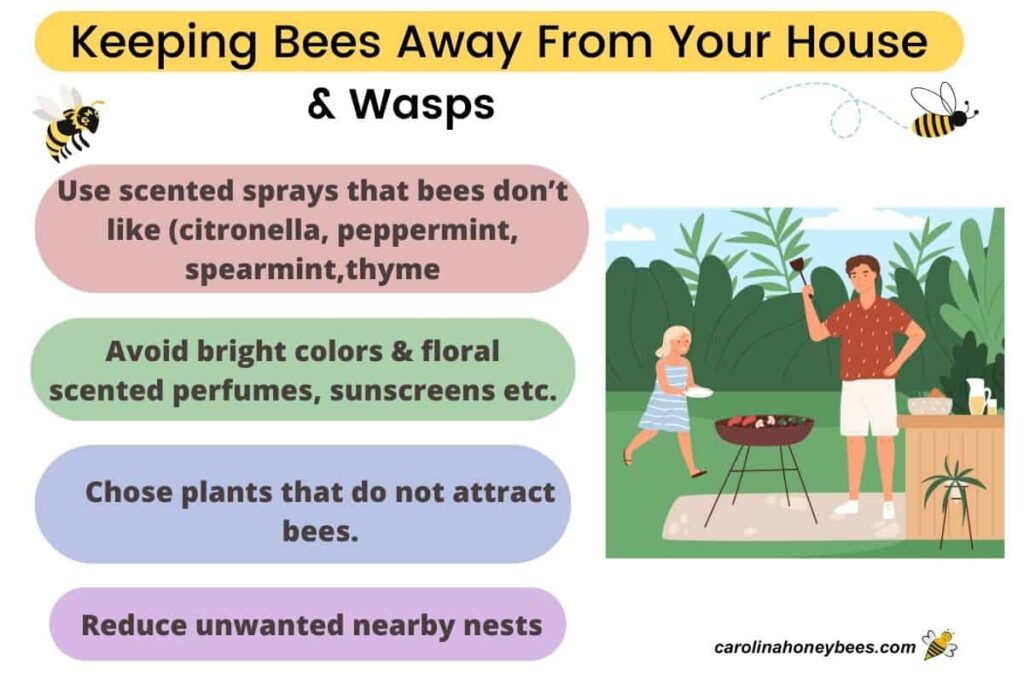
- Plant bee-repellent plants: Certain plants like mint, lemongrass, and citronella have natural properties that repel bees.
- Avoid sweet-smelling perfumes: Bees are attracted to strong scents, so avoid using perfume or cologne in your garden.
- Remove food sources: Keep your trash cans tightly sealed and remove any potential food sources for bees.
Common Mistakes When Deterring Bees
- Using too much citronella: While citronella is a natural repellent, using it excessively can attract more bees to the area.
- Ignoring the source of the problem: Don’t just place a citronella candle in your garden and expect the problem to disappear. Identify the source of the bee infestation and take steps to address it.
- Using ineffective repellents: Some natural repellents may not be effective against bees, so don’t rely solely on one method.
Conclusion
Bees are fascinating creatures that play a vital role in maintaining ecological balance. While they may not be our favorite insect visitors, we can learn to live with them by using natural repellents like smoke, citronella, essential oils, and cucumber skins.
Remember to remain calm around bees and respect their space. With these tips and strategies, you can enjoy your garden or balcony while keeping those pesky bees at bay.
Frequently Asked Questions
- Q: Are bees a threat to human health?
A: No, bees are not typically aggressive towards humans and will only sting in defense of themselves or their hives. - Q: Can I use citrus fruits to repel bees?
A: Yes, some people claim that lemons and oranges can repel bees, but there’s limited scientific evidence to support this claim. - Q: How do I get rid of a bee nest in my garden?
A: Contact a local beekeeper or pest control service to safely remove the nest and relocate the bees to a nearby apiary. - Q: Can I use honey to repel bees?
A: No, using honey as a repellent may not be effective, as bees are attracted to its sweet scent. - Q: Are there any other natural repellents for bees besides smoke and citronella?
A: Yes, other natural repellents include basil, lavender oil, and cucumber skins. - Q: Can I use essential oils to repel bees in my garden or balcony?
A: Some essential oils may attract bees rather than repel them; always test their effectiveness before using. - Q: How do I identify a bee nest in my garden?
A: Bee nests can be identified by their distinctive honeycomb structure and the presence of bees flying in and out. - Q: Can I use natural repellents to deter wasps as well?
A: While some natural repellents may work for both bees and wasps, others may not be effective against these insects; always test their effectiveness before using.
Final Thoughts
Remember that bees are an essential part of our ecosystem, and we should strive to coexist with them peacefully. By using natural repellents and remaining calm around bees, you can enjoy your garden or balcony while minimizing the risk of bee encounters.


