
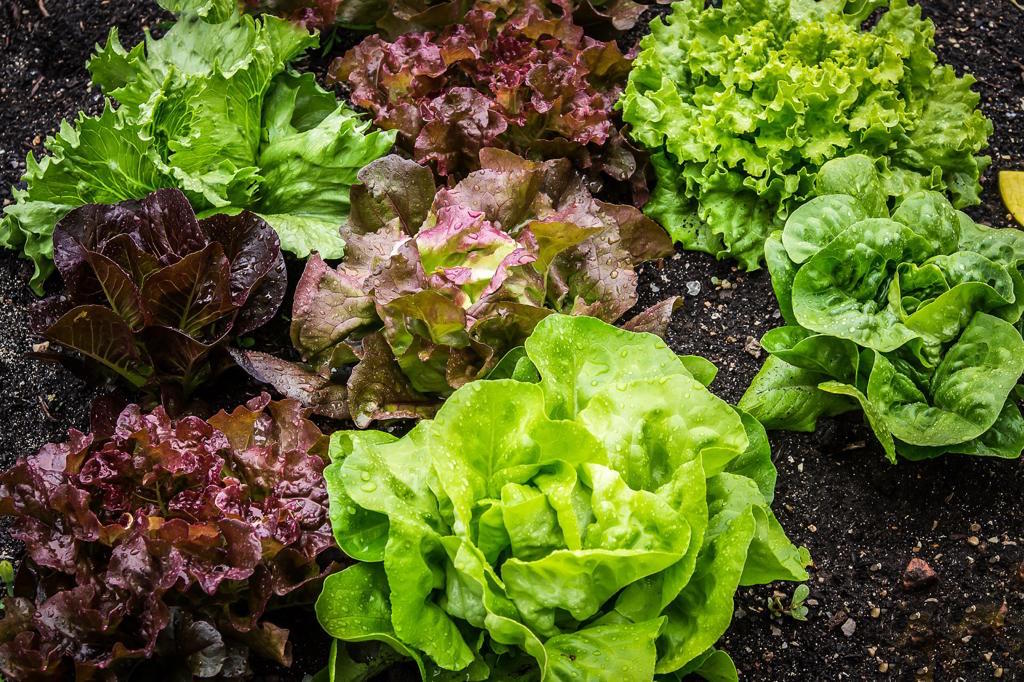
Growing lettuce is easy, almost as easy as eating it. However, it’s good to note some general tips and the peculiarities of the most popular and frequent varieties on our plates, so we can be sure to get a great result. And not just for this summer. Lettuce can be grown throughout the year with the right tools.
Content
- Growing Lettuce
- Growing Lettuce in the Garden
- When to Water Lettuce
- Growing Lettuce in Pots
- Growing Iceberg Lettuce
- Growing Escarole Lettuce
- Growing Wild Mustard Lettuce
- Where to Buy Lettuce Seeds
- How to Protect Lettuce from Pests
Growing Lettuce
Before learning how to grow lettuce, let’s get to know it as a herbaceous plant and not just a word on the menu. It belongs to the Asteraceae (or Composite) family and has a biennial life cycle even if we grow it annually.
It’s either cut or headed, but both are quite easy to cultivate without too much effort.
It’s more the taste that makes us choose one over the other. If we know how to grow lettuce, we can then focus on it, even in high temperatures, as it loves sunshine and a lot of water, and it manages just fine with moderate temperatures. If we do things right, there will come the time to harvest our fruits, or rather, lettuce. The cut lettuce is harvested by cutting it with a knife or scissors, choosing leaves 7/10 cm tall. The headed lettuce, on the other hand, must be allowed to mature and then cut at the base.
Growing Lettuce in the Garden
To sow our lettuce – before learning how to grow lettuce properly, let’s first make it sprout – we can do a sowing by sprinkling or sowing directly in our garden or a seed tray for later transplanting. If we have chosen a cut variety, we must sow by sprinkling in a more uniform way possible. If we have opted for the headed type, following the tips on how to grow lettuce, we will end up sowing in rows 30/40 cm apart with the same spacing between the plants to allow them to breathe and prevent diseases.
Not everything is within our control, as we’ll soon discover when we need to know how to grow lettuce in the garden and encounter an unsuitable soil. For example, it should be very soft, light and rich in nutrients. We shouldn’t be discouraged if it’s too clayey: we can add compost and keep in mind that the ideal pH is between 6/7.
When to Water Lettuce
Lettuce needs a lot of water, especially when growing in pots. If we have set up a greenhouse or a good covering like we anticipated, we can grow lettuce all year round. We just need to remember to water it every day when the temperature drops. It’s not for us to suffer from too much sun but for our lettuce to avoid heat shocks that don’t help our exercise on how to grow lettuce in the garden.
If we’ve done things right, it’s time to harvest our crops or rather, lettuce. Cut lettuce is harvested by cutting it with a knife or scissors, choosing leaves 7/10 cm tall. Headed lettuce, on the other hand, must be allowed to mature and then cut at the base.
Growing Lettuce in Pots
Why not try growing a mini-garden on our balcony? Everyone can try growing lettuce even those who don’t have a garden. It’s easy and we get to enjoy fresh produce with satisfaction. Without much expense or hassle when shopping for groceries.
All we need is a pot, some potting soil and seeds. We sprinkle the seeds on top of the soil, cover them with a little more soil and water it lightly.
Growing Iceberg Lettuce
Let’s start from the seeds and learn how to grow Iceberg lettuce, starting four to six weeks before the last frost day. Prepare seed trays or pots with pre-warmed and sterilized soil and place two seeds at the center of each section (seed tray). Cover them delicately with a thin layer of soil.
In about a week or two, with water and sunlight, the seeds should germinate into plants and when they are 10-13 cm high, it’s time to acclimate them to outdoor conditions without temperatures below 0°C. When transplanting to our garden, find a spot with good drainage and at least six hours of direct sunlight.
Prepare holes, about 25 cm apart, in rows spaced 50 cm between each other, plant the seedlings, add organic fertilizer or compost to their base and cover them with soil, compact it and water without getting wet. We must do this every 5-10 days depending on the weather, even pruning the outer leaves of the plants so they can breathe.
The most difficult part of growing Iceberg lettuce is maintaining a moist soil and avoiding heat shocks for the plants, removing pests like slugs and snails and then… harvesting! Lettuce is ready when its heads are fully formed and firm. We cut it at the base with an axe, cutting off the entire head.
Growing Escarole Lettuce
Escarole is a biennial lettuce variety like most, but the first year produces the rosette and in the second year, the flowers and seeds. So if we’re learning how to grow lettuce for eating, escarole will be great from its very first year when we can pick the many leaves of the rosetta.
Using all the tips previously mentioned, starting with the seeds, which are available online for less than two euros, we obtain seedlings. We check if they are ready by observing when their leaves start to become slightly white.
Growing Wild Mustard Lettuce
It’s easy to grow wild mustard lettuce, it’s even a bonus. It belongs to the family of Valerianaceae and has small, fleshy leaves that can be used raw or in salads, as a garnish for other delicious dishes. In Italy, it grows spontaneously too.
All we need is an order of high-quality seeds on this page.
Where to Buy Lettuce Seeds
Lettuce seeds can be bought online for just a few euros and we get to watch them grow quickly. Lettuce is part of the Compositae family and is often the main ingredient in salads that are so popular during summer.
How to Protect Lettuce from Pests
To protect what we’ve produced by learning how to grow lettuce, here are two ideas that can be combined or used separately according to our comfort and the type of attack we’re facing.
We can set up a pest control net on our garden. With 18 euros online, you’ll find an excellent 2.30 x 4.25 meters net with which you can “wrap” your lettuce.
Another system could be using anti-pest sticks that are also fertilizers. In a pack of 10 euros, we find 40 sticks to try out easily, either alone or under the net.
Frequently Asked Questions
Q: How do I choose the best lettuce variety for my garden?
A: Choose a type that is well-suited to your climate and the amount of sunlight your garden receives. Some varieties are more resistant to pests and diseases than others.
Q: What are the benefits of growing lettuce in a pot?
A: Lettuce can be grown in pots, providing fresh produce with minimal space and expense.
Q: How often should I water my lettuce plants?
A: Water your lettuce plants daily when the temperature drops. This will help prevent heat shocks that won’t aid our exercise on how to grow lettuce.
Q: What is the best way to harvest cut lettuce?
A: Harvest cut lettuce by cutting it with scissors or a knife, choosing leaves 7/10 cm tall.
Q: Can I grow lettuce in my backyard if I don’t have an orchard?
A: Yes, you can grow lettuce even if you don’t have an orchard. It’s easy and you’ll get to enjoy fresh produce right from your garden.
Q: What is the difference between Iceberg and Escarole lettuces?
A: Iceberg lettuce has a crunchy texture and mild flavor, while Escarole lettuce has a more robust flavor and can be used in various dishes.
Q: How long does it take for lettuce to grow?
A: The growth time of lettuce depends on the variety, but most types mature within 40-60 days.
Common Mistakes to Avoid
- Not providing enough sunlight: Lettuce needs at least 4-6 hours of direct sunlight per day.
- Not watering regularly: Lettuce needs consistent moisture, especially when it’s producing leaves.
- Not fertilizing: Fertilize your lettuce plants regularly with a balanced fertilizer to promote healthy growth.
- Not pruning: Prune your lettuce plants regularly to encourage bushy growth and prevent flowering.
- Not protecting from pests: Use pest control methods such as netting or insecticidal soap to protect your lettuce from pests.
Conclusion
Growing lettuce is a simple process that can be enjoyed by anyone, regardless of their gardening experience. By following the tips and guidelines outlined in this article, you’ll be able to grow delicious and fresh lettuce all year round. Remember to choose the right variety for your climate and sun exposure, water regularly, fertilize, prune, and protect from pests. With a little patience and care, you’ll be enjoying crispy, fresh lettuce leaves in no time!
Additional Tips
- Plant lettuce in succession: To ensure a continuous supply of fresh lettuce, plant new seeds every 2-3 weeks.
- Use companion planting: Planting lettuce with other vegetables such as tomatoes, peppers, and carrots can help deter pests and improve growth.
- Harvest at the right time: Harvest your lettuce leaves when they’re young and tender for optimal flavor and texture.
- Store properly: Store your harvested lettuce in a cool, dry place to keep it fresh for longer.
Resources
- Online lettuce seed retailers
- Gardening books and magazines
- Local nurseries and gardening stores
- Online forums and communities
By following these tips and resources, you’ll be well on your way to growing delicious and fresh lettuce all year round!


