
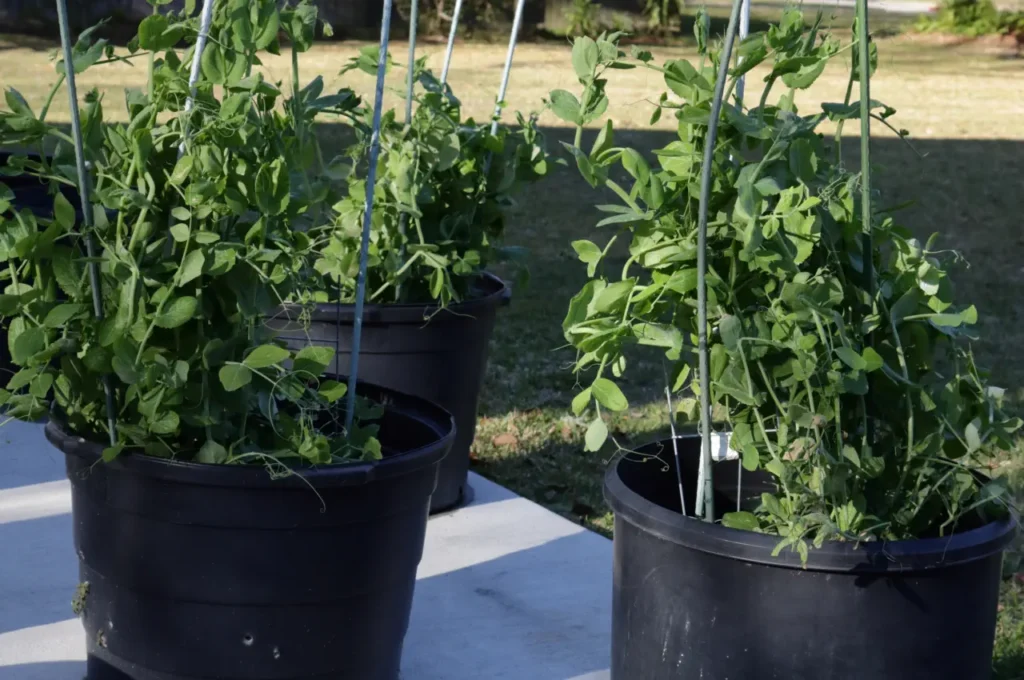
Don’t have a garden, but still want to enjoy fresh peas? Growing peas in pots is a great way to enjoy the flavor of these delicious legumes without needing a lot of space. In this article, we’ll show you how to cultivate peas in pots and provide you with all the necessary instructions.
Choosing the Right Pot
When it comes to growing peas in pots, the type of pot you choose is crucial. For bush varieties like “mangiatutto,” you’ll need a wide pot that can accommodate at least 4 plants. This variety is ideal for balcony gardens, as it produces more fruit than other types of peas.
For climbing varieties, you’ll need a long, narrow pot to plant the seeds about 8 cm apart and 4/5 cm deep. It’s essential to place the pot near a wall or fence where you can attach a trellis or mesh for support. Alternatively, you can use a large, round pot with stakes attached to provide structure.
Lighting and Temperature
Peas prefer bright, indirect light, making them ideal for north-facing balconies or south-facing spots that receive partial shade. The ideal temperature for pea growth is between 10°C and 20°C (50°F to 68°F). It’s best to sow seeds in early spring, around March or April, before the weather gets too hot.
A Little Help with Germination
To encourage germination, you can place pea seeds between two damp towels for a few days before planting them directly into the pot. This helps create a warm, humid environment that promotes growth.
Caring for Your Pea Plants
Peas are relatively low-maintenance plants that require regular watering and occasional fertilization. Make sure to water your peas regularly, but avoid overwatering, which can lead to root rot. You can also add organic matter like straw or leaves to the potting mix to retain moisture and suppress weeds.
Fertilizing Your Peas
Feeding your pea plants with a balanced fertilizer will promote healthy growth and fruit production. Avoid using high-nitrogen fertilizers, as they can lead to leggy stems. Instead, opt for a fertilizer that is rich in phosphorus and potassium (P-K).
For bush varieties like “mangiatutto,” you can use a fertilizer that is specifically formulated for container gardens. These fertilizers are usually balanced and will provide your pea plants with the necessary nutrients for growth.
For climbing varieties, you may need to use a more intensive fertilizer to promote vigorous growth. Look for a fertilizer that is high in phosphorus (P) to encourage flower formation and fruit production.
Harvesting Your Peas
Peas are ready to harvest when the pods are tender and the seeds are just starting to form. Check your peas regularly, as overripe pods can become bitter. For bush varieties like “mangiatutto,” you can harvest individual pods at any time, while for climbing varieties, wait until the entire plant has flowered.
Tips and Variations
For a more traditional look, consider using a wooden or metal trellis to support your pea plants. You can also mix different types of peas in your pot to create a colorful display.
Some additional tips to keep in mind:
- Make sure your pot has good drainage holes to prevent waterlogged soil.
- Peas are sensitive to extreme temperatures, so avoid placing them near heating vents or air conditioning units.
- Consider growing other vegetables like tomatoes or cucumbers alongside your peas for a more diverse garden.
- Keep an eye out for pests and diseases, such as aphids, slugs, and powdery mildew.
Common Mistakes to Avoid
There are several common mistakes that beginners make when growing peas in pots. Here are some of the most important ones to avoid:
- Planting pea seeds too deep: Make sure to plant your pea seeds at a depth that is about 2/3 the width of the seed. If you plant them too deeply, they may rot or have poor germination.
- Overwatering: Avoid overwatering your peas by checking the soil moisture regularly and only watering when necessary.
- Not providing enough support: Make sure to provide your pea plants with a trellis or other support system to prevent them from becoming leggy and weak.
FAQs
Q: Can I grow peas in a small pot?
A: Yes, you can grow peas in a small pot, but make sure it’s at least 20 cm deep and has good drainage holes. Bush varieties are ideal for small pots.
Q: How often should I water my pea plants?
A: Water your pea plants regularly, but avoid overwatering. Check the soil moisture by sticking your finger into the soil up to the first knuckle.
Q: Can I grow peas indoors?
A: Yes, you can grow peas indoors, but make sure they receive bright, indirect light and are kept at a consistent temperature between 10°C and 20°C (50°F to 68°F).
Q: How long does it take for pea plants to mature?
A: Pea plants typically take about 3 months to mature from sowing the seeds.
Q: Can I eat the stems and leaves of pea plants?
A: Yes, pea stems and leaves are edible and can be used in salads or cooked like spinach.
Q: Are peas a good choice for container gardens?
A: Peas are an excellent choice for container gardens due to their compact growth habit and ability to thrive in small spaces.
Growing Different Types of Peas
There are several different types of peas that you can grow in pots, each with its own unique characteristics. Here’s a brief overview:
- Bush peas: These are the most common type of pea and are ideal for small pots. They produce more fruit than other varieties and are easy to care for.
- Climbing peas: These peas require more support and are best grown in large, long pots. They are great for vertical gardens or trellises.
- Snow peas: These peas have flat pods and are perfect for salads and stir-fries. They are also great for container gardens due to their compact growth habit.
- Sugar snap peas: These peas have crunchy, sweet pods and are ideal for snacking on the go. They can be grown in small pots or large containers.
Growing Peas with Other Vegetables
You can grow peas with other vegetables in your pot to create a more diverse garden. Here are some popular combinations:
- Tomatoes and peas: Planting tomatoes alongside peas creates a beautiful combination of colors and textures.
- Cucumbers and peas: These two vegetables have similar growing requirements and can be grown together for added flavor and nutrients.
- Carrots and peas: Planting carrots and peas in the same pot creates a delicious and healthy snack.
Conclusion
Growing peas in pots is a great way to enjoy fresh, nutritious legumes without needing a lot of space. By following these simple steps and tips, you can create your own pea garden and enjoy the many benefits of growing your own food. Happy gardening!


