
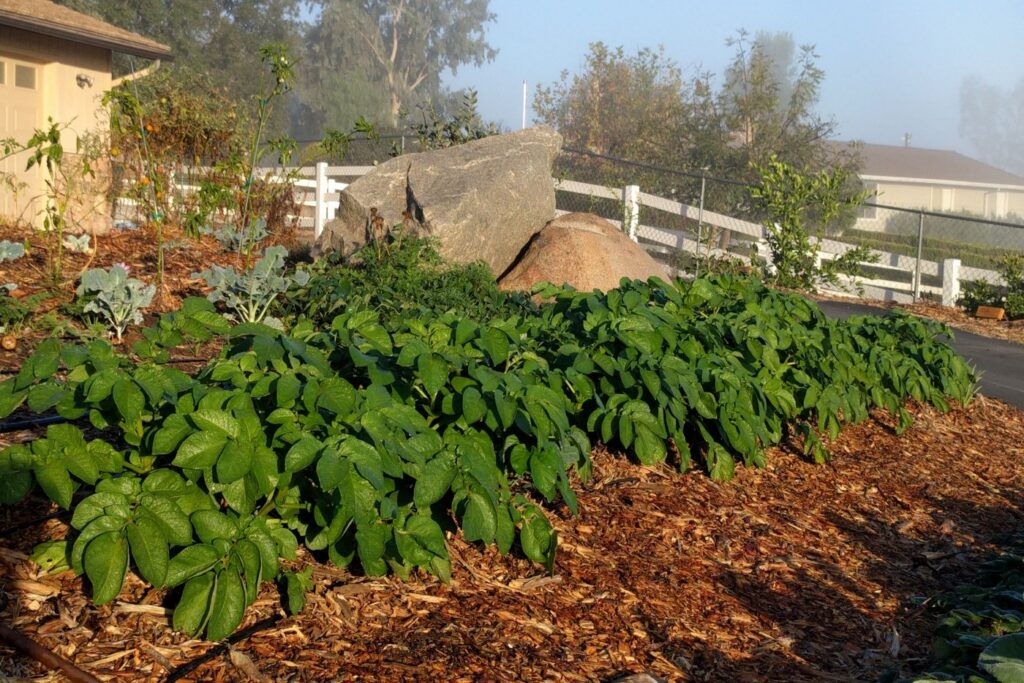
As the scorching heat of this summer has no doubt taken a toll on our garden, it’s essential to learn how to tackle water scarcity head-on. In areas where resources are scarce, it’s crucial to adopt innovative methods to conserve water and maintain a thriving garden.
In this article, we’ll explore a biodegradable technique that utilizes shredded wood, also known as cippato, to cultivate an almost waterless garden.
What is the Shredded Wood Technique?
Originating from France, where it’s known as Bois Rameaux Fragmentés (BRF), this eco-friendly method has gained popularity worldwide. By utilizing shredded wood, you can significantly reduce your reliance on water and energy while creating a thriving ecosystem in your garden.
How does it work?
- The shredded wood is rich in organic matter, which improves soil structure and retains moisture.
- The soil doesn’t require frequent tilling or fertilizers, reducing the need for external inputs.
- With time, the cippato breaks down, creating a nutrient-rich humus that supports a diverse range of microorganisms.
Getting Started with Cippato
To begin your journey, you’ll need to shred wood from various sources, such as:
- Fruit trees
- Brushwood
- Other plant debris
Using these materials, create a “coppa” (shredded wood mixture) that will become the foundation of your garden.
Year 1: Preparing the Soil
In the first year, focus on incorporating the cippato into your soil:
- Add letame mature (mature manure)
- Plant a cover crop like winter legumes
- Allow the cover crop to mature and then intercrop it with your desired garden crops
Year 2+: Building a Thriving Ecosystem
After the first year, you can start cultivating your desired crops:
- Add more cippato to maintain soil health
- Use additional materials like straw or other organic matter for mulching
- Continue to monitor and adapt your garden’s ecosystem
Harmonizing with Nature: Companion Planting
By understanding the relationships between plants, you can create a harmonious and efficient ecosystem in your garden:
- Pair crops with complementary growth habits and water requirements
- Utilize mulch to retain moisture and suppress weeds
- Experiment with different plant combinations to find what works best for your climate and soil conditions
Additional Tips for Water Conservation
To further optimize your garden’s water usage, consider these practical suggestions:
- Choose drought-resistant crop varieties
- Implement a drip irrigation system during the hottest months
- Mulch around plants to reduce evaporation
- Plant trees with broad canopies to shade the soil
Common Challenges and Solutions
- Soil Compaction: Avoid over-tilling or using heavy machinery, which can compact the soil. Instead, use a shallow tiller or a fork to loosen the top layer of soil.
- Weeds: Mulch regularly to suppress weeds and retain moisture in the soil.
- Pests: Use companion planting to repel pests, such as marigolds to deter nematodes.
Fertilization Strategies
As you cultivate your garden using cippato, you’ll need to consider alternative fertilization strategies:
- Manure Tea: Steep manure in water to create a nutrient-rich liquid fertilizer.
- Compost: Use compost tea as an alternative to traditional fertilizers.
Pest and Disease Management
When cultivating with cippato, you may encounter pests or diseases. Here are some strategies to manage these issues:
- Beneficial Insects: Encourage beneficial insects, such as ladybugs and lacewings, which prey on pests.
- Organic Pesticides: Use organic pesticides, such as neem oil and pyrethrin, to control pests.
Long-Term Benefits
Cultivating with cippato offers numerous long-term benefits:
- Soil Erosion Prevention: Cippato helps prevent soil erosion by improving soil structure and reducing runoff.
- Carbon Sequestration: The organic matter in cippato contributes to carbon sequestration, helping mitigate climate change.
- Biodiversity Enhancement: By creating a diverse ecosystem, you can enhance biodiversity in your garden.
Conclusion
By embracing this innovative approach to gardening, you’ll not only conserve water but also create a thriving ecosystem that benefits both you and the environment. With patience, dedication, and the right knowledge, you can successfully cultivate an almost waterless garden using shredded wood.
By understanding how cippato works, you can optimize your garden’s performance and enjoy the many benefits of biodegradable gardening.
Additional Resources
- Books: Check out “The Dry Garden: Bio-Based Gardening with Shredded Wood” by Jacky Dupety.
- Online Courses: Take online courses on permaculture, biodynamic gardening, or regenerative agriculture to learn more about cippato and its applications.
Final Tips
To ensure the success of your garden:
- Start small and scale up gradually
- Monitor and adapt to changes in your ecosystem
- Experiment with different plant combinations
By following these tips and embracing the shredded wood technique, you’ll be well on your way to creating a thriving, waterless garden that benefits both you and the environment.


