
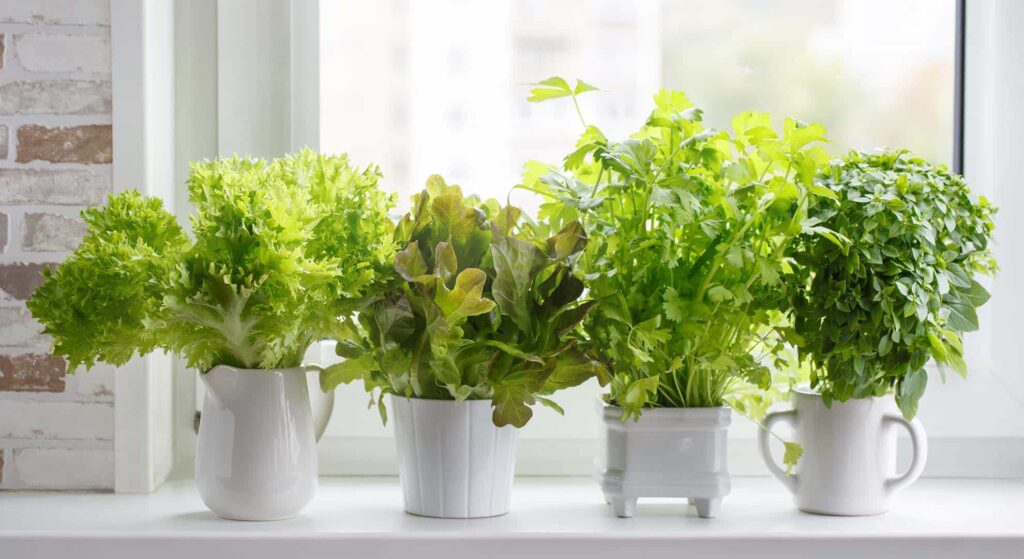
If you don’t have enough space, even the windowsill can be a great place to grow an herb garden (maybe even 100% organic) with small varieties of herbs, medicinal plants, and tiny vegetables. The most practical containers for growing a window box garden are common plastic boxes, lightweight and washable, typically measuring 60x20x20 centimeters.
The boxes that will contain the garden can be placed directly on the windowsills or displayed in external flowerers (sturdy), securely fixed with suitable hooks, clamps, and brackets to avoid accidents of falling pots in case of wind. There are also more daring solutions like using a photo, but it’s best to read the condominium regulation first and get permission from the condo assembly. In some cases, even a municipal authorization may be required.
The best exposure for growing a garden on the windowsill is towards south, southeast, or southwest. Of course, in urban areas, it’s better to avoid growing vegetable gardens on the windowsills of lower floors or that face busy streets where there is high concentration of smog and fine particles. On the other hand, ornamental plants: a lush vegetation is indicated exactly for windows that look out onto the street because it forms a barrier against smog and pollutants.
The best plants for growing in pots on the windowsill are those with reduced dimensions. For tomatoes, varieties with small fruit are recommended, including precocious ones that exceed 30cm of height. In addition, these tomatoes have the advantage of being highly resistant to diseases, are flavorful, and produce a lot. Excellent results can be obtained with basil and all culinary or herbal aromatic plants: thyme, majoram, sage, rosemary, mint, scallion grass, dragoncello, etc.
Preparing the window box garden can be done by buying good ready soil or taking some from a garden, but making sure there are no larvae of parasites. Given the small spaces, it’s best to simplify every operation: for sowing, you can use the ‘strip’ system, a biodegradable strip of cardboard containing seeds at the right distance that dissolves with the first moisture of the soil. The salad can be sown by mixing the seeds with dry sand. Alternatively, you can start from potted seedlings bought at a nursery.
Getting Started
Before starting your window box garden, consider the following factors:
- Light exposure: As mentioned earlier, south, southeast, or southwest exposure is ideal.
- Wind protection: Securely fix pots and flowerers to avoid accidents.
- Smog and pollution: Avoid planting vegetable gardens on lower floors with busy street views.
Choosing the Right Plants
Select plants that thrive in small spaces and can tolerate partial shade:
- Herbs: basil, mint, thyme, rosemary
- Medicinal plants: echinacea, ginkgo biloba, St. John’s Wort
- Vegetables: cherry tomatoes, leafy greens (lettuce, kale), microgreens
Growing Medium and Sowing
Use a well-draining potting mix and follow these sowing methods:
- ‘A nastro’ system: Use biodegradable strips containing seeds at the right distance.
- Direct sowing: Mix seeds with dry sand and sow on the surface.
Common Mistakes to Avoid
Don’t make these common mistakes when growing a window box garden:
- Insufficient light: Choose plants that tolerate partial shade or provide supplemental lighting.
- Inadequate watering: Water plants carefully, as overwatering can lead to root rot.
- Poor air circulation: Ensure good air circulation around plants to prevent fungal diseases.
Troubleshooting
If you encounter issues with your window box garden:
- Pests and diseases: Inspect plants regularly and treat promptly if necessary.
- Nutrient deficiencies: Fertilize plants according to their needs.
- Discoloration or stunted growth: Adjust plant placement, watering, or lighting as needed.
Conclusion
Growing a window box garden is a great way to enjoy fresh produce while saving space. By choosing the right plants, providing proper care, and avoiding common mistakes, you can create a thriving and productive garden on your windowsill.
FAQs
- What type of soil should I use for my window box garden?
- Choose a well-draining potting mix specifically designed for indoor gardens.
- How often should I water my plants in a window box garden?
- Water plants when the top inch of soil feels dry to the touch, avoiding overwatering.
- Can I grow vegetables on my windowsill?
- Yes, cherry tomatoes and leafy greens are good options for small spaces.
- What is the best way to fertilize my window box garden plants?
- Follow the fertilizer instructions on the packaging and adjust according to plant needs.
By following these guidelines, you’ll be well on your way to creating a successful and enjoyable window box garden.


