
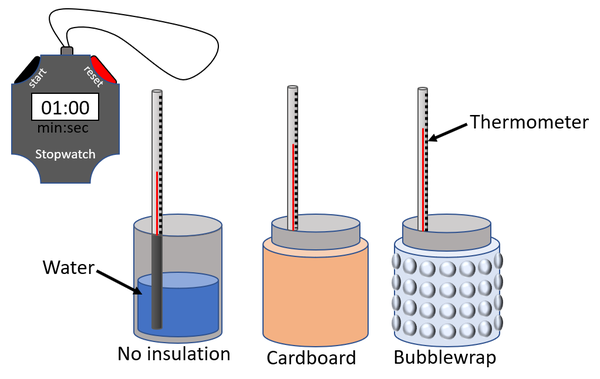
Understanding Thermal Insulation Materials
To evaluate the thermal insulation properties of materials, it’s essential to know the lambda (λ) and K values of the material. The value λ represents the amount of heat that passes through a 1-meter square of the material in 1 hour, given a temperature difference of 1°C between the two faces. On the other hand, the value K represents the amount of heat that passes through a wall with a surface area of 1 meter squared in 1 hour, given a temperature difference of 1°C between the two sides.
Calculating Lambda (λ) Values
Lambda values indicate the thermal conductivity of materials. A higher λ value means lower thermal insulation properties. Here are some examples of λ values for commonly used insulation materials:
- Wool glass fiber: 0.038
- Expanded polystyrene foam: 0.035
- Polyurethane foam: 0.030
- Wood fiber: 0.050
- Sugared wood (in granules or panels): 0.30 to 0.100
- Cellulose fiber: 0.032
When selecting a material for thermal insulation, it’s crucial to consider its λ value. Materials with lower λ values are more effective at reducing heat transfer and maintaining a comfortable indoor temperature.
Calculating K Values
However, the value most useful for determining a material’s actual insulation capacity is not λ, but rather K, which is calculated from λ by dividing it by the chosen thickness of the insulation layer.
For example, if the λ value of an insulation material is 0.030 and the chosen thickness is 10 cm (0.1 meters), the K value would be: 0.03 / 0.1 = 0.30
K values are essential for determining a material’s thermal insulation performance in specific applications. A higher K value indicates better thermal insulation performance, while a lower K value means less effective insulation.
Energy Efficiency Guidelines
To ensure energy efficiency, the K value should not exceed 0.50. This guideline is widely accepted in building codes and standards to ensure that buildings are designed and constructed with energy-efficient features.
Factors Affecting Thermal Insulation Performance
Another critical factor in evaluating thermal insulation materials is the time lag (or phase shift). This refers to the interval between when a surface reaches its maximum external temperature and when the internal surface reaches its maximum temperature.
In simpler terms, time lag indicates how long it takes for heat (thermal energy) to pass through an insulating layer. A higher time lag means better thermal insulation performance, especially during hot summer months when keeping the inside cool is crucial.
Here are some examples of time lag values for common insulation materials:
- Wood fiber and natural sughero: 15.1 hours
- Cellulose fiber: 8.7 hours
- Wool from sheep: 7.0 hours
- Rock wool: 6.7 hours
- Expanded polystyrene foam: 6.3 hours
- Mineral wool: 5.9 hours
Understanding time lag is crucial for selecting the right insulation material for a specific application. Materials with higher time lag values are generally better at maintaining a comfortable indoor temperature, especially during hot summer months.
Conclusion
Thermal insulation is crucial for maintaining a comfortable indoor temperature, especially in buildings and homes. By understanding lambda (λ) values and K values, you can choose the right materials for optimal energy efficiency.
Do you have any questions about thermal insulation materials or their applications?
Frequently Asked Questions (FAQs)
1. What is the difference between lambda (λ) and K values?
Lambda (λ) represents the amount of heat that passes through a 1-meter square of material in 1 hour, given a temperature difference of 1°C between the two faces. On the other hand, K value represents the amount of heat that passes through a wall with a surface area of 1 meter squared in 1 hour.
2. How to calculate K values?
K value is calculated by dividing λ by the chosen thickness of the insulation layer.
3. What is the purpose of time lag (or phase shift) in thermal insulation?
Time lag refers to the interval between when a surface reaches its maximum external temperature and when the internal surface reaches its maximum temperature, indicating how long it takes for heat (thermal energy) to pass through an insulating layer.
4. Which insulation materials have high time lag values?
Materials with higher time lag values are generally better at maintaining a comfortable indoor temperature, especially during hot summer months.
5. Can I use any insulation material in my building or home?
No, it’s essential to choose the right insulation material based on your specific needs and conditions.
6. Are there natural insulation materials available?
Yes, there are several natural insulation materials that can be used for thermal insulation purposes.
7. How often should I replace my insulation material?
It depends on various factors such as usage, exposure to moisture, and temperature fluctuations.
8. Can I use a combination of insulation materials in my building or home?
Yes, using a combination of insulation materials can provide better overall thermal performance.
9. What are the benefits of using high-K insulation materials?
High-K insulation materials have higher thermal insulation performance, which means they can reduce heat transfer and maintain a comfortable indoor temperature more effectively.
10. Can I use insulation materials in unheated areas such as attics or crawlspaces?
Yes, it’s essential to choose the right insulation material for unheated areas based on your specific needs and conditions.
By understanding thermal insulation materials and their properties, you can make informed decisions when selecting materials for your building or home. Remember to consider factors such as energy efficiency, cost-effectiveness, and environmental impact when making your choices.


