
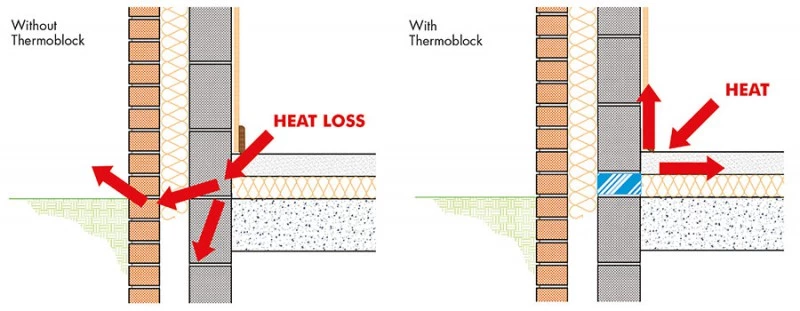
Before we dive into how to eliminate thermal bridges, let’s understand what they are. Thermal bridges represent areas where there is a transfer of heat flow, resulting in an increase in temperature dispersion. A classic example of thermal bridge in domestic context is the intersection of two walls, but it can also occur at windows and the meeting point of elements made from different materials.
Eliminating thermal bridges means reducing the risk of mold growth: by eliminating thermal bridges, we have a reduction of heat dispersion and therefore a reduction of the risk of mold on interior walls due to condensation risks.
The Importance of Eliminating Thermal Bridges
Thermal bridges can lead to reduced energy efficiency, increased energy bills, and even damage to your home over time. By identifying and addressing thermal bridges, you can make your home more comfortable, efficient, and cost-effective.
Thermal bridges can cause a variety of problems in your home, including:
- Increased energy bills: Thermal bridges allow heat to escape from your home, making it harder for heating systems to maintain a consistent temperature.
- Reduced comfort: Inadequate insulation can lead to uneven temperatures throughout your home, causing discomfort and stress.
- Premature aging of materials: Repeatedly heated and cooled areas can cause damage to building materials, leading to premature wear and tear.
- Increased risk of mold growth: As mentioned earlier, thermal bridges can create condensation risks, which can lead to mold growth on interior walls.
Method 1: Insulation with a Cappotto
Insulation with a cappotto is one effective way to eliminate thermal bridges. This involves applying lastres isolating or simply covering the wall with adequate spessori of termointonaci. While it may seem like the most effective method, there are more drastic solutions available.
Cappotto-based insulation is suitable for areas where the thermal bridge is relatively small and localized. It’s also a cost-effective solution that can be applied in conjunction with other methods.
Method 2: Refurbishment
If you’re planning a major renovation, eliminating thermal bridges is an essential step. This involves demolishing the portion of the building that acts as a thermal bridge, allowing for proper refurbishment. This approach is recommended for areas created by protrusions, balconies, or other obstructions, where a cappotto-based solution may not be effective.
Refurbishment can be a more expensive and time-consuming option but provides a comprehensive solution to eliminating thermal bridges.
Method 3: Windows
If the thermal bridge concerns windows, there are various solutions to mitigate its effects. Some of these include using thermoisolating glass, supported by structures with low thermal conductivity. In this context, the most gentle solution is the use of specialized guarnitions.
Thermoisolating glass can be installed in existing windows or new constructions, providing a more effective solution than cappotto-based insulation alone.
Incentives for Thermal Bridge Elimination
It’s worth noting that renovation projects that involve energy-efficient upgrades can benefit from various incentives. For example, the Ecobonus provides a 15% tax deduction on expenditures related to building renovations.
In Italy, the Ecobonus program offers financial incentives for homeowners who invest in energy-efficient measures, including thermal bridge elimination.
Other countries and regions offer similar programs and incentives. Homeowners should research local programs to determine if their renovation project qualifies for these benefits.
Efficient Materials
When discussing insulation and thermal bridges, it’s essential to consider the concept of Fattore U (U-factor). The U-factor represents the rate at which heat flows through a surface, and is affected by temperature differences between the inside and outside environments. In other words, lower U-factors indicate better insulating properties.
When selecting materials for insulation or other thermal bridge elimination solutions, consider the following factors:
- Low thermal conductivity: Materials with low thermal conductivity are more effective at reducing heat flow.
- High R-values: Materials with high R-values (thermal resistance) provide greater insulation benefits.
- Moisture resistance: Materials that resist moisture damage can help prevent mold growth and other issues related to condensation.
Some examples of efficient materials include:
- Polyisocyanurate foam: A highly insulating material used in various applications, including cappotto-based insulation.
- Mineral wool: A natural, eco-friendly insulation material that provides excellent thermal performance.
- Thermoinsulated glass: A specialized type of glass designed to reduce heat flow and minimize thermal bridges.
Frequently Asked Questions
- What are thermal bridges?
Thermal bridges are areas where there is an exchange of heat flow, leading to increased temperature dispersion. - How do I identify thermal bridges in my home?
Look for areas where different materials meet or windows intersect with walls. - What are the benefits of eliminating thermal bridges?
Reducing energy bills, improving comfort, and extending your home’s lifespan. - Can I eliminate thermal bridges on my own?
While possible, it may require professional expertise to ensure safety and effectiveness. -
How often should I check for thermal bridges in my home?
Regularly inspect your home’s walls, windows, and other components for signs of thermal bridges. -
What are the most effective materials for eliminating thermal bridges?
Lastres isolating, thermoisolating glass, and specialized guarnitions can help mitigate thermal bridge effects. -
Can I use caulk or spray foam to eliminate thermal bridges?
While these materials can provide some insulation benefits, they may not be sufficient to address all types of thermal bridges. -
How much does it cost to eliminate thermal bridges in my home?
The cost will depend on the extent and location of the thermal bridge issue, as well as the chosen solution.
Conclusion
Eliminating thermal bridges is a crucial step in maintaining your home’s energy efficiency, comfort, and longevity. By understanding the importance of thermal bridges and exploring various methods for elimination, you can make informed decisions about your home’s renovation or maintenance projects.
Before starting any project, consider consulting with a professional to determine the best approach for your specific situation. Remember to also research local incentives and programs that may be available to support your energy-efficient upgrades.
By working together, we can create homes that are not only comfortable and efficient but also sustainable and cost-effective for generations to come.


