
Understanding the Problem
Mold, lichen, and patina can be a real nightmare for anyone who has neglected their garden. If your exterior walls have issues with mold, we invite you to read our guide on how to remove mold from exterior walls of your home. In this article, we will focus on the formation of biological patinas and all residues left by molds and lichens.
The Problem of Patina Biologica
Patina biologica is an aggregate of organic substances secreted by mushrooms and lichens. While that of mushrooms and that of lichens are quite different from each other, they both contribute to the formation of biological patinas on exterior walls.
Mushrooms thrive in high humidity, can become black without photosynthesis (when there isn’t much light). When their root penetrates deeply into the wall, they can cause cracks and chemical degradation caused by substances secreted by roots. This process is known as saprotrophic activity, where fungi feed on organic matter.
Lichens, on the other hand, are symbiotic organisms made up of a fungus and an alga. Lichens can also thrive without light because the two organisms support each other: the alga provides nutrients to the fungus, and the fungus allows the alga to thrive even without photosynthesis.
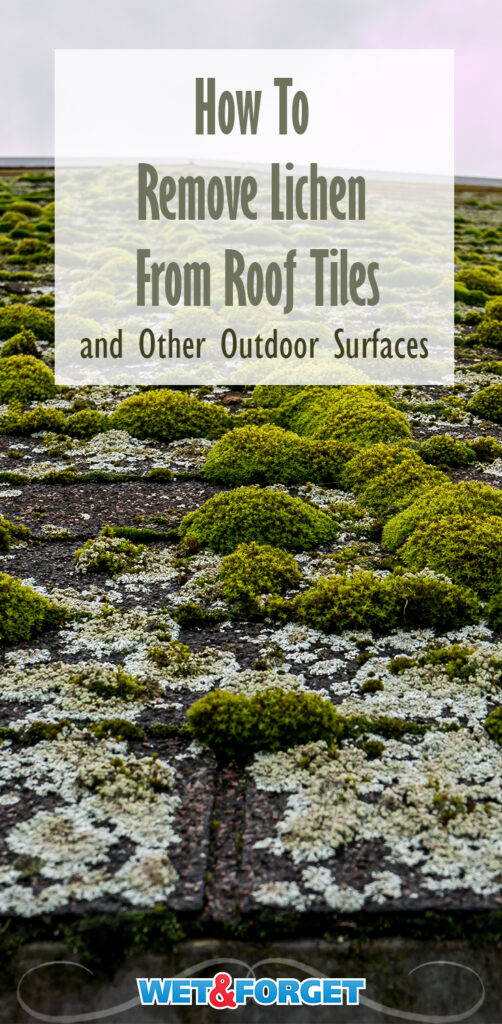
The appearance of lichens is quite different from that of mushrooms. Lichens can have a lamellar, crusty, or plate-like appearance. The color varies depending on the species. Some common types of lichens include:
- Crustose lichens: These are small, crust-like lichens that grow on rocks and other surfaces.
- Foliose lichens: These are leaf-like lichens that grow on rocks and trees.
- Fruticose lichens: These are bushy or shrub-like lichens that grow on trees and rocks.
Black Crust
The black crust is not created by molds and lichens. This substance forms due to pollution present in the atmosphere and acid rain. Anhydride sulfur, carbon material, and other pollutants stratify on exterior walls and man-made objects (statues, columns, porticos…). These strata form a compact and dark layer described as a black crust.
This type of incrustation is very damaging to masonry, statues, and any object. The crust has different shrinkage than the underlying masonry and therefore creates cracks. Acidic rain and chemical action from pollutants damage your property further, making it difficult to repair.
Causes of Black Crust
Black crusts are caused by a combination of factors, including:
- Pollution: Sulfur dioxide, nitrogen oxides, and other pollutants in the atmosphere contribute to the formation of black crust.
- Acid rain: The acidity of acid rain can damage masonry and other surfaces, leading to the formation of black crust.
- Lack of maintenance: Failure to clean and maintain exterior walls and objects can lead to the accumulation of pollutants and the formation of black crust.
Removing Molds and Lichens
Removing biological residues
To remove the organic residue of molds and lichens or for cleaning incrustations, wear a mask, a pair of gloves, and safety glasses. This is an essential step in preventing exposure to allergens and other health risks associated with mold and lichen removal.
This cleaning should be performed in spring, summer, or early autumn when temperatures don’t drop below 15 – 20 °C. The water used must evaporate quickly, otherwise it may worsen the situation.
Get yourself an spray bottle and a spongy brush. Brush all surfaces starting from the bottom. This operation is quite simple but also effective: allows you to remove patina biologica, molds, and lichens without damaging the masonry.
If you prefer, you can add specific biocides to the water (better if warm) for treating different types of biological patina. Some common biocides used for mold removal include:
- Bleach: A strong disinfectant that can be effective against a wide range of molds and lichens.
- Vinegar: A natural acid that can help dissolve and remove organic residues.
- Baking soda: A mild abrasive that can help scrub away mold and lichen growth.
Removing Black Crust
Black incrustations on statues in gardens and walls are more difficult to remove. Try using cellulose packs, a DIY process.
Dilute the cellulose in some water until it becomes workable. Apply the cellulose to the dark crust to be removed, make it stick with cloth napkins and place cotton wool (ovatta) on top to fix the pack.
Cover with nylon cloths to prevent water from evaporating through the cellulose. Leave the packs for 2 or 3 days and then clean with deionized water and brush with a soft-bristled broom.
Use chemicals and solvents only in extreme cases as they do not always preserve the object. It’s also important to note that some chemicals can damage certain types of stone, so it’s essential to test them first on a small area before using them extensively.
Tips for Preventing Mold Growth
To prevent mold growth, follow these tips:
- Regularly clean exterior walls and objects during spring, summer, or early autumn when temperatures are between 15 – 20 °C.
- Use a water-repellent coating to protect surfaces from moisture.
- Ensure good ventilation around trees and other plants to reduce humidity.
- Keep surrounding areas free of debris and clutter.
Frequently Asked Questions
- What causes black crusts?
Black crusts are caused by pollutants present in the atmosphere, acid rain, and other environmental factors. - How do I clean patina biologica from walls?
To clean patina biologica from walls, wear protective gear (mask, gloves, safety glasses) and perform the cleaning operation during spring, summer, or early autumn when temperatures are between 15 – 20 °C. - What is cellulose used for in removing black crusts?
Cellulose is a DIY solution to remove black crusts from statues. To use cellulose packs, dilute the cellulose in water until it becomes workable, make it stick with cloth napkins, and then cover it with cotton wool (ovatta) to fix the pack. - Can chemicals damage statues?
Only use chemicals and solvents in extreme cases as they may not preserve the object. - How do I prevent molds and lichens from growing on tree trunks?
Prevent molds and lichen growth by maintaining a clean environment, using fungicides if necessary, and ensuring good ventilation around trees. - What are some effective treatments for removing biological residues?
Effective treatments for removing biological residues include using biocides specific to the type of patina being removed or diluting cellulose in water until it becomes workable. - Can black crusts be repaired?
Black crusts can be difficult to repair as they damage masonry, statues, and other objects. However, with proper cleaning and maintenance, some repairs may be possible. - How often should I clean my exterior walls to prevent mold growth?
Regularly clean your exterior walls during spring, summer, or early autumn when temperatures are between 15 – 20 °C to prevent mold growth.
Conclusion
Removing molds and lichens from exterior walls can be a challenging task, but it’s essential for maintaining the aesthetic appeal and health of your home. By following these tips and using the right techniques, you can effectively remove patina biologica, molds, and lichens without damaging the masonry or objects.
Remember to always wear protective gear when cleaning biological residues, and use chemicals and solvents only in extreme cases. With regular maintenance and proper cleaning, you can prevent mold growth and keep your exterior walls looking their best.


