
As homeowners, we’re often not aware of the constant stress our walls are under. From subtle shifts to full-blown movements, these forces can lead to cracks and crevices in our walls. In this article, we’ll explore why cracks form, how to identify them, and most importantly, how to fix them.
Why Do Cracks Form?
Cracks can be a sign of a larger issue, such as structural problems or poor construction techniques. But they’re not just an aesthetic concern; they can also indicate underlying issues like moisture problems or soil settlement. In areas prone to earthquakes, the frequency and severity of cracks are more pronounced.
For example, a crack in a wall might seem insignificant at first, but it could be a sign of a larger problem, such as:
- A shift in the foundation
- Soil settlement
- Poor drainage
Ignoring these issues can lead to further damage and even compromise the integrity of your home’s structure.
Internal Cracks: What They Mean
Cracks within your walls can be caused by various factors, including:
- Moisture-related issues: High humidity or water damage can cause cracks in your walls.
- Poor ventilation: Lack of proper ventilation can lead to moisture buildup and subsequent cracking.
- Clogged gutters: Dirty or clogged gutters can cause water to accumulate around the foundation of your home, leading to cracks.
These internal cracks may not be immediately noticeable but can lead to more severe problems if left unchecked. Addressing them promptly is crucial.
Signs of Internal Cracks
To identify internal cracks, look for:
- Small fissures or splits in the wall
- Discoloration or staining around the crack
- Bulging or sagging paint
If you suspect an internal crack, it’s essential to investigate further and address the issue as soon as possible.
External Cracks: What They Mean
Cracks on the exterior of your home can be a sign of more significant structural issues, such as:
- Soil settlement: When soil settles or shifts, it can cause cracks in your walls.
- Foundation problems: Poor foundation design or construction can lead to external cracks.
These external cracks require immediate attention to prevent further damage and ensure the integrity of your home’s foundation.
Signs of External Cracks
To identify external cracks, look for:
- Cracks in the exterior finish (e.g., stucco, brick, or siding)
- Shifts or tilts in the wall
- Discoloration or staining around the crack
If you notice an external crack, it’s crucial to address it promptly.
Materials Needed for Repair
Before we dive into the repair process, it’s essential to gather the necessary materials. These may include:
- Stucco filler: For small cracks in stucco surfaces
- Nails or screws: For reinforcing weak areas of the wall
- Spackling compound: For filling small gaps and holes
- Sandpaper: For smoothing out the surface
For more extensive repairs, you might need additional materials like:
- Mortar: For repairing cracks in brick or block walls
- Concrete: For reinforcing foundation walls or pouring a new slab
- Steel mesh: For added strength and stability
Before starting any repair project, ensure you have the necessary tools and materials.
Repair Techniques
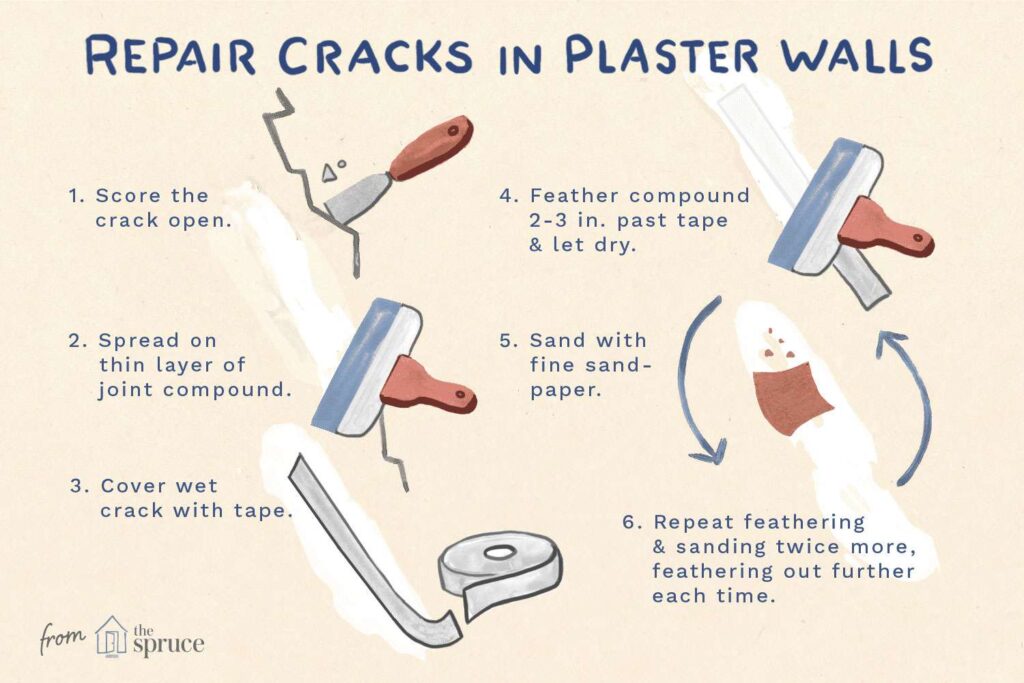
Once you’ve gathered your materials, it’s time to start repairing your cracks. Here are some common techniques:
- Filling small gaps with spackling compound
- Using stucco filler for larger cracks
- Applying a patching compound for more extensive damage
- Using nails or screws to reinforce weak areas
When using any of these techniques, be sure to follow the manufacturer’s instructions and take necessary safety precautions.
Preventing Future Cracks
While it’s essential to repair existing cracks, there are steps you can take to prevent future cracks:
- Regularly inspect your walls for signs of damage
- Address any moisture-related issues promptly
- Ensure proper ventilation in your home
- Maintain a regular cleaning schedule for gutters and downspouts
By taking these preventative measures, you can reduce the likelihood of future cracks and maintain the integrity of your home’s structure.
Conclusion
Cracks in your walls can be a sign of larger issues, but with the right techniques and materials, you can fix them promptly. By understanding why cracks form, identifying internal and external signs, gathering necessary materials, and using repair techniques effectively, you can ensure the stability and integrity of your home’s structure. Regularly inspecting your walls and taking preventative measures can also help reduce the likelihood of future cracks.


