
As we go about our daily lives, getting a good night’s sleep is essential for both physical and mental well-being. One of the most crucial decisions we make to ensure a restful night’s sleep is choosing the right mattress. With so many options available in the market, selecting the perfect one can be overwhelming, especially with varying needs and preferences. In this article, we’ll explore the different types of mattresses available, their features, and how to choose the best one for you.
Understanding Your Needs
Before diving into the world of mattresses, it’s essential to understand your specific needs. Are you looking for a mattress that suits your weight? Do you suffer from back pain or insomnia? Identifying your requirements will help you narrow down your search and make an informed decision.
Types of Mattresses: A Comprehensive Overview
The market offers various types of mattresses, each with its unique characteristics, advantages, and disadvantages. Here’s an overview of the most popular types:
1. Memory Foam Mattresses
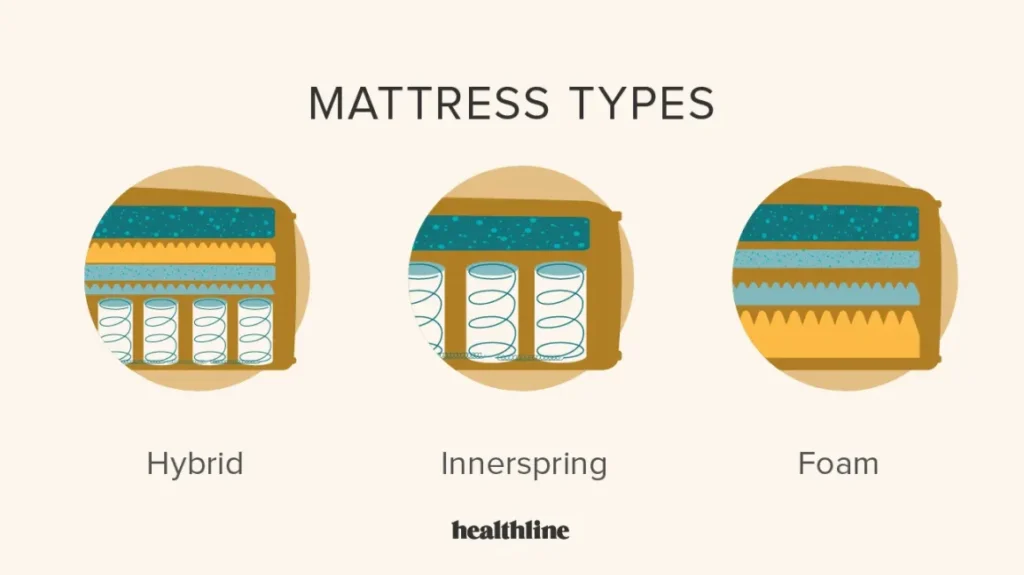
Memory foam mattresses are made from a type of plastic called polyurethane foam. They contour to the body, providing optimal support and pressure relief.
- Benefits: Pressure relief, contouring comfort, and motion isolation
- Disadvantages: Heat retention, slow recovery time
- Who is it suitable for?: Memory foam mattresses are ideal for side sleepers and those who prefer a soft sleeping surface. They can also be beneficial for people with joint pain or pressure points.
2. Innerspring Mattresses
Innerspring mattresses feature a coil support system that provides excellent ventilation and edge support.
- Benefits: Breathability, edge support, and affordability
- Disadvantages: Motion transfer, limited pressure relief
- Who is it suitable for?: Innerspring mattresses are perfect for back sleepers who require support and maintain a neutral spine alignment. They can also be beneficial for those who prefer a firmer sleeping surface.
3. Hybrid Mattresses
Hybrid mattresses combine the best of both worlds – innerspring coils and memory foam – for a unique sleeping experience.
- Benefits: Improved pressure relief, better edge support, and motion isolation
- Disadvantages: Higher price point, potential heat retention
- Who is it suitable for?: Hybrid mattresses are ideal for those who want the best of both worlds. They can provide excellent support and pressure relief while maintaining breathability.
4. Latex Mattresses
Latex mattresses are made from natural or synthetic latex, offering excellent breathability and durability.
- Benefits: Breathability, eco-friendliness, and support
- Disadvantages: Potential motion transfer, high upfront cost
- Who is it suitable for?: Latex mattresses are perfect for those who prefer a firmer sleeping surface and value the benefits of natural materials. They can also be beneficial for people with allergies or sensitive skin.
5. Natural Fibre Mattresses
Natural fibre mattresses, such as those made from cotton, wool, or bamboo, are a great option for those seeking an eco-friendly sleeping solution.
- Benefits: Eco-friendliness, breathability, and natural materials
- Disadvantages: Potential motion transfer, limited support
- Who is it suitable for?: Natural fibre mattresses are ideal for environmentally conscious individuals who prioritize the use of sustainable materials. They can also be beneficial for those with allergies or sensitive skin.
Choosing the Right Mattress: Tips and Tricks
With so many options available, choosing the right mattress can be daunting. Here are some tips to help you make an informed decision:
- Consider your weight: If you’re heavier than average, look for a mattress with higher density or a hybrid design.
- Think about your sleeping position: Side sleepers need pressure relief and contouring comfort, while back sleepers require support and edge protection.
- Look for breathability: A breathable mattress will help regulate body temperature and prevent overheating.
- Check the warranty: A longer warranty often indicates a higher-quality mattress with better durability.
- Read reviews: Research different mattresses by reading reviews from various sources, including independent review websites and forums.
Materials Used in Mattress Construction
When choosing a mattress, it’s essential to consider the materials used in its construction. Here are some common materials you’ll find:
- Foam: Memory foam, latex foam, and polyurethane foam are commonly used in mattress construction.
- Innerspring coils: Steel or pocketed coils provide support and edge protection.
- Natural fibers: Cotton, wool, bamboo, and other natural materials are often used for breathability and eco-friendliness.
- Synthetic materials: Polyester, nylon, and other synthetic materials may be used for durability and affordability.
Mattress Firmness Levels
Mattress firmness levels can significantly impact your sleeping experience. Here’s a breakdown of the most common firmness levels:
- Soft mattresses: 3-5 on the firmness scale
- Medium-firm mattresses: 6-7 on the firmness scale
- Firm mattresses: 8-10 on the firmness scale
Tips for Buying a Mattress Online
Buying a mattress online can be challenging due to the lack of in-person testing. Here are some tips to help you make an informed decision:
- Check the return policy: Look for a manufacturer with a comprehensive return policy that allows for easy returns and exchanges.
- Read reviews: Research different mattresses by reading reviews from various sources, including independent review websites and forums.
- Try before you buy: If possible, try out the mattress in person or take advantage of in-home trials offered by some manufacturers.
Conclusion
Choosing the right mattress is a crucial decision that can impact your sleep quality, back health, and overall well-being. By understanding your needs, considering the types of mattresses available, and following our tips and tricks, you’ll be well on your way to finding the perfect sleeping solution for you.
Frequently Asked Questions (FAQs)
- What is the best mattress for back pain?
- The best mattress for back pain depends on individual preferences and needs. However, hybrid mattresses with medium-firm comfort levels often provide excellent support and pressure relief.
- How often should I replace my mattress?
- It’s recommended to replace your mattress every 7-10 years or sooner if you notice a decrease in quality of sleep or physical discomfort.
- Can I use a mattress on the floor?
- While it’s technically possible, using a mattress on the floor can be challenging due to the risk of sagging and unevenness.
- Are memory foam mattresses suitable for hot sleepers?
- Memory foam mattresses can retain heat, making them less suitable for hot sleepers. However, some manufacturers have developed cooling technologies to address this issue.
- Can I return or exchange my mattress if it’s not comfortable?
- Most manufacturers offer returns and exchanges within a specific timeframe (usually 30-90 days). Be sure to check the manufacturer’s policies before making a purchase.
By understanding your needs, considering the types of mattresses available, and following our tips and tricks, you’ll be well on your way to finding the perfect sleeping solution for you. Happy shopping!


