
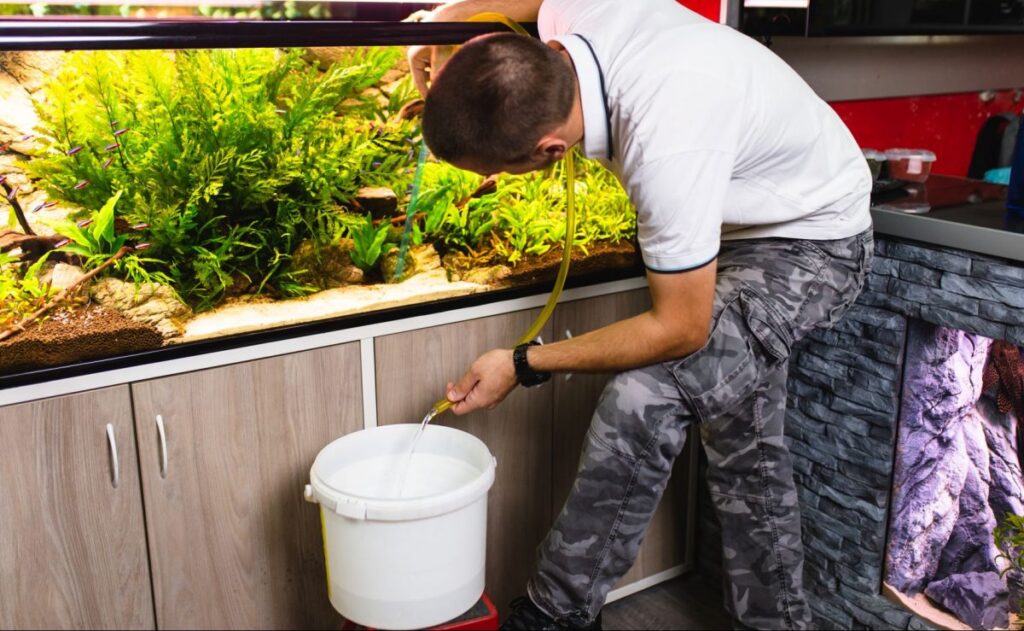
Maintaining Clean Water in Your Aquarium: Why and How to Change the Water
As we gaze into the glass walls of our aquariums, it’s easy to assume that the water is pristine. However, beneath the surface, a multitude of “invisible waste” accumulates, comprising nitrates and phosphates. These toxins can have a devastating impact on the health of our aquatic friends, making it essential to change the water regularly.
Why Change the Water in Your Aquarium?
The filter in your aquarium can only do so much. High levels of nitrates can hinder the growth of young fry and disrupt the life cycle of adult fish. Moreover, these toxins promote the overgrowth of algae, which can lead to a decrease in water quality. Phosphates have a similar effect.
Changing the water is the most effective way to maintain control over nitrate and phosphate levels and restore the balance of essential nutrients. Oligoelements and minerals present in the water are crucial for the health of your fish as well as the stability of the water itself.
Regular water changes also help to prevent bacterial growth, which can lead to infections and other diseases in your aquatic friends. Furthermore, changing the water helps to maintain a stable pH level, which is essential for the health and well-being of your fish.
How Often Should You Change the Water in Your Aquarium?
Changing the water is an essential part of aquarium maintenance. The frequency depends on various factors, including:
- Population density: Aquaria with high stocking levels require more frequent water changes.
- Type and number of fish: Different species have unique waste production rates.
- Plant life: Aquaria with extensive plant growth may need more frequent water changes.
For a moderately populated 60-liter aquarium, changing 1/3 of the water every 15 days is sufficient. Many experts recommend replacing 15% of the water weekly to maintain optimal water quality.
Important Note: Never “top off” the water in your aquarium! Adding new water won’t eliminate waste products; it will only dilute the existing water, making it ineffective for filtration.
How to Change the Water in Your Aquarium?
To change the water, you’ll need:
- Dechlorinated water suitable for aquaria
- A simple pump or siphon
- A container for holding the new water and a bucket for disposing of the old water
If you don’t have a pump or siphon, you can use manual methods to remove the old water. In any case, you’ll need a bucket for transferring the dirty water.
A Step-by-Step Guide to Changing Aquarium Water
Here’s a comprehensive guide to changing the water in your aquarium:
- Turn off equipment: Before starting the water change, turn off all equipment in the aquarium, including filters, heaters, and pumps.
- Remove decorations and accessories: Take out any decorations or accessories that may be obstructing the way for the siphon or pump.
- Siphon out the old water: Use a siphon hose to remove the old water from the aquarium. Make sure to siphon slowly and carefully to avoid splashing the water.
- Transfer the old water: Once the old water has been removed, transfer it to a bucket or container for disposal.
- Add dechlorinated water: Add dechlorinated water to the aquarium at the same rate as you removed the old water. Make sure the water is at the same temperature as the aquarium water.
- Turn on equipment: Once the new water has been added, turn on all equipment in the aquarium, including filters, heaters, and pumps.
- Monitor water quality: After the water change, monitor water quality to ensure that it remains stable.
Tips for a Smooth Water Change
Here are some tips to help make your next water change as smooth as possible:
- Use a gravel vacuum: A gravel vacuum can help remove debris and waste from the substrate during the water change.
- Test water parameters: Before adding new water, test the water parameters to ensure that they are within safe ranges for your fish.
- Use a bucket with a siphon attachment: Using a bucket with a siphon attachment can make it easier to remove old water and add new water.
- Clean equipment: Clean all equipment during the water change to prevent bacterial growth.
Conclusion
Changing the water in your aquarium is an essential part of maintaining a healthy environment for your aquatic friends. By following these simple steps and tips, you can ensure that your aquarium remains a thriving ecosystem, teeming with life and color.
Regular water changes are crucial for maintaining optimal water quality and preventing disease. By understanding why water changes are necessary and how to perform them effectively, you can enjoy a healthy and happy aquarium for years to come.
Additional Resources:
Stay tuned for more informative articles on aquarium maintenance and care.


