
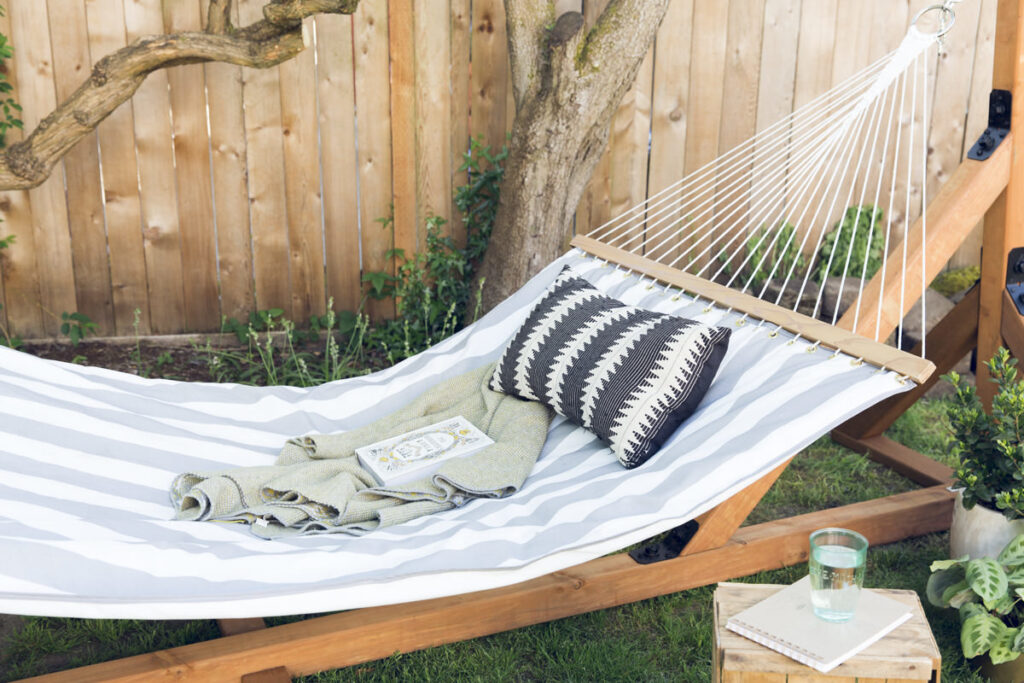
Are you dreaming of lounging in a hammock beneath the shade of a tree? If so, arm yourself with tools and practicality, because this guide will walk you through building your very own hammock.
Building a hammock is not difficult, but it does require a bit of practicality and elbow grease. Let’s get started!
Gathering Materials
To build a sturdy and comfortable hammock, you’ll need the following materials:
- 1 olona or tent fabric for the hammock bed (2 meters x 90 cm wide)
- 5cm wide adhesive tape
- 2 wooden poles (diameter: 1.25cm, length: 70cm)
- 2 wooden slats (diameter: 2.5cm, length: 80cm)
- Drill
- 14 meters of cord
It’s also important to consider the following factors when selecting materials:
- Choose a durable and weather-resistant fabric for your hammock bed. Olona or tent fabric is an excellent option due to its resistance to wind, rain, and sun exposure.
- Wooden poles should be sturdy and resistant to rot and insects. Cedar or cypress are popular options due to their natural properties.
- Wooden slats should also be durable and resistant to warping or cracking. Look for slats made from hardwoods like oak or maple.
The Building Process
Fastening the Adhesive Tape:
Attach the adhesive tape to both short sides of the fabric and lean it against two of the wooden poles. Fold the fabric and press it onto the tape to encase the pole. This will provide a secure attachment point for your hammock bed.
Securing the Fabric:
Hold one of the short sides of the fabric in place with your hand, while using another hand to attach the adhesive tape along the length of the hammock bed. Repeat this process on the other short side. Make sure to apply even pressure to ensure a secure attachment.
Creating the Eyelets:
Mark 7 equal points on each side and position a piece of fabric over them. Use an awl or needle to create holes for the eyelets, making sure they are evenly spaced. This will allow you to attach the suspension cord to your hammock bed.
Attaching the Eyelets:
Using a strong adhesive, attach the eyelets to the marked points. Make sure they are securely attached and won’t come loose over time.
Adding the Suspension Points:
Cut two wooden slats (diameter: 2.5cm, length: 80cm). Practice holes for the cord using a drill, spacing them 7cm apart from each other. Secure the slats in place while drilling to avoid any movement. Next, thread the cord through the holes on both ends.
Adjusting the Hammock:
Check that the tension of the cord is even and consistent throughout the hammock bed. Make sure it’s secure at all points, but also allow for some flexibility to accommodate different body types and preferences.
The Finished Product
Congratulations! You now have a sturdy hammock, ready for use. Just remember to always follow safety guidelines when using your new hammock.
- Always inspect your hammock before use to ensure that it is in good condition and free from damage.
- Make sure the hammock is properly anchored to a stable structure to prevent accidents or injuries.
- Consider adding additional support structures, such as brackets or straps, for added stability and safety.
Frequently Asked Questions
- What type of fabric should I use for my hammock?
A. Cotton or polyester are good options due to their durability and resistance to weather conditions.
B. Linen is a better choice, but it can be more expensive and may not provide the same level of comfort as other fabrics.
C. Bamboo fabric is a great eco-friendly option.
- How long should my hammock bed be?
A. It depends on your personal preference, but generally, 2-3 meters is sufficient for most people.
B. A longer hammock bed can accommodate multiple people, but it may require additional support structures.
C. You can always adjust the length of your hammock to fit your specific needs.
- What type of wood should I use for my wooden poles and slats?
A. Cedar or cypress are popular options due to their natural resistance to rot and insects.
B. Pine is a more affordable option, but it may not provide the same level of durability as other types of wood.
C. You can also consider using metal or fiberglass for your suspension points.
- How often should I clean my hammock?
A. It’s recommended to clean your hammock after every use, especially if you plan on using it in a humid environment.
B. Regular cleaning can help prevent mildew and extend the lifespan of your hammock.
C. You can always wash your hammock with soap and water for easier maintenance.
- Can I hang my hammock from a tree?
A. Yes, but make sure to follow proper safety guidelines to avoid any accidents or damage to the tree.
B. It’s recommended to use sturdy branches that are at least 3-4 meters off the ground for optimal support.
C. You can also consider using additional structural elements, such as brackets or straps, for added stability.
- How do I prevent my hammock from sagging?
A. Regularly check and adjust the tension of your cord to ensure even distribution of weight.
B. Make sure your wooden poles are securely attached to the ground using anchors or stakes.
C. Consider adding additional support structures, such as a horizontal beam or brackets, for added stability.
- Can I customize my hammock with decorations?
A. Absolutely! You can add eye-catching colors, patterns, or accessories to make your hammock truly unique.
B. Make sure any decorations are securely attached and won’t compromise the structural integrity of your hammock.
C. Consider using natural materials, such as leaves or vines, for a more rustic look.
- How do I transport my hammock?
A. You can disassemble it and carry the individual components separately to minimize weight and hassle.
B. Make sure to secure all parts tightly before transporting to prevent damage or loss during transit.
C. Consider using a sturdy bag or carrying case to protect your hammock from the elements.
By following these steps and tips, you’ll be well on your way to building a comfortable and durable hammock that will provide you with years of relaxation and enjoyment. Happy building!


