
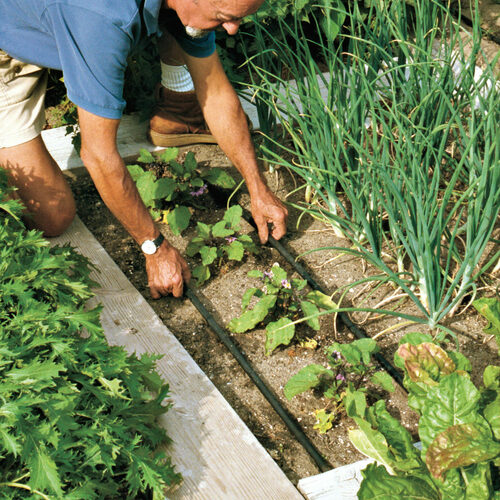
Drip irrigation systems have numerous benefits, both for gardens and flowering plants. By using a drip irrigation system, water will reach your garden’s roots directly, providing immediate soil saturation and saving water and time. Additionally, automated drip irrigation allows you to water your garden with regularity, even when you’re not around.
Why Choose Drip Irrigation?
Drip irrigation is ideal for gardens, whether in pots or organized in beds: every plant will receive the right amount of water without leaving room for waste. Various types of drip irrigation systems are available on the market, including those that can be buried underground and those suitable for lawns. For gardens, a simpler system is often preferred.
Choosing the Right Drip Irrigation System
There are different types of drip irrigation systems available, each with its own benefits. For gardens, it’s recommended to use a simple “porous tube” or a more advanced system. The porous tube consists of a central pipe that releases water through tiny holes along its length, distributing water evenly throughout the pipe.
Key Components of a Drip Irrigation System
Regardless of the type of drip irrigation system you choose, there are a few essential components to consider:
- A “programming device” or central unit that controls watering schedules: this device regulates both frequency and duration of each watering cycle.
- The cost of a drip irrigation system depends on the complexity of the central unit chosen. More advanced central units require more resources, resulting in higher costs.
Building Your Own Drip Irrigation System
While pre-assembled kits are available for purchase, building your own drip irrigation system from scratch can be a rewarding experience. After purchasing a central unit, you’ll need to buy a polycarbonate pipe and a capillary tube (1/4 inch diameter). You’ll also require connectors and sprinklers.
Calculating the Number of Sprinklers Needed
The number of sprinklers required depends on the number of plants being irrigated. To determine the right amount of sprinklers for your garden, use a measuring tape to mark the pipe where each plant needs watering. For each marking, attach a connector and secure it with a piece of capillary tube (1/4 inch diameter).
Connecting Sprinklers to the Pipe
Attach a sprinkler to the end of each capillary tube, making sure it’s securely attached. Connect the sprinkler to the pipe using connectors, ensuring a watertight seal.
Common Mistakes and Solutions for Building Your Own Drip Irrigation System
- Mistake 1: Insufficient pipe length: Not enough pipe may result in uneven watering or plant damage due to inadequate water distribution.
Solution: Ensure you have the necessary pipe length to connect all plants, taking into account any bends or changes in direction. - Mistake 2: Inadequate sprinkler placement: Incorrectly placing sprinklers can lead to overwatering or under-watering certain areas of the garden.
Solution: Measure and mark the pipe where each plant needs watering, then attach a connector and secure it with capillary tube. - Mistake 3: Poor connection quality: Weak connections between components can cause leaks, clogs, or other issues.
Solution: Ensure all connections are watertight by using connectors that fit snugly on both ends of the pipe.
Benefits of Using a Pre-Assembled Kit for Your Drip Irrigation System
While building your own drip irrigation system can be rewarding, purchasing a pre-assembled kit can also have its advantages. Here are some benefits to consider:
- Convenience: Pre-assembled kits come with all necessary components and installation instructions, making it easier to get started.
- Quality control: Kits are typically manufactured by experienced companies that ensure high-quality components and construction.
- Cost-effectiveness: Buying a pre-assembled kit can be more cost-effective than purchasing individual components, especially for larger gardens.
Tips for Maintaining Your Drip Irrigation System
Regular maintenance is essential to ensure your drip irrigation system continues to function efficiently and effectively. Here are some tips to keep in mind:
- Check for leaks: Regularly inspect the system for signs of damage or blockages.
- Clean the filter: Clean the central unit’s filter regularly to prevent clogs and maintain proper water flow.
- Adjust the programming device: Periodically adjust the watering schedule to ensure plants receive the right amount of water.
Conclusion: A Sustainable and Water-Efficient Solution
Drip irrigation systems are a sustainable and water-efficient solution for gardens and flowering plants. By building your own system or purchasing a pre-assembled kit, you can enjoy the benefits of drip irrigation without breaking the bank. With a little creativity and resourcefulness, you can create a customized watering system that meets your specific needs.
Frequently Asked Questions
Q: What is the best way to ensure proper water distribution throughout my garden?
A: Proper water distribution in your garden can be achieved by using a combination of capillary tubes, connectors, and sprinklers. Ensure all components are securely attached and connected to prevent leaks or blockages.
Q: How do I determine the right number of sprinklers for my garden?
A: To determine the correct amount of sprinklers for your garden, measure the length of pipe required for each plant. Calculate the distance from the main water source to the first plant, then add an additional 1-2 feet to account for any bends or changes in direction.
Q: What types of materials are used in drip irrigation systems?
A: Drip irrigation systems can be made from various materials, including polycarbonate pipes, capillary tubes (e.g., PVC or nylon), and connectors. Choose the right materials based on your specific needs and budget.
Q: Can I use a simple porous tube as an alternative to more complex drip irrigation systems?
A: Yes, simpler systems like porous tubes can be effective for small gardens or those with limited water requirements. However, these systems may not offer the same level of efficiency or customization as more advanced drip irrigation systems.
Q: How do I program my central unit to ensure regular watering?
A: Programming your central unit involves setting the frequency and duration of each watering cycle. Consult your user manual for specific instructions on programming your device.
Q: What are some common issues with drip irrigation systems, and how can they be resolved?
A: Common issues with drip irrigation systems include leaks, clogs, and improper water distribution. Regularly inspect your system for signs of damage or blockages, and address any problems promptly to maintain optimal performance.
Q: Can I use a pre-assembled kit as an alternative to building my own drip irrigation system?
A: Yes, purchasing a pre-assembled kit can be a convenient option if you’re short on time or not comfortable with DIY projects. These kits usually include all necessary components and come with installation instructions.
Q: What are the benefits of using a centralized control unit for my drip irrigation system?
A: Centralized control units allow for easy scheduling, reduced water waste, and increased efficiency. They can also be integrated with other smart home devices to create a fully automated watering system.


