
In a world where technology continuously reshapes our experiences, few television series have made an impact as profound as “The Mandalorian.” Launched on Disney+ in November 2019, this Star Wars spin-off not only captivated audiences through its storytelling but also revolutionized the way we perceive and enjoy visual content. The groundbreaking technology behind “The Mandalorian” seamlessly integrates data, filming techniques, and post-production tools to create a vivid, immersive experience that has set a new standard for television production. In this article, we will explore how these innovations are changing the landscape of television—and, in turn, the way we watch it.
Setting the Stage: The Rise of Streaming Platforms
Before we delve into the intricate details behind the stunning visuals of “The Mandalorian,” it’s essential to understand the larger context of television in the streaming era. Streaming platforms like Netflix, Hulu, and Disney+ have changed how audiences consume content. No longer confined to weekly episodes, viewers now binge-watch entire seasons, demanding high-quality production values for their immediate gratification.
“The Mandalorian” emerged during this transition, serving as a flagship series for Disney+ and appealing not only to Star Wars fans but also to a new generation of viewers. The combination of nostalgia and cutting-edge technology offered an experience that felt both familiar and novel, signaling what was possible in the realm of televised storytelling.
The Virtual Production Revolution: Stagecraft
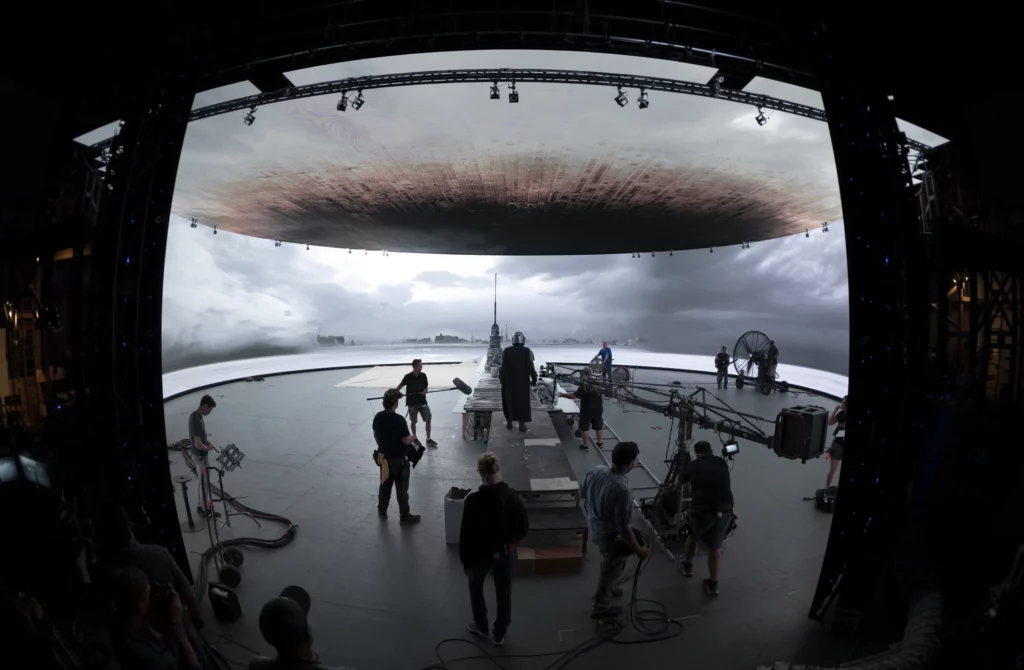
At the heart of “The Mandalorian’s” visual magnificence lies a revolutionary technique known as Stagecraft. Developed by Lucasfilm’s Industrial Light & Magic (ILM), Stagecraft employs LED video walls to create a dynamic, immersive background. This groundbreaking method contrasts sharply with traditional green-screen filmmaking, which can alienate actors from their environment, necessitating the imagination to create a sense of space.
What Is Stagecraft?
Stagecraft utilizes high-definition LED screens to generate realistic backgrounds and environments that can be manipulated in real-time. This technology allows directors to change lighting, perspective, and even weather conditions instantly, providing a more fluid and adaptable filming process. The actors are placed within these environments, allowing them to interact naturally with their surroundings and each other—an experience akin to performing on a traditional set, but with the added benefit of limitless customization.
The Impact of Stagecraft on Filmmaking
The implications of Stagecraft are monumental. By bridging the gap between physical sets and digital landscapes, “The Mandalorian” eliminates the need for extensive location shoots, thereby significantly saving time, money, and resources. This innovative approach has not only changed the production timeline but has also allowed filmmakers to focus on storytelling and character development.
Because the LED backgrounds are so vibrant and lifelike, they contribute a tangible quality to the performance. The actors have the opportunity to respond to authentic visual stimuli, making their performances more convincing. Additionally, the on-set lighting from the screens enhances the actors’ integration into the scene, reducing the need for extensive color correction and effects in post-production.
The Backstage Magic: How It Really Works
While Stagecraft is central to the visual experience of “The Mandalorian,” it’s important to acknowledge the technology supporting this innovation. A complex interplay of hardware and software enables the creation of immersive environments that captivate the audience.
Virtual Reality and Augmented Reality Integration
The systems behind Stagecraft incorporate both Virtual Reality (VR) and Augmented Reality (AR) technologies. This integration allows directors and cinematographers to visualize the scenes in real-time while filming. Imagine being able to see how a sunset might wash over a desert landscape or how a snowstorm might envelop a mountain range—all while the cast is performing. This creative freedom allows for richer, more engaging storytelling.
Real-Time Rendering
The power of real-time rendering is another crucial aspect of the technology behind “The Mandalorian.” The visuals you see on-screen are generated instantaneously, allowing filmmakers to adjust and experiment with the scenes as they unfold. This flexibility not only enhances creativity but also reduces the need for costly reshoots, making the production process much more efficient.
Additionally, by utilizing high-quality graphic engines akin to those found in video games, the producers of “The Mandalorian” can push the boundaries of what is visually possible on-screen. Ultra-high-definition rendering creates stunning landscapes and character designs that stand out even in today’s fast-paced media environment.
Storytelling Through Immersive Environments
One of the most remarkable aspects of “The Mandalorian” is its ability to transport viewers into the Star Wars universe. The seamless melding of technology and storytelling amplifies the emotional depth and complexity of the narrative.
Enhancing Emotional Engagement
The surroundings serve as more than just a backdrop; they are integral to the storytelling process. The diverse landscapes in “The Mandalorian” — from the desolate sands of Tatooine to the bustling cities on Coruscant — are reflective of the characters’ journeys and emotions. The viewers are not just passive observers, but participants who are immersed in a vibrant world that parallels the emotional stakes of the story.
Creating a Distinct Visual Language
Much like how traditional cinematography encompasses various frames, angles, and lighting techniques to create a visual language, “The Mandalorian” employs advanced technology to craft its distinctive aesthetic. The use of controlled lighting from the LED screens mimics natural light, giving each environment a unique character that supports the narrative.
Filmmakers can seamlessly integrate practical effects with visual effects, creating hybrid scenes where the fans and story naturally coexist. This attention to detail enriches the viewing experience and has led to a renewed appreciation for practical effects across the entire film and television industry.
[amazon box=”B08XLLF3PG”]
Changing the Landscape of TV Production
As groundbreaking as “The Mandalorian” is, it doesn’t exist in a vacuum. The innovations birthed from this production are reverberating throughout the film and television industry, motivating other creators to explore new technologies and techniques.
Accessibility of Technology
The rise of affordable green screens, high-quality cameras, and advanced rendering engines means that many smaller production companies can now experiment with the innovations pioneered by “The Mandalorian.” This democratization of technology is opening doors for independent filmmakers and budding creators everywhere.
Access to high-end production methods has the potential to redefine storytelling in television. More voices and diverse stories can shine through, expanding the narratives typically seen on-screen.
Setting New Standards
Networks and studios now recognize the audience’s expectations and demand for quality content at an unprecedented level. The success of “The Mandalorian” has influenced budgets across the industry, with studios willing to invest more heavily in technology and special effects to attract viewers.
As a result, we are witnessing a race for innovation. The use of advanced cinematography and technology in productions like “WandaVision,” “Stranger Things,” and “The Expanse” echoes the ambitious vision set forth by “The Mandalorian.” This shift encourages creative experimentation, delivering diverse content that breaks narrative boundaries.
The Audience Experience
Perhaps one of the most significant ways in which “The Mandalorian” has changed the way we watch TV is through the engagement and immersion of the audience. As viewers become ever-more sophisticated in their media consumption, they expect experiences instead of passive entertainment.
Engaging Fandom
“The Mandalorian” was able to tap into the existing Star Wars fanbase while encouraging new fans to gravitate toward the franchise. The use of nostalgia and well-crafted storytelling makes it accessible for both new viewers and die-hard supporters, creating a community where discussions flourish online.
The meticulous attention to detail, intriguing plotlines, and charismatic characters have inspired creative fan engagement across social media platforms, conventions, and fan art. The series fosters an adaptive dialogue between content and viewers that enhances their connection to the franchise.
An Immersive Experience
The technology behind “The Mandalorian” fosters a unique viewing experience that transcends traditional television. Cinematic visuals project escapism, allowing audiences to lose themselves in a richly detailed world that feels tangible and alive. Additionally, sites like Disney+ emphasize accessibility, enabling viewers to enjoy high-quality streaming experiences from the comfort of their homes.
With the rise of advanced technologies like virtual reality, one can easily envision a future where viewers can step into the world of “The Mandalorian,” experiencing the Star Wars universe in new ways. Such innovation promises to blur the line between viewer and participant, fundamentally changing our viewing habits.
The Future of Television and Film
As we look toward the future, it is clear that “The Mandalorian” has ushered in a transformative era for both television and film. The confluence of technology and storytelling suggests exciting new possibilities for content creators and viewers alike.
Redefining Boundaries
The integration of immersive technology is redefining the boundaries of storytelling. Filmmakers are empowered to create environments and experiences that allow for greater narrative exploration, enabling them to capture complex themes and emotions.
As the line between film and television blurs, the industry is poised for a dynamic shift. Audiences are likely to see increased experimentation in narratives, redefining what it means to engage with moving images.
Embracing the Unknown
While we can’t predict precisely how technology will continue to evolve, we can expect a wave of creative storytelling opportunities that challenge traditional methodologies. The potential applications of Stagecraft and similar technologies leave room for imagination to flourish, driving innovation that will shape the entertainment landscape.
The Mandalorian: A Template for the Future
In conclusion, “The Mandalorian” is not just a successful television series; it’s a reflection of how technology can revolutionize storytelling, enhance viewer engagement, and redefine the entertainment landscape. Its masterful use of Stagecraft has laid the groundwork for future productions, inspiring filmmakers to blend technology and creativity in ways we’ve only begun to imagine.
As we stand on the verge of a new era in television, one thing is clear: The capabilities for visual storytelling are expanding, allowing us to delve into new dimensions of innovation, engagement, and experience. So, the next time you tune into your favorite series or film, take a moment to appreciate the technology that brings those captivating worlds to life. After all, the art of storytelling is evolving, and the journey is just beginning.


