
Introduction
As we navigate the complexities of climate change and environmental sustainability, one thing is becoming increasingly clear: the automotive industry must undergo a significant transformation. The sheer number of vehicles on the road poses a significant challenge to our planet’s resources, air quality, and overall well-being. In this article, we’ll explore the current state of the global vehicle market, with a focus on electric vehicles (EVs) and their potential impact on our future.
The Scale of the Problem
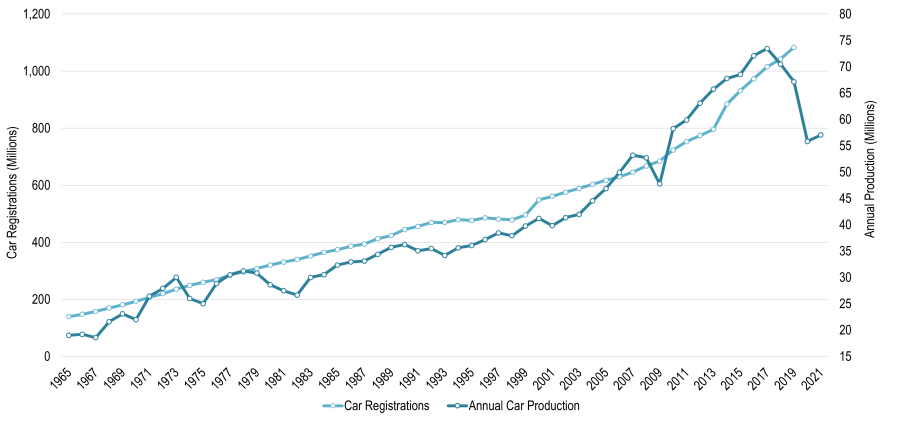
By 2012, it was estimated that over 1 billion vehicles would be on the road worldwide – one for every seven people. This number has only grown since then, with a staggering 979 million vehicles currently in circulation (Worldwatch Institute, 2021). The sheer volume of vehicles poses significant challenges to our environment, from air pollution and greenhouse gas emissions to resource depletion and waste management.
As the global population continues to grow, so too does the demand for transportation. With an estimated 9.7 billion people projected to be living on Earth by 2050 (United Nations Department of Economic and Social Affairs Population Division, 2022), it’s essential that we find sustainable solutions to meet this increasing demand.
The State of Electric Vehicles
While electric vehicles have made significant strides in recent years, their adoption remains relatively slow. According to the International Energy Agency (IEA), global EV production grew by just 10% in 2020, despite increasing demand for sustainable transportation solutions. The barriers to entry are numerous: high upfront costs, limited charging infrastructure, and concerns about battery durability and range.
Despite these challenges, many countries have set ambitious targets for EV adoption, aiming to increase the number of “sustainable” vehicles on the road. China, for example, seeks to reach 5 million electric and hybrid vehicles by 2020 – a goal that could potentially dominate global sales (Renault, n.d.). Other countries, such as Norway and Sweden, have also made significant strides in EV adoption, with some even offering incentives for consumers to purchase eco-friendly vehicles.
The Role of Government Policy
Government policy plays a critical role in shaping the future of electric vehicles. Governments around the world are implementing a range of policies aimed at promoting EV adoption, including tax breaks, subsidies, and investments in charging infrastructure. For example, Norway offers a 100% exemption from value-added tax for all new cars sold in the country, making it an attractive destination for EV buyers.
The Rise of Hybrid Vehicles
While electric vehicles may not be yet mainstream, hybrid vehicles have gained significant traction on the global market. Hybrids combine conventional fossil fuel engines with electric motors, offering improved fuel efficiency and reduced emissions. However, their impact is still relatively small, accounting for just 2% of total vehicle production (Renault, n.d.).
Despite this, hybrids are likely to play an important role in reducing greenhouse gas emissions from transportation in the short term. As EV technology improves, it’s possible that hybrids will become a bridge between conventional fossil fuel vehicles and fully electric vehicles.
The Impact of Electric Vehicles on Air Quality
One of the most significant benefits of electric vehicles is their potential to reduce air pollution. Conventional fossil fuel vehicles are responsible for an estimated 16% of global greenhouse gas emissions, with transportation accounting for 11% (International Energy Agency, 2021). In contrast, EVs produce zero tailpipe emissions, making them a cleaner option for urban areas.
However, the impact of electric vehicles on air quality is not without its challenges. While EVs themselves may reduce pollution, the production and disposal of batteries can generate significant amounts of greenhouse gas emissions. Moreover, the charging process itself can also emit pollutants if powered by fossil fuels.
The Benefits of Electric Vehicles
Despite these challenges, there are numerous benefits to electric vehicles that make them an attractive option for consumers. Some of the most significant advantages include:
- Zero tailpipe emissions
- Improved fuel efficiency (EVs typically have a higher miles-per-gallon equivalent than conventional vehicles)
- Reduced greenhouse gas emissions
- Lower operating costs (EVs require less maintenance and have lower fuel costs)
Country-Specific Targets
Several countries have set ambitious targets for EV adoption, aiming to increase the number of “sustainable” vehicles on the road. China, for example, seeks to reach 5 million electric and hybrid vehicles by 2020 – a goal that could potentially dominate global sales (Renault, n.d.). Other countries, such as Norway and Sweden, have also made significant strides in EV adoption, with some even offering incentives for consumers to purchase eco-friendly vehicles.
The Role of Industry Leadership
As market leaders, companies like Tesla, Volkswagen, and General Motors are playing a critical role in shaping the future of electric vehicles. These companies are investing heavily in research and development, expanding their product offerings, and working to improve the range and affordability of EVs.
However, industry leadership is not enough – governments and consumers must also play a key role in promoting EV adoption. This includes implementing supportive policies, investing in charging infrastructure, and providing incentives for consumers to purchase eco-friendly vehicles.
Conclusion
The rise of electric vehicles represents a critical juncture for humanity. As we hurtle towards a climate crisis, it’s essential that we prioritize sustainable transportation solutions. While there are still many challenges to overcome, the momentum behind EVs is undeniable. With continued investment in research and development, improved battery technology, and expanded charging infrastructure, the future looks bright – but only if we work together to create a more sustainable transportation system for all.
Frequently Asked Questions
Q: How many vehicles are on the road today?
A: According to the Worldwatch Institute (2021), there are approximately 979 million vehicles in circulation worldwide, up from just 691 million in 2011.
Q: What is the current state of global EV production?
A: Despite increasing demand, global EV production grew by only 10% in 2020, according to the International Energy Agency (IEA).
Q: Which countries have set ambitious targets for EV adoption?
A: China, for example, seeks to reach 5 million electric and hybrid vehicles by 2020 – a goal that could potentially dominate global sales.
Q: What are the main barriers to widespread EV adoption?
A: High upfront costs, limited charging infrastructure, and concerns about battery durability and range are among the primary hurdles facing the industry.
Q: How do countries like China, the United States, Japan, and Germany influence global EV trends?
A: As market leaders, these countries have a disproportionate impact on global EV trends – but their progress is often hampered by regulatory hurdles, industry competition, and consumer acceptance.


