
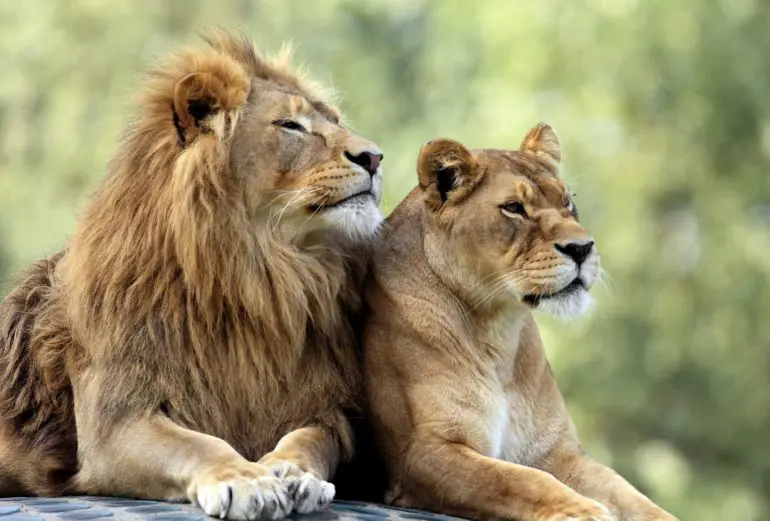
Understanding the Majestic Lion
Lions are often referred to as the kings of the jungle, and it’s easy to see why. With their majestic manes and powerful roars, they command respect from all who encounter them. But have you ever wondered how long a lion lives? In this article, we’ll delve into the fascinating world of lions, exploring their life span, habitat, behavior, and more.
The Decline of Lion Populations
Unfortunately, lion populations are declining at an alarming rate. According to the International Union for Conservation of Nature (IUCN), lions are considered a vulnerable species, with their habitats shrinking and human-wildlife conflict on the rise. As we explore the life span of a lion, it’s essential to acknowledge the challenges they face.
Lion Life Span: In the Wild
In the wild, lions typically live between 10 to 14 years. However, some individuals have been known to reach up to 16 years of age. While their lifespan is impressive, it’s worth noting that lionesses tend to outlive male lions, with females living up to 18 years in the wild.
Why Do Male Lions Live Shorter Lives?
Research suggests that male lions’ shorter lifespan can be attributed to injuries sustained during battles for dominance or mating rights. As alpha males, they often face physical challenges and social stressors that can impact their overall health.
The Size of a Lion: A Record-Breaking Masculine Form
Lions are known for their impressive size, with some males reaching weights of up to 250 kg (550 lbs). However, there have been instances where individual lions have reached even more remarkable proportions. For example, a lion named Simba at the Colchester Zoo in the UK reached an astonishing weight of 375 kg (831 lbs).
Habitat and Distribution: Where Lions Call Home
Lions are found primarily in Africa’s savannas and grasslands, but they can also be adapted to areas with denser vegetation. In their natural habitats, lions roam freely in prides, which typically consist of several females, their cubs, and one or more males.
The Social Structure of Lion Prides
Unlike other big cats, lions are highly social animals that live in prides. The pride is usually led by an alpha male and female, who work together to protect the pride’s territory and raise the cubs. When a lioness gives birth, she will often choose a specific spot within the pride’s territory to give birth.
Size Comparison: Lions vs. Other Big Cats
When it comes to size, lions are among the largest felines in the world. However, they are not as massive as some other big cats. For example, the Siberian tiger can weigh up to 320 kg (705 lbs), while the lion’s closest relative, the leopard, typically reaches a weight of around 70 kg (154 lbs).
Leopard vs. Lion: A Comparison
While both lions and leopards are majestic felines, they exhibit distinct differences in terms of their size, coat color, and habitat preferences. Leopards are generally smaller than lions, with most males weighing between 30-60 kg (66-132 lbs). They also tend to live in more forested or rocky areas.
Rare White Lions: A Genetic Anomaly
White lions, also known as leucistic lions, are extremely rare and are born with a genetic condition that affects their coat color. This phenomenon is caused by a recessive gene that reduces the production of melanin, resulting in a pale or white coat. While not all white lions are albino, they often display patches of pigmentation on their coats.
The Life Span of White Lions
White lions have an average life span similar to that of other lion subspecies, with some individuals living up to 15-18 years in the wild. However, due to their rare occurrence, there is limited data available on their lifespan and behavior.
Frequently Asked Questions
Q: How long do lions live?
A: Lions typically live between 10-14 years in the wild, although some females can reach up to 16 years of age.
Q: Why do male lions have shorter lifespans?
A: Research suggests that male lions’ shorter lifespan is due to injuries sustained during battles for dominance or mating rights.
Q: How big can a lion get?
A: Some males can weigh up to 250 kg (550 lbs), while the largest recorded lion was a male named Simba, who reached an astonishing weight of 375 kg (831 lbs).
Q: Where do lions live?
A: Lions are primarily found in Africa’s savannas and grasslands.
Q: Are white lions a separate species?
A: No, white lions are not a separate species. They are born with a genetic condition that affects their coat color.
Q: How long do white lions live?
A: There is limited data available on the lifespan of white lions, but they tend to live up to 15-18 years in the wild.
Q: Can leopards and lions coexist in the same habitat?
A: While both are big cats, they occupy different ecological niches. Leopards prefer more forested or rocky areas, whereas lions inhabit savannas and grasslands.
Conservation Efforts
Efforts to conserve lion populations are underway, but it’s essential to acknowledge that these efforts face significant challenges. Human-wildlife conflict is a major concern, as lions often come into contact with human settlements and agriculture. Habitat loss and fragmentation also contribute to the decline of lion populations.
Protecting Lion Habitats
Conservation organizations and governments are working together to protect lion habitats and prevent habitat loss. This includes establishing protected areas and conducting research on lion behavior and ecology.
Reducing Human-Lion Conflict
Human-lion conflict can be reduced through education and outreach programs that promote coexistence between humans and lions. This includes providing compensation to farmers for crop damage caused by lions and promoting sustainable land-use practices.
Responsible Wildlife Tourism
Responsible wildlife tourism is essential in supporting lion conservation efforts. Tourists should never approach or feed lions, as this can disrupt their natural behavior and lead to human-lion conflict.
What You Can Do to Help Lions
There are many ways you can help support lion conservation efforts. Here are a few suggestions:
- Donate to reputable organizations dedicated to lion conservation
- Spread awareness about the decline of lion populations and the importance of conservation efforts
- Support eco-tourism that promotes responsible wildlife viewing practices
By taking action, we can work towards protecting lions and their habitats for generations to come.
Conclusion
The life span of a lion is an fascinating topic that offers insights into these majestic creatures. While lion populations are declining, there are still many organizations and individuals working tirelessly to protect them. By understanding the social structure of lion prides, size comparison with other big cats, and rare genetic anomalies like white lions, we can better appreciate these incredible animals.
Ultimately, it’s up to us to take action and support conservation efforts that will help protect lions for generations to come.


