
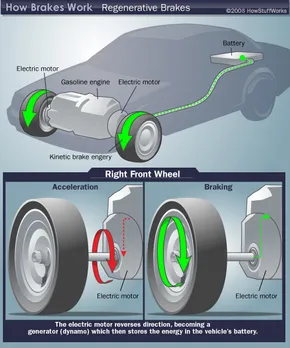
Regenerative braking is a technology that has become increasingly important in recent years, particularly in the automotive and transportation industries. This article will delve into how regenerative braking works, its applications, and the benefits it offers to consumers.
What is Regenerative Braking?
Regenerative braking is a process where a vehicle converts kinetic energy into electrical energy during the deceleration phase. This technology has been employed in various modes of transportation, including electric vehicles (EVs), hybrid cars, and even public transit systems like buses and trains.
The term “regenerative” refers to the ability of the vehicle to generate electricity from its own movement. In the context of braking, this means that some of the kinetic energy is converted into electrical energy, which can be stored in the vehicle’s battery for later use. This process happens due to a specialized device called a generator, which is connected to the wheels and axles of the vehicle.
How Does Regenerative Braking Work?
When a vehicle decelerates, its kinetic energy is typically dissipated as heat through the brakes. However, regenerative braking captures some of this energy and converts it into electrical energy, which can be stored in the vehicle’s battery for later use. This process happens due to a specialized device called a generator, which is connected to the wheels and axles of the vehicle.
The generator works by converting the mechanical energy of the wheels and axles into electrical energy through electromagnetic induction. When the vehicle decelerates, the generator captures some of this energy and converts it into electricity, which is then stored in the battery.
Regenerative Braking: Traction Trains
Trains are one of the most efficient applications of regenerative braking technology. In urban environments, trains frequently experience short bursts of acceleration and deceleration, making them ideal candidates for regenerative braking. When a train brakes, its kinetic energy is converted into electrical energy, which is then fed back into the power grid or stored in onboard batteries.
Trains use advanced regeneration systems that can recover up to 90% of their kinetic energy during braking, reducing wear on brake pads and increasing overall efficiency. This technology has been instrumental in reducing energy consumption and emissions from urban rail networks.
Regenerative Braking: Bicycles
For cyclists, regenerative braking can be achieved with the right equipment. Bike manufacturers have developed specialized components that capture some of the kinetic energy during deceleration and convert it into electrical energy, which is then used to recharge the battery.
These systems typically use advanced regenerative braking technologies such as hub-mounted generators or electromagnetic brakes, which are designed to recover as much energy as possible during deceleration. By converting some of this energy into electricity, cyclists can reduce their carbon footprint and enhance their overall cycling experience.
Regenerative Braking: Vehicles
Cars equipped with regenerative braking technology can recover up to 30% of their kinetic energy during braking, reducing wear on brake pads and increasing overall fuel efficiency. This technology is particularly useful for EVs, plug-in hybrids, and hybrid cars, as it enhances their range and performance.
Some models, like the Volkswagen ID.3, incorporate advanced regenerative braking systems that optimize energy recovery during deceleration. These systems can recover up to 90% of kinetic energy, reducing wear on brake pads and increasing overall efficiency.
Regenerative Braking: Electric Vehicles
Electric vehicles are among the most significant beneficiaries of regenerative braking technology. By converting kinetic energy into electrical energy, EVs can increase their range and efficiency. Some models, like the Volkswagen ID.3, incorporate advanced regenerative braking systems that optimize energy recovery during deceleration.
The benefits of regenerative braking for electric vehicles include:
- Increased range: Regenerative braking extends an EV’s range by capturing kinetic energy and converting it into electrical energy.
- Improved efficiency: Regenerative braking reduces wear on brake pads, increasing overall fuel efficiency and reducing emissions.
- Enhanced performance: Regenerative braking enhances an EV’s acceleration and responsiveness.
The Benefits of Regenerative Braking
Regenerative braking offers numerous benefits to consumers, including:
- Reduced wear on brake pads
- Improved fuel efficiency
- Increased range and performance for electric vehicles
- Enhanced environmental sustainability
In addition, regenerative braking can also lead to significant reductions in greenhouse gas emissions. By capturing kinetic energy during deceleration and converting it into electrical energy, vehicles can reduce their reliance on fossil fuels and decrease emissions.
FAQs: Regenerative Braking
- What is the primary function of regenerative braking?
- To capture kinetic energy during deceleration and convert it into electrical energy.
- Which industries benefit most from regenerative braking technology?
- Electric vehicles, hybrid cars, public transportation systems like buses and trains.
- How much energy can be recovered through regenerative braking?
- Up to 90% of kinetic energy for traction trains and up to 30% for electric vehicles.
- What are the advantages of using regenerative braking in urban environments?
- Reduced strain on power grids, lower emissions, and increased efficiency.
Conclusion
Regenerative braking technology is revolutionizing various industries by optimizing energy recovery during deceleration. Its benefits extend to consumers, including reduced wear on brake pads, improved fuel efficiency, and increased environmental sustainability. As the world continues to shift towards more sustainable transportation options, regenerative braking will play an increasingly important role in reducing emissions and improving overall efficiency.
By understanding how regenerative braking works and its applications across various industries, consumers can make informed decisions about their energy needs and contribute to a more sustainable future.


