
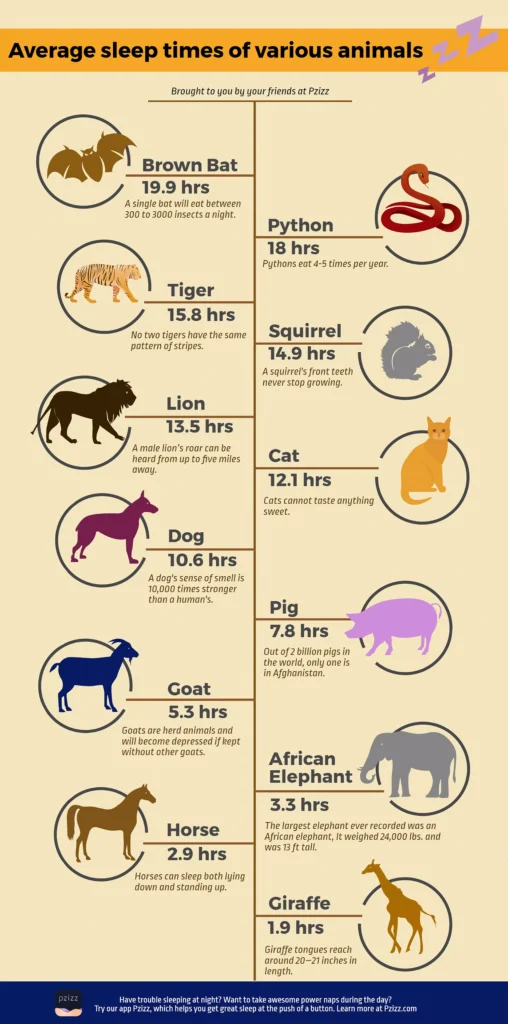
As humans, we often take our sleep for granted. But did you know that animals also need to rest? In fact, their sleep patterns are quite different from ours. Just like how humans need 7-8 hours of sleep each day, animals have varying amounts of sleep based on their species, lifestyle, and environment. Let’s explore some fascinating facts about animal sleep.
Animal Sleep: How Much Do They Rest?
Unlike humans, animals don’t get the same amount of sleep every night. The amount of sleep varies greatly between species, from a few hours to almost 20 hours! For example:
- Whales and Dolphins: These marine mammals don’t truly sleep like humans do. Instead, they rest for short periods while keeping one half of their brain awake. This allows them to stay alert for predators.
- Lions: The kings of the savannah sleep for up to 16 hours a day! They can even spend most of their day sleeping in short naps.
- Elephants: These massive animals can sleep for about 4-6 hours a night, but they often take multiple short naps throughout the day.
Animal Sleep: What Can We Learn From Them?
By studying animal sleep patterns, we can gain insights into their behavior, adaptations, and survival strategies. For instance:
- Carnivores: Animals like lions and tigers sleep more than herbivores because they need to conserve energy for hunting and defending themselves.
- Mammals: Baby mammals often don’t sleep much because they rely on their mothers’ milk for sustenance and warmth.
- Birds: Many birds, such as chickens and ducks, take turns resting while keeping watch for predators.
Animal Sleep: How Do They Adapt?
Some animals have adapted unique strategies to rest while still being vigilant. For example:
- Giraffes: These long-necked animals can sleep with their heads down, allowing them to rest while still being able to see predators.
- Zebras and Elephants: These herbivores can sleep standing up, using a special system that allows them to lock their joints in place.
- Kangaroos: These marsupials are known for their ability to sleep with one eye open, keeping watch for predators while still resting.
Animal Sleep: What Can We Do from Our Own Lives?
By understanding animal sleep patterns, we can learn new strategies for improving our own sleep quality. For instance:
- Consistency: Animals often have regular sleep schedules, which is essential for maintaining good health and well-being.
- Restfulness: By taking breaks and practicing relaxation techniques, we can improve our overall quality of life.
- Creating a Sleep-Conducive Environment: Just like animals need a safe place to rest, we do too. Creating a dark, quiet, and cool sleep environment can help us get the best possible sleep.
Animal Sleep: Conclusion
In conclusion, animal sleep patterns are incredibly diverse and fascinating. By studying these patterns, we can gain insights into their behavior, adaptations, and survival strategies. Whether it’s learning from the lions’ love of napping or the giraffes’ unique sleeping stance, there’s always something new to discover.
Frequently Asked Questions
- How much sleep do animals get?
Animals have varying amounts of sleep based on their species, lifestyle, and environment. - Why don’t whales and dolphins truly sleep like humans do?
Whales and dolphins don’t sleep like humans because they need to stay alert for predators while resting. - Can animals sleep standing up?
Yes, some animals like zebras, elephants, and buffaloes can sleep standing up. - How do giraffes sleep with their heads down?
Giraffes can sleep with their heads down by using a special system that allows them to lock their joints in place. - Can I learn anything from animal sleep patterns?
Yes, studying animal sleep patterns can teach us new strategies for improving our own sleep quality and overall well-being.
Animal Sleep: Fun Facts
- The shortest recorded nap was just 4 seconds long!
- Some animals can sleep with their eyes open! This is called “unihemispheric slow-wave sleep,” where one half of the brain rests while the other half remains awake.
- Elephants have a special type of sleep called “polyphasic sleep,” where they take multiple short naps throughout the day.
Animal Sleep: Myth-Busting
- Myth: All animals sleep for 8 hours a night.
Fact: Most animals don’t get 8 hours of sleep per night, and some species may only need 2-3 hours. - Myth: Animals always wake up quickly after a nap.
Fact: Some animals can take much longer to wake up from a nap, and it’s not uncommon for them to doze off again before fully waking up.
Animal Sleep: Conclusion
In conclusion, animal sleep patterns are incredibly diverse and fascinating. By studying these patterns, we can gain insights into their behavior, adaptations, and survival strategies. Whether it’s learning from the lions’ love of napping or the giraffes’ unique sleeping stance, there’s always something new to discover.
Animal Sleep: Future Research Directions
- Sleep Patterns in Wildlife: Studying sleep patterns in wildlife can help us understand how animals adapt to different environments and lifestyles.
- Sleep Disorders in Animals: Investigating sleep disorders in animals can provide insights into the causes of sleep-related problems in humans.
- Sleep-Regulating Mechanisms: Uncovering the mechanisms that regulate animal sleep can lead to new strategies for improving human sleep quality.
By exploring the fascinating world of animal sleep, we can gain a deeper understanding of the natural world and our place within it. Whether it’s learning from the animals or discovering new facts about their sleep patterns, there’s always something new to discover.


