
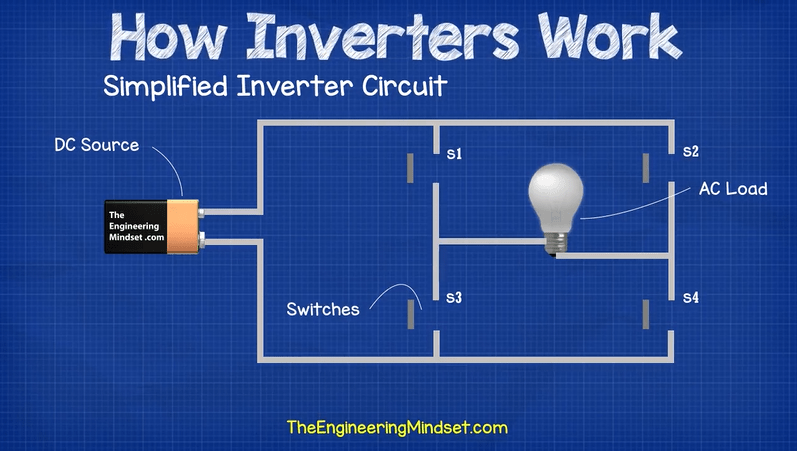
As we navigate the world of renewable energy and smart home devices, it’s essential to understand how inverters work and their various applications. In this article, we’ll delve into the world of inverters, exploring what they are, how they function, and their different types.
What is an Inverter?
An inverter is an electronic device that converts direct current (DC) into alternating current (AC), a crucial process for powering devices that operate on AC. Inverters are indispensable in the field of renewable energy, particularly in photovoltaic systems, where they transform DC power from solar panels into AC power for household use.
History of Inverters
The concept of inverters dates back to the 19th century when the first alternating current (AC) generators were developed. These early devices used electromagnetic induction to convert mechanical energy into electrical energy in the form of AC. Over time, inverters evolved to meet the needs of various applications, including renewable energy systems and motor control.
How Do Inverters Work?
In simple terms, an inverter works by converting a DC current, typically generated by a battery or a solar panel, into an AC current. This process is made possible by the principle of electromagnetic induction, where a changing magnetic field induces an electric current.
To understand how inverters work, let’s first explore the basics of alternators and transformers. An alternator converts mechanical energy into electrical energy in the form of AC. A transformer, on the other hand, changes the voltage of an alternating current by altering the ratio of turns in its primary and secondary coils.
An inverter can be seen as a modified transformer with the addition of circuitry to rapidly change the direction of the DC current. This allows it to produce AC power that is identical to the grid’s frequency and voltage.
Types of Inverters
There are three main types of inverters: those that produce an output waveform shaped like a square wave, those with a modified sinusoidal waveform, and pure sinusoidal waveforms.
- Inverter a onda quadrata: These are best suited for purely resistive loads.
- Inverter a onda sinusoidale modificata: Suitable for both resistive and capacitive loads but may be too noisy for inductive loads.
- Inverter a onda sinusoidale pura: Can handle all types of loads as they accurately reproduce the AC waveform found in household electricity.
Characteristics of Inverters
Inverters have several characteristics that make them suitable for various applications:
- Efficiency: Inverters are designed to be highly efficient, converting a high percentage of DC power into AC power.
- Flexibility: Modern inverters can handle various types of loads, including resistive, capacitive, and inductive loads.
- Safety: Inverters are equipped with safety features, such as overcurrent protection and thermal monitoring, to prevent damage to equipment.
Applications of Inverters
- Photovoltaic Systems: The most common application, where inverters convert DC power from solar panels into AC for grid connection or direct use.
- Motor Control: Inverters regulate the speed of three-phase motors by changing the frequency and voltage applied to them.
- Power Conditioning: Provides a stable output for sensitive equipment, like data centers and medical facilities.
Advantages of Using Inverters
Using inverters offers several advantages:
- Renewable Energy: Inverters enable the efficient conversion of DC power from renewable energy sources into AC power.
- Flexibility: Modern inverters can handle various types of loads, making them suitable for a wide range of applications.
- Energy Efficiency: Inverters are designed to be highly efficient, reducing energy losses and increasing overall system efficiency.
Challenges in Using Inverters
While inverters offer several advantages, they also present some challenges:
- Complexity: Modern inverters can be complex devices, requiring specialized knowledge to install and operate.
- Cost: High-quality inverters can be expensive, making them a significant investment for some applications.
- Interoperability: Inverters may not always be compatible with existing infrastructure, requiring additional planning and installation.
Conclusion
Inverters play a critical role in renewable energy systems and modern smart home devices. Understanding how they work and their various applications can help you make informed decisions when selecting an inverter for your needs.
Choosing the Right Inverter
When selecting an inverter, consider factors such as the type of load you’re powering, the size of your solar panel system, and local electrical codes. It’s also essential to choose an inverter that is suitable for your specific application, taking into account factors such as efficiency, flexibility, and safety.
Best Practices for Inverter Installation
To ensure safe and efficient operation of inverters, follow these best practices:
- Follow Local Electrical Codes: Ensure compliance with local electrical codes and regulations.
- Use High-Quality Equipment: Choose high-quality inverters that meet your specific needs.
- Regular Maintenance: Regularly inspect and maintain inverters to ensure optimal performance.
Common Issues with Inverters
While inverters are designed to be reliable, they can still experience issues:
- Inverter Failure: Inverters can fail due to overheating, electrical surges, or other factors.
- Battery Performance: Batteries used in solar panel systems can degrade over time, reducing their overall performance.
- Grid Connection Issues: Grid connection issues can occur if the inverter is not properly synchronized with the grid’s frequency and voltage.
Troubleshooting Inverters
When troubleshooting inverters, follow these steps:
- Check Electrical Connections: Verify that all electrical connections are secure and meet local electrical codes.
- Inspect Equipment: Regularly inspect inverters for signs of wear or damage.
- Monitor Performance: Continuously monitor inverter performance to identify any issues.
Conclusion
Inverters play a critical role in renewable energy systems and modern smart home devices. Understanding how they work and their various applications can help you make informed decisions when selecting an inverter for your needs.
Frequently Asked Questions
Q: What is the primary function of an inverter?
A: The primary function of an inverter is to convert direct current (DC) into alternating current (AC), which is necessary for powering devices that operate on AC power.
Q: How do inverters produce AC power from DC power?
A: Inverters use electromagnetic induction, where a changing magnetic field induces an electric current. This process is made possible by the addition of circuitry to rapidly change the direction of the DC current.
Q: What are the different types of inverters available?
A: There are three main types of inverters: those that produce square wave outputs, modified sinusoidal waveform outputs, and pure sinusoidal waveform outputs.
Q: How do I choose the right inverter for my needs?
A: When selecting an inverter, consider factors such as the type of load you’re powering, the size of your solar panel system, and local electrical codes.


