
Understanding how a wind turbine works is crucial for appreciating the technology behind harnessing renewable energy from the wind. In this article, we will delve into the mechanics of wind turbines and explore their components, working principles, and recent advancements.
A Brief History of Wind Energy
Wind power has its roots in ancient times. The earliest recorded use of windmills dates back to around 3000 BCE, when sailors used sails to harness wind energy for transportation. In ancient Babylon, around 2000 BCE, the first windmills were developed to grind grain.
Fast-forward to today, and wind turbines have become a vital source of renewable energy. But how do they work? The principle behind wind turbine operation is simple: the force of the wind turns blades, which are connected to a rotor, ultimately driving an electrical generator to produce electricity.
Components of a Wind Turbine
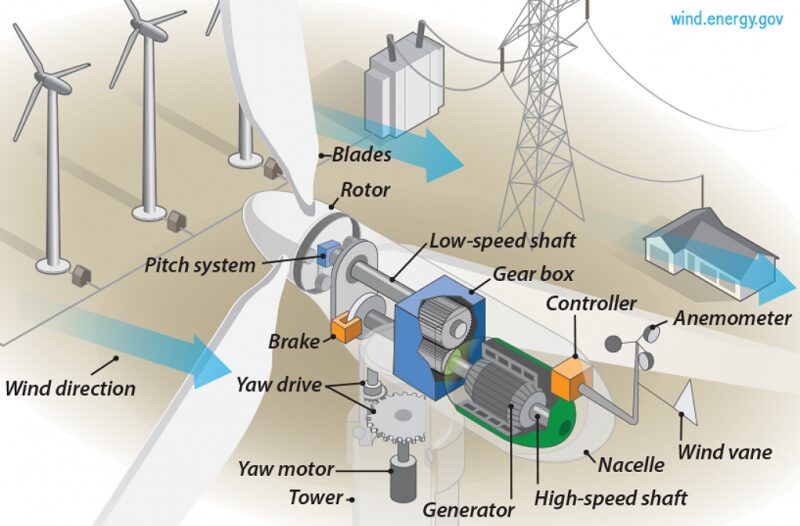
A wind turbine consists of several key components:
- Rotor: The rotating blade that captures the wind’s kinetic energy.
- Nacelle: The housing that contains the electrical components and control systems.
- Tower: Supports the nacelle and rotor, providing structural stability.
- Generators: Convert mechanical energy into electrical energy.
Working Principle of a Wind Turbine
Here’s how it works:
- As wind flows through the turbine’s blades, it creates an area of lower air pressure above the blade and higher air pressure below.
- This pressure difference causes the blades to rotate, which is connected to a shaft (the rotor).
- The rotating shaft is linked to a generator, which converts mechanical energy into electrical energy.
- As wind speed increases, so does the rotational speed of the turbine, producing more electricity.
Types of Wind Turbines
There are several types of wind turbines, each with its unique features:
- Horizontal Axis Wind Turbine (HAWT): The most common type, where the rotor blades rotate around a horizontal axis.
- Vertical Axis Wind Turbine (VAWT): Rotors align vertically, which can improve efficiency in urban areas.
Recent Advancements
The wind turbine industry is rapidly evolving. New technologies and designs are emerging:
- Larger Turbines: Modern turbines have larger rotors, allowing for increased energy production.
- Floating Wind Turbines: Designed to operate offshore, these turbines can harness wind energy from deeper waters.
How Wind Turbines Are Installed
Installing a wind turbine requires careful planning and execution. Here’s an overview of the process:
- Site selection: Identify suitable locations for wind turbines based on wind speed, direction, and terrain.
- Foundation installation: Dig foundations for the tower, which can be made from concrete or steel.
- Tower construction: Assemble the tower using materials like steel or concrete.
- Nacelle installation: Install the nacelle containing the electrical components and control systems.
- Rotor installation: Attach the rotor blades to the shaft.
Benefits of Wind Energy
Wind energy offers numerous benefits, including:
- Renewable source: Wind energy is a renewable source that doesn’t contribute to greenhouse gas emissions.
- Low operating costs: Once installed, wind turbines have low operating costs compared to traditional fossil fuel-based power plants.
- Job creation: The wind industry creates jobs in manufacturing, installation, and maintenance.
Challenges Facing the Wind Industry
Despite its benefits, the wind industry faces several challenges:
- Integrating into grid: Wind energy is intermittent, making it difficult to integrate into the grid.
- Environmental concerns: Wind turbines can have visual impacts on the landscape and disturb wildlife habitats.
- Technological advancements: The need for more efficient and cost-effective technologies drives innovation.
FAQs
Here are some frequently asked questions about wind turbines:
- Q: Are wind turbines noisy?
A: Modern wind turbines are designed to minimize noise pollution, with advanced materials and optimized blade designs. - Q: Can wind turbines be used in urban areas?
A: Yes, vertical-axis wind turbines can be more suitable for urban environments due to their compact design. - Q: How much electricity do wind turbines produce?
A: The amount of electricity produced depends on factors like wind speed, turbine size, and location.
Wind turbines have come a long way since ancient times. With ongoing innovation and advancements, we can expect even more efficient and effective ways to harness the power of wind energy.
Conclusion
In conclusion, understanding how a wind turbine works is essential for appreciating its role in renewable energy production. From its history to recent advancements, the wind turbine industry continues to evolve and improve. As the world shifts towards cleaner energy sources, wind turbines will play an increasingly vital part in reducing greenhouse gas emissions and mitigating climate change.
Future of Wind Energy
The future of wind energy looks bright, with several factors contributing to its growth:
- Technological advancements: Continued innovation in turbine design, materials, and control systems will improve efficiency and reduce costs.
- Government policies: Increasing government support for wind energy through subsidies, tax credits, and renewable portfolio standards will drive investment and deployment.
- Public awareness: Growing public awareness of the benefits of wind energy and its role in addressing climate change will lead to increased demand.
As we move forward, it’s essential to address the challenges facing the wind industry while capitalizing on its potential. By doing so, we can unlock a cleaner, more sustainable future for generations to come.
Final Thoughts
The journey towards harnessing renewable energy from wind has been a long and winding one. From ancient times to modern innovations, wind turbines have played a vital role in reducing our reliance on fossil fuels. As the world continues to evolve, it’s clear that wind energy will remain an essential component of our transition towards a cleaner, more sustainable future.


