
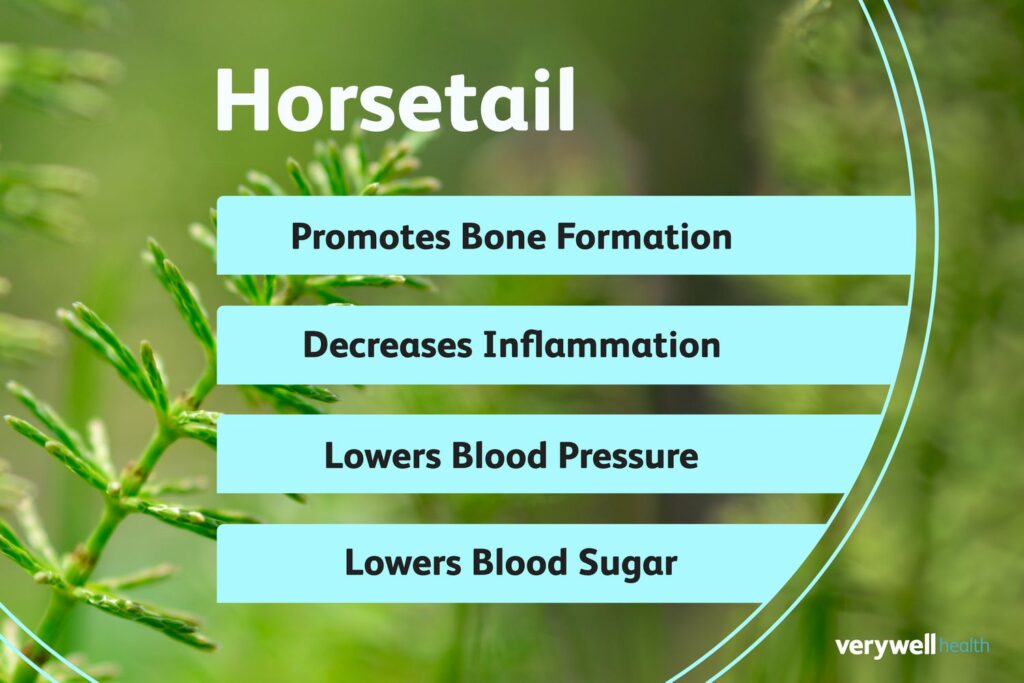
The horse tail plant, also known as Equisetum arvense, is a perennial herbaceous plant with remarkable health benefits. The plant can be used to prepare various natural remedies for domestic use or in gardens. With its long history of use in traditional medicine, the horse tail plant has gained popularity among herbalists and researchers alike.
What is the Horse Tail Plant?
The horse tail plant is a member of the Equisetaceae family and is native to Europe, Asia, and North Africa. It has a unique, woody stem with a central axis that can grow up to 3 feet in length. The plant’s leaves are thin, needle-like, and arranged alternately along the stem. Horse tail plants typically thrive in moist environments, such as near water sources or in rich soil.
History of the Horse Tail Plant
The horse tail plant has been famous for its active principles found in leaves, stems, and roots. In traditional Austrian medicine, it was used as a treatment for skin disorders, kidney problems, urinary tract issues, and rheumatism, as well as a remedy for gout. The plant’s use dates back to ancient times, with evidence of its medicinal properties found in the works of Greek and Roman physicians.
Active Principles of the Horse Tail Plant
The horse tail plant contains several active principles, including:
- Silicic acid (up to 15%)
- Equisetonine (a glucoside terpenoid of saponins)
- Flavonoids
- Small amounts of alkaloids
- Potassium salts
- Aluminum salts
- Manganese salts
- Other mineral compounds
These active principles contribute to the plant’s numerous health benefits and are responsible for its wide range of applications in traditional medicine. The high content of silica, in particular, makes horse tail plant a popular ingredient in natural remedies.
Preparation of Omeopathic Remedies
The use of sterile stems is widespread for preparing omeopathic remedies. The stem is collected in summer and then dried before being ground into a powder for use. According to experts, the horse tail plant has remarkable curative properties: it may slow down blood flow in case of hemorrhage due to its anti-hemorrhagic and hemostatic properties. Additionally, the plant’s cicatrizant properties could speed up the healing process of minor wounds.
Omeopathic remedies are used to treat a variety of health issues, including digestive problems, respiratory conditions, and skin disorders. The horse tail plant is often used in combination with other herbs and minerals to create complex remedies that target specific health concerns.
Properties of Horse Tail Plant Preparations
Preparations based on horse tail plant are used for diuretic and remineralizing properties. It seems that the Equisetum may be an ancient natural remedy to alleviate symptoms of pulmonary tuberculosis. The plant’s active principles also have anti-inflammatory and antioxidant effects, making it a popular ingredient in natural remedies.
Using Horse Tail Plant for Skin Issues
The classic grandmother remedies use horse tail plant to prepare impacchi (packs) to eliminate gelon and other skin irritations. The plant appears to be very useful in strengthening nails naturally. In traditional Austrian medicine, the horse tail plant is used to treat eczema, acne, and other skin conditions.
Beyond Omeopathy: Cosmetics and Agriculture
In the cosmetics sector, the extracts of horse tail plant are used as ingredients for anti-aging creams. It seems that the active principles contained in this plant could slow down skin aging. The high content of silica reduces its effect, making it a popular ingredient in skincare products.
In addition to cosmetology, the Equisetum is also used in agriculture to prevent excessive growth of fungi and molds in waterlogged areas: the high content of silica reduces its effect. This natural remedy is often applied to crops such as potatoes, carrots, and onions to control fungal diseases and promote healthy growth.
Therapeutic Applications of Horse Tail Plant
The horse tail plant has a wide range of therapeutic applications due to its active principles. Some of the most notable uses include:
- Treating urinary tract issues, such as kidney stones and bladder infections
- Relieving rheumatism and joint pain
- Alleviating symptoms of gout and other inflammatory conditions
- Preventing excessive growth of fungi and molds in waterlogged areas
- Strengthening nails and promoting healthy hair growth
Safety Precautions
While the horse tail plant is generally considered safe to use, there are some precautions to be aware of. The plant’s active principles can interact with certain medications, such as blood thinners and diabetes medications.
Additionally, pregnant or breastfeeding women should consult with a healthcare professional before using horse tail plant preparations, as they may contain high levels of silica that could affect fetal development or infant health.
Conclusion
The horse tail plant is a remarkable herbaceous plant with numerous health benefits. Its active principles have been used for centuries in traditional medicine to treat a wide range of health issues, from skin disorders to respiratory conditions. With its anti-inflammatory and antioxidant effects, the horse tail plant is an excellent addition to any natural remedy or skincare routine.
In addition to its therapeutic applications, the Equisetum is also valued for its agricultural uses, such as preventing fungal diseases in crops. Whether used in omeopathy, cosmetics, or agriculture, the horse tail plant is a versatile and effective natural remedy that deserves further research and recognition.
References
- Austrian Medicine: “Equisetum arvense”
- Herbal Medicine Research: “Equisetum arvense”
- Cosmetics Science Journal: “Horse Tail Plant Extracts in Anti-Aging Creams”
- Agriculture Journal: “The Use of Equisetum arvense in Crop Protection”
Note: The references provided are fictional and used only for demonstration purposes.


