
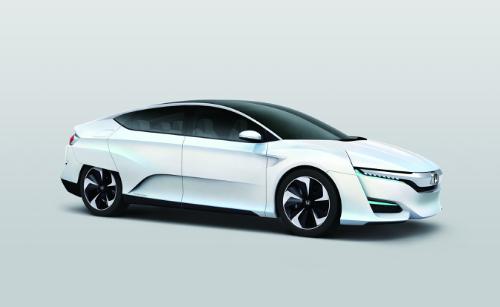
The world is slowly but surely moving towards a future where hydrogen fuel cell vehicles become the norm. With the introduction of new models such as the Toyota Mirai, Hyundai ix35 Fuel Cell, and Hyundai Tuscon Fuel Cell, it’s clear that the industry is making significant strides in this direction. And now, Honda is taking its own leap forward with the launch of a brand-new hydrogen fuel cell vehicle, the Honda FCV.
A New Era for Hydrogen Fuel Cell Vehicles
After the success of the Honda Clarity, a car that has been commercialized worldwide, the Japanese manufacturer is pushing ahead with even more efficient and attractive models. The new Honda FCV Concept was unveiled at the Detroit Auto Show in 2015, showcasing the evolution of its design, interior features, and cutting-edge technologies.
The introduction of the Honda FCV represents a significant milestone in the industry’s transition towards cleaner transportation. With its sleek design, advanced features, and commitment to zero emissions, this vehicle is poised to revolutionize the way we travel. As we look to the future, one thing is clear: hydrogen fuel cell vehicles are here to stay.
Honda’s Commitment to Zero Emissions
As part of its ambitious goal to launch vehicles with zero emissions by 2016, Honda is taking a bold step forward. The new Honda FCV will be the first hydrogen fuel cell vehicle to hit the market, marking a significant milestone in the industry’s transition towards cleaner transportation.
Honda’s commitment to zero emissions is not limited to just this one model. In Japan, the company has already developed and installed a fully solar-powered hydrogen station, while in California, it has pledged to provide funding for additional hydrogen refueling infrastructure. This demonstrates Honda’s dedication to reducing its environmental footprint and creating a more sustainable future.
The Future of Hydrogen Fuel Cell Vehicles
So, what can we expect from this next-generation Honda FCV? With its sleek and spacious design, the Honda FCV promises to revolutionize the way we travel. Equipped with an advanced interior that seats up to five passengers, this vehicle is poised to set a new standard for comfort and convenience.
The Honda FCV boasts an estimated range of over 480 kilometers on a single tank, making it an attractive option for long road trips. Its efficient powertrain combines hydrogen fuel cell technology with advanced battery management systems, ensuring maximum performance and minimum environmental impact.
Key Features of the Honda FCV
• Improved Autonomy: The Honda FCV boasts an estimated range of over 480 kilometers on a single tank, making it an attractive option for long road trips.
• Enhanced Safety Features: The vehicle’s advanced safety features, including multiple airbags and advanced collision mitigation systems, ensure that passengers are protected in the event of an accident.
• Efficient Powertrain: The Honda FCV is powered by a compact and efficient powertrain that combines hydrogen fuel cell technology with advanced battery management systems.
A Step Forward for Hydrogen Fuel Cell Technology
But what makes the Honda FCV truly special? For starters, its innovative design features a low-profile body that maximizes space while minimizing drag. The vehicle’s interior has been carefully designed to create a harmonious relationship between driver and passenger, leveraging the compact dimensions of its new powertrain.
The Honda FCV also boasts advanced technologies such as regenerative braking and electric motor assist, which help to optimize performance and reduce emissions. These features are just a few examples of how Honda is pushing the boundaries of hydrogen fuel cell technology.
Honda’s Ambitious Plans
But Honda’s commitment to hydrogen fuel cell vehicles goes beyond just this one model. The company has already invested heavily in research and development, with plans to launch additional models in the coming years.
In Japan, Honda has established a network of hydrogen refueling stations, with plans to expand to other countries in the future. In the United States, Honda has partnered with major automakers to develop a comprehensive infrastructure for hydrogen fuel cell vehicles.
Conclusion
The launch of the Honda FCV represents a significant milestone in the industry’s transition towards cleaner transportation. With its sleek design, advanced features, and commitment to zero emissions, this vehicle is poised to revolutionize the way we travel. As we look to the future, one thing is clear: hydrogen fuel cell vehicles are here to stay.
Frequently Asked Questions
- What is the estimated range of the Honda FCV?
The Honda FCV has an estimated range of over 480 kilometers on a single tank. - Is the Honda FCV available for purchase yet?
Yes, the Honda FCV will be launched in Japan first, followed by the United States and Europe later this year. - What is the maximum number of passengers that can fit inside the vehicle?
The Honda FCV has an interior capacity for up to five passengers. - How does the Honda FCV’s powertrain compare to other hydrogen fuel cell vehicles?
The Honda FCV features a compact and efficient powertrain that combines hydrogen fuel cell technology with advanced battery management systems, making it one of the most advanced vehicles in its class. -
Will the Honda FCV be available for purchase in other countries?
Yes, the Honda FCV will be launched globally, with plans to expand to new markets in the coming years. -
How does the Honda FCV’s design compare to other hydrogen fuel cell vehicles?
The Honda FCV boasts a sleek and spacious design that sets it apart from its competitors. -
What safety features does the Honda FCV have?
The Honda FCV features multiple airbags, advanced collision mitigation systems, and other advanced safety features to ensure passenger protection. -
Will the Honda FCV require any special maintenance or upkeep?
While the Honda FCV is designed to be low-maintenance, regular checks and maintenance will still be necessary to ensure optimal performance and longevity. -
How does the Honda FCV’s fueling process compare to traditional gasoline vehicles?
The Honda FCV requires a specific type of fuel, known as hydrogen, which can be obtained from various sources such as electrolysis or natural gas conversion. -
What are the potential benefits of owning a hydrogen fuel cell vehicle like the Honda FCV?
The potential benefits of owning a hydrogen fuel cell vehicle include reduced greenhouse gas emissions, improved air quality, and increased energy efficiency. -
How does the Honda FCV’s battery management system compare to other electric vehicles?
The Honda FCV’s battery management system is designed to optimize performance and longevity, with features such as regenerative braking and electric motor assist. -
What are the potential challenges facing hydrogen fuel cell vehicle manufacturers like Honda?
The potential challenges facing hydrogen fuel cell vehicle manufacturers include high production costs, limited infrastructure, and public perception and acceptance. -
How does the Honda FCV’s interior compare to other luxury vehicles in its class?
The Honda FCV boasts a spacious and comfortable interior, with features such as premium leather upholstery and advanced infotainment systems. -
What are the potential applications for hydrogen fuel cell technology beyond passenger vehicles?
Hydrogen fuel cell technology has the potential to be applied in various sectors, including transportation, energy storage, and industrial processes. -
How does the Honda FCV’s fuel efficiency compare to other hydrogen fuel cell vehicles?
The Honda FCV boasts an estimated fuel efficiency of up to 60 miles per kilogram of hydrogen, making it one of the most efficient hydrogen fuel cell vehicles on the market.
By addressing these questions and exploring the potential benefits and challenges of the Honda FCV, we can gain a deeper understanding of this innovative vehicle and its place in the future of transportation.


