
Introduction
As we navigate the complexities of modern medicine, it’s not uncommon for patients to seek alternative approaches to traditional treatments. One such approach is Omotossicology, a homeopathic theory that has garnered significant attention in recent years. In this article, we’ll delve into the world of Omotossicology, exploring its origins, principles, and potential applications.
What is Omotossicology?
Omotossicology is a current within homeopathy that focuses on the concept of homotoxins – presumed toxic factors responsible for various diseases. This theory was first developed by Hans-Heinrich Reckeweg, a German physician who introduced new substances and a novel approach to understanding the human body.
The Origins of Omotossicology
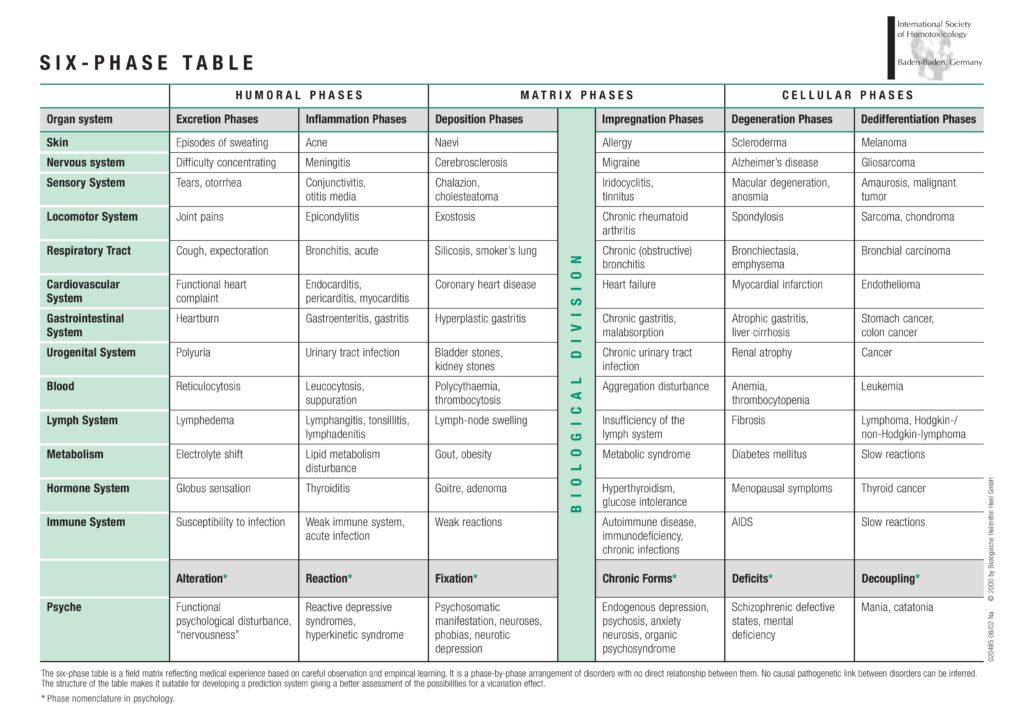
Reckeweg’s work on complex homeopathic medicines led to the creation of the Table of Homotoxins – a comprehensive chart detailing the correlation between pathologies and toxic factors. This table comprises six phases, each representing a distinct stage in the development of diseases.
Understanding the Table of Homotoxins
The Table of Homotoxins outlines the following phases:
- Phase of Excretion: Toxins are absorbed and expelled through physiological secretions, without entering epithelial cells.
- Phase of Inflammation (or Reaction): The organism neutralizes and expels toxins that enter the system.
- Phase of Deposit: The organism stores toxins at the connective level to restore balance.
- Phase of Impregnation: Toxins are channeled to areas of lesser resistance, causing cell damage and enzymatic mechanisms disruption.
- Phase of Degeneration: Persistent toxic accumulation leads to tissue degradation and intracellular organelle damage.
- Phase of Dedifferentiation: Chronic inflammation stimulates abnormal cellular differentiation, potentially affecting the entire organism.
The Concept of Vicariazione
Reckeweg introduced the concept of vicariazione – the displacement of disease from one organ or tissue to another. This phenomenon can have positive (regressive) or negative outcomes (progressive), depending on the natural healing process.
Omotossicological Treatments
To trigger regressive vicariazione, Omotossicological treatments aim to reinvigorate detoxification processes by:
- Catalyzing Intermediates: Using chinones and Krebs cycle factors to address energy deficiencies.
- Nosodes: Preparing derivatives from secretions, diseased tissues, and microcultures to stimulate immunological reactions.
- Organoterapeutic Suis: Utilizing omeopatized animal organs for trophic action on affected tissues.
- Allopathic Omeopatized: Conventional drugs or homeopathized, used in treating jatrogenic diseases or symptoms similar to toxic effects.
Potential Applications of Omotossicology
Omotossicology may provide assistance in curing a range of conditions, including respiratory and gastrointestinal pathologies, allergies, skin problems, digestive issues, bone and joint disorders, and hormonal sphere pathologies.
The Limitations of Omotossicology
While some patients have reported benefits from Omotossicological treatments, scientific studies have not found conclusive evidence to support its validity. The theory’s lack of scientific foundation raises questions about the efficacy of these treatments.
Conclusion
Omotossicology offers a unique perspective on disease treatment, focusing on the concept of homotoxins and their role in various pathologies. While it has garnered attention for potential applications, further research is necessary to fully understand its merits and limitations.
Frequently Asked Questions (FAQs)
- Q: What are homotoxins?
A: Homotoxins are presumed toxic factors responsible for various diseases. - Q: Who developed Omotossicology?
A: Hans-Heinrich Reckeweg, a German physician, introduced the concept of Omotossicology. - Q: What is the Table of Homotoxins?
A: The Table of Homotoxins outlines six phases detailing the correlation between pathologies and toxic factors. - Q: Can Omotossicology cure diseases?
A: While some patients have reported benefits, scientific studies have not found conclusive evidence to support its validity. - Q: What are the potential applications of Omotossicology?
A: It may provide assistance in curing respiratory and gastrointestinal pathologies, allergies, skin problems, digestive issues, bone and joint disorders, and hormonal sphere pathologies. - Q: Is Omotossicology a proven treatment method?
A: No, scientific studies have not found conclusive evidence to support its validity. - Q: What are the limitations of Omotossicological treatments?
A: The lack of scientific foundation raises questions about their efficacy. - Q: Can Omotossicology be used in conjunction with conventional medicine?
A: While it may provide additional benefits, further research is necessary to fully understand its interactions with conventional treatments. - Q: Are there any potential risks associated with Omotossicological treatments?
A: As with any alternative treatment method, patients should consult with a qualified healthcare professional before undergoing Omotossicological therapies.


