
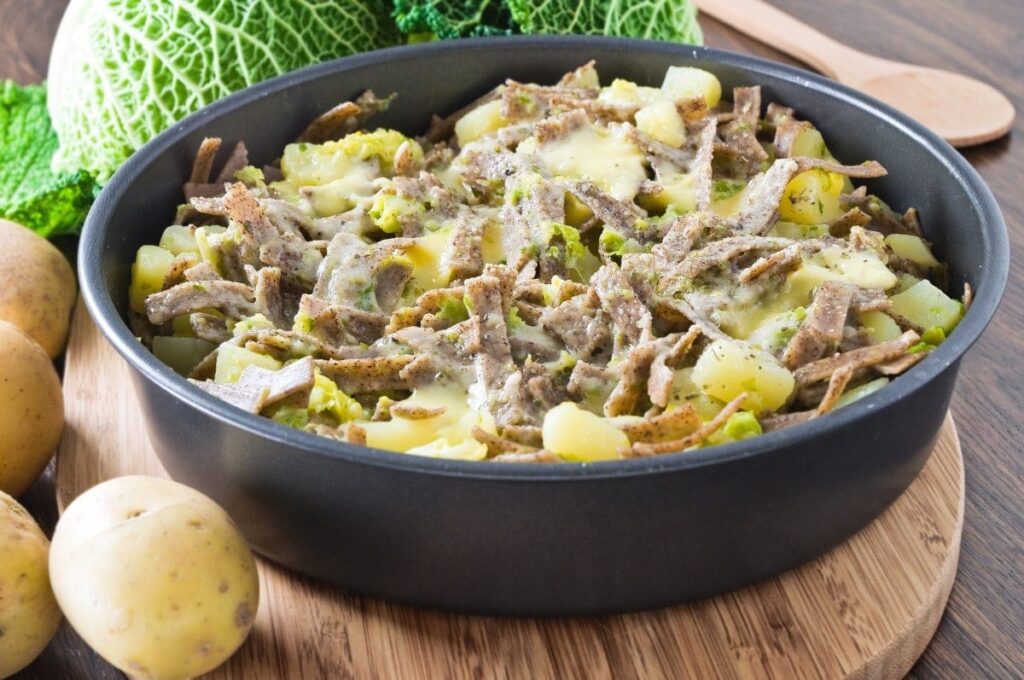
In the Valtellina region of Italy, there’s a traditional pasta dish called pizzoccheri that’s been passed down through generations. These thick, wide noodles are typically served in the cold months, and making them from scratch is a great way to experience their authentic flavor. In this article, we’ll explore how to make classic pizzoccheri and a gluten-free version at home.
What are Pizzoccheri?
Pizzoccheri are a type of pasta that originated in Teglio, Valtellina. They’re characterized by their thick, chewy texture and distinctive yellow color, which comes from the use of emmer wheat flour (also known as grano saraceno). For centuries, pizzoccheri were made by hand, and it’s still a labor of love for many pasta enthusiasts today.
Why Make Pizzoccheri at Home?
While you can find pre-made pizzoccheri in stores, they often contain low amounts of emmer wheat flour, which means they lack the traditional flavor and texture. By making your own pizzoccheri from scratch, you can ensure that you get the authentic taste and experience. Plus, it’s a great way to control the ingredients and make sure they’re gluten-free.
Ingredients for Classic Pizzoccheri
- 350g emmer wheat flour (grano saraceno)
- 250ml water
- 150g all-purpose flour
- Salt to taste
Traditional Condiment
The classic condiment for pizzoccheri is a simple yet flavorful mixture of:
- 250g verza or bok choy
- 350g potatoes, peeled and diced
- 250g Valtellina Casera cheese (DOP)
- Black pepper to taste
- 1 clove garlic, minced
- 100g butter
Making the Pizzoccheri Dough
To start, combine the emmer wheat flour, water, and all-purpose flour in a bowl. Mix until you get a smooth dough, then knead it for about 10 minutes until it becomes elastic.
Resting the Dough
Cover the dough with plastic wrap and let it rest for at least 30 minutes in a cool, dry place.
Rolling Out the Pasta
Divide the dough into smaller pieces, about 2-3mm thick. Roll out each piece using a pasta machine or a rolling pin until you get thin sheets of pasta (about 5mm). Repeat this process to get multiple layers of pasta.
Assembling the Pizzoccheri
Stack the rolled-out pasta sheets on top of each other, overlapping them slightly as you go. Press down gently to ensure they stick together.
Cooking the Pizzoccheri
Bring a large pot of salted water to a boil and add the pizzoccheri. Cook for 8-10 minutes or until they float to the surface. Remove with a slotted spoon and drain off excess water.
Finishing Touches
Melt butter in a pan, add garlic, and sauté for a few seconds. Toss cooked pizzoccheri with the garlic-infused butter, black pepper, and grated Valtellina Casera cheese.
Gluten-Free Pizzoccheri Variation
- 350g emmer wheat flour (grano saraceno)
- 250ml water
- 150g gluten-free flour blend (e.g., granoturco or tapioca)
Mix the gluten-free flour blend with the emmer wheat flour and water to create a dough. Knead for about 10 minutes until it becomes smooth.
Tips and Variations
- Use a food processor to make the pasta dough, but be careful not to overprocess.
- Add some flavor to your pizzoccheri by mixing in herbs or spices into the dough.
- Try using different types of cheese or add other ingredients like mushrooms or prosciutto to create unique variations.
Conclusion
Making pizzoccheri at home is a rewarding experience that requires patience, skill, and a passion for traditional Italian cuisine. With this recipe, you’ll learn how to create both classic and gluten-free versions of these delicious noodles. Whether you’re an experienced pasta maker or just starting out, we hope you enjoy the journey and savor every bite!
Frequently Asked Questions
-
What is emmer wheat flour?
Emmer wheat flour is a type of ancient grain that’s high in fiber and nutrients. It has a distinctive flavor and texture that’s perfect for making traditional pasta like pizzoccheri. -
Can I use other types of gluten-free flours?
Yes, you can experiment with different gluten-free flours to create a blend that works best for you. Granoturco or tapioca are popular options, but feel free to try others! -
How do I store pizzoccheri leftovers?
To keep pizzoccheri fresh for a longer period, store them in an airtight container in the fridge or freeze them for up to 2 months. -
Can I make gluten-free pizzoccheri with just rice flour?
No, rice flour lacks the structure and flavor that emmer wheat flour provides. Adding other types of gluten-free flours will help create a more authentic taste and texture. -
Are there any substitutions for Valtellina Casera cheese?
Valtellina Casera cheese is an Italian specialty, but you can substitute it with similar cheeses like Parmesan or Pecorino Romano. However, keep in mind that the flavor will be slightly different. -
How do I roll out pasta to the perfect thickness?
To achieve a uniform thickness, use a pasta machine or a rolling pin and maintain a consistent pressure while rolling. -
Can I make pizzoccheri with a stand mixer?
While you can make pasta dough in a stand mixer, traditional methods involve kneading by hand for about 10 minutes to develop the gluten and achieve the perfect texture. -
Are there any health benefits to eating pizzoccheri?
Yes! Emmer wheat flour contains fiber, protein, and nutrients like iron and B vitamins. Pizzoccheri are also relatively low in calories and rich in complex carbohydrates.
Get Social
Follow me on Twitter: [your handle]
Like my page on Facebook: [your page URL]
Join my Google+ circle: [circle name]
Check out my Instagram photos: [your profile URL]
Happy cooking, and buon appetito!
Pizzoccheri Recipe Variations
Here are some creative ways to use your homemade pizzoccheri:
- Add roasted vegetables like carrots, zucchini, or bell peppers for a colorful and flavorful dish.
- Mix in cooked sausage or ham for a heartier meal.
- Try using different types of cheese or cream sauces for a unique twist.
Pizzoccheri Pairing Suggestions
Here are some classic pairing suggestions to enjoy with your homemade pizzoccheri:
- Classic combination: Valtellina Casera cheese and verza
- Modern twist: Grilled chicken, cherry tomatoes, and basil
- Vegetarian delight: Roasted eggplant, zucchini, and red peppers
Tips for Making Pizzoccheri
Here are some expert tips to help you create the perfect pizzoccheri:
- Use a high-quality emmer wheat flour for the best flavor and texture.
- Don’t overwork the dough – it should be smooth but still slightly sticky.
- Cook the pizzoccheri until they’re al dente – this will ensure they retain their texture.
Conclusion
Making pizzoccheri at home is a rewarding experience that requires patience, skill, and a passion for traditional Italian cuisine. With this recipe, you’ll learn how to create both classic and gluten-free versions of these delicious noodles. Whether you’re an experienced pasta maker or just starting out, we hope you enjoy the journey and savor every bite!


