
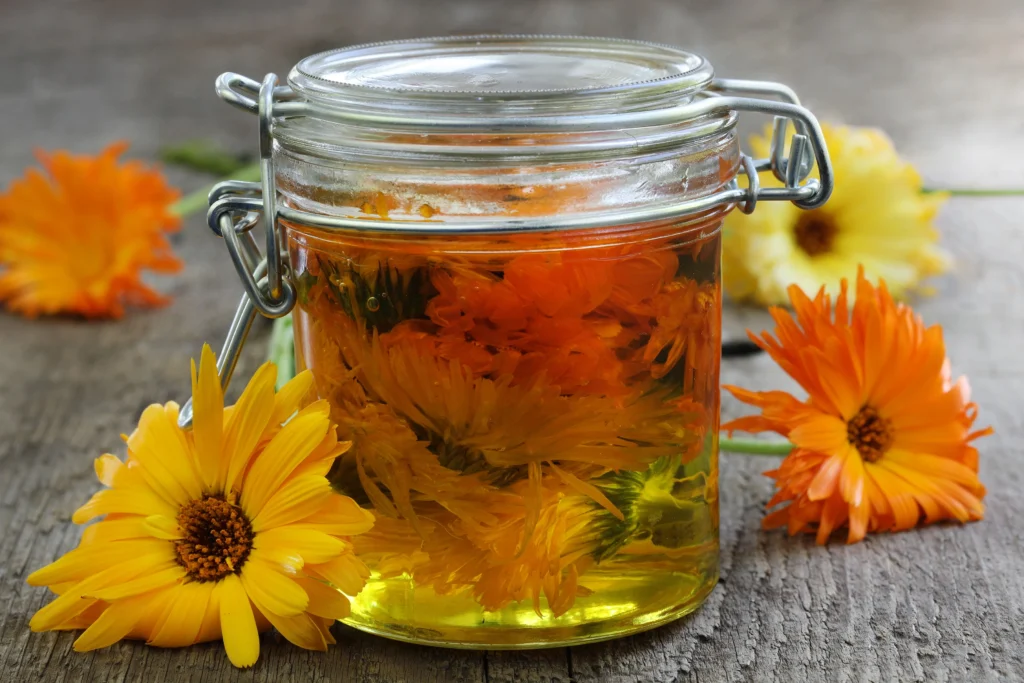
Calendula oil, also known as marigold oil, is a natural remedy that has been used for centuries to treat various skin conditions and promote overall health. In this article, we will explore the process of growing and making calendula oil at home.
Understanding Calendula
There are several species of calendula, but the most commonly used is Calendula officinalis, a flowering plant that is cultivated for its bright yellow-orange flowers. However, if you can’t find Calendula officinalis, you can use Calendula arvensis, also known as field marigold, which is a wild species that grows in many parts of the world.
Choosing the Right Flowers
When choosing calendula flowers to make oil, it’s essential to select fresh and healthy blooms. You’ll need enough flowers to fill a jar completely, with a ratio of about 1:10 (flowers to oil). However, there is no fixed rule, so feel free to adjust based on your personal preference.
Calendula flowers are available at most health food stores or online. Look for fresh, vibrant blooms with no signs of wilting or damage. It’s also important to note that calendula flowers can be quite potent, so it’s best to use them in moderation.
Growing Calendula at Home
If you’re interested in growing your own calendula at home, here are some tips:
- Choose a sunny location: Calendula plants love full sun, so choose a spot that receives direct sunlight for at least 6 hours a day.
- Use well-draining soil: Calendula prefers dry to medium moisture, so use a well-draining potting mix to prevent root rot.
- Sow seeds in spring or fall: Sow calendula seeds in the spring or fall, about 1/4 inch deep and 12-18 inches apart.
- Water carefully: Water your calendula plants sparingly, as they prefer dry conditions.
Harvesting Calendula Flowers
Once your calendula plants are established, it’s time to harvest your flowers! Here are some tips:
- Wait until the blooms are fully open: Only use flowers that have completely opened and are at their peak color.
- Pinch off buds: Pinch off flower buds as they appear to encourage more blooms.
- Harvest in morning dew: Harvest calendula flowers when the dew is still on them, as this helps preserve their potency.
Making Calendula Oil at Home
To make calendula oil, you’ll need:
- Fresh calendula flowers
- A clean glass jar
- Carrier oil (such as olive or canola oil)
- Cheesecloth or a coffee filter
Here’s the step-by-step process:
- Combine flowers with carrier oil: Fill a clean glass jar with dried calendula flowers and cover them with a carrier oil (such as olive or canola oil). Stir well to ensure even distribution of the flowers.
- Place the jar in direct sunlight: Expose the jar to direct sunlight for at least 3 weeks, shaking it every few days to help the process along.
- Strain and filter the oil: After the maceration period, strain the oil through cheesecloth or a coffee filter into a clean glass bottle.
Tips and Variations
- Use high-quality carrier oils: Choose a carrier oil that complements the calendula’s natural properties.
- Adjust the ratio of flowers to oil: Experiment with different ratios to find your preferred consistency.
- Add other herbs for enhanced benefits: Consider adding other herbs, such as lavender or chamomile, to create a unique blend.
Storing and Using Calendula Oil
Calendula oil can be stored for several years if made correctly. To ensure optimal quality:
- Store the oil in a cool, dark place.
- Use a clean glass bottle with a tight-fitting lid.
- Keep the oil away from direct sunlight and heat sources.
Where to Buy Calendula Oil
If you prefer not to make calendula oil at home, you can purchase it online or at local health food stores. Look for high-quality products that are pure and concentrated.
Alternatively, you can also use calendula flowers to create a homemade oil blend with other natural ingredients, such as sweet almond oil. This combination provides enhanced moisturizing and soothing properties.
Conclusion
Growing and making calendula oil at home is a simple yet rewarding process that offers numerous health benefits. With this guide, you’re ready to start creating your own natural remedies using fresh calendula flowers and carrier oils. Happy growing and oil-making!
Frequently Asked Questions (FAQs)
- What are the benefits of using calendula oil?
Calendula oil is known for its anti-inflammatory, antimicrobial, and antioxidant properties, making it an excellent remedy for skin conditions such as eczema, acne, and wounds. - Can I use Calendula arvensis instead of Calendula officinalis?
Yes, you can use Calendula arvensis, but keep in mind that the flowers are smaller, and the oil may not be as potent. - How long does it take to make calendula oil?
The maceration period typically lasts 3-4 weeks, depending on factors such as sunlight exposure and flower quality. - Can I add other herbs to my calendula oil blend?
Yes, you can experiment with adding other herbs like lavender or chamomile to create a unique blend that suits your needs. - How do I store calendula oil?
Store the oil in a cool, dark place, away from direct sunlight and heat sources. - Can I use calendula oil for children?
Yes, but always perform a patch test on a small area before using it extensively on children’s skin. - Is calendula oil suitable for acne-prone skin?
Calendula oil can help reduce inflammation and soothe acne-prone skin, but be sure to dilute it with a carrier oil and do a patch test before using it extensively. - Can I make calendula oil in the winter?
While sunlight is essential for making calendula oil, you can still make it indoors by placing the jar near a sunny window or using grow lights.
By following these guidelines and tips, you’ll be able to create your own natural remedies using fresh calendula flowers and carrier oils. Happy growing and oil-making!
Tips for Making Calendula Oil at Home
- Use high-quality ingredients: Choose fresh, healthy calendula flowers and a high-quality carrier oil.
- Experiment with ratios: Find the perfect balance of flowers to oil for your needs.
- Be patient: Allow the maceration period to complete before straining and filtering the oil.
Common Issues When Making Calendula Oil at Home
- Mold or contamination: Regularly check the oil for signs of mold or contamination, and discard it if necessary.
- Insufficient sunlight: Ensure your jar is exposed to direct sunlight for an adequate amount of time.
- Over-maceration: Be careful not to over-macerate the flowers, as this can lead to a weak or ineffective oil.
Using Calendula Oil in Skincare
Calendula oil is a versatile ingredient that can be used in a variety of skincare applications. Here are some ideas:
- Moisturizer: Mix calendula oil with other natural ingredients to create a nourishing moisturizer.
- Face serum: Use calendula oil as a base for a face serum, combining it with other antioxidants and essential oils.
- Wound care: Apply calendula oil directly to wounds or cuts to promote healing and reduce inflammation.
Calendula Oil Recipes
Here are some recipes that incorporate calendula oil:
- Calendula Oil Moisturizer: Mix 10ml of calendula oil with 50ml of coconut oil, 20ml of shea butter, and a few drops of vitamin E oil.
- Calendula Face Serum: Combine 5ml of calendula oil with 15ml of rosehip oil, 5ml of green tea extract, and a few drops of lavender essential oil.
By following these guidelines and recipes, you’ll be able to create your own natural skincare products using fresh calendula flowers and carrier oils. Happy oil-making!


