
As a seasoned horticulturist, propagating hibiscus plants can be a daunting task, especially for those new to plant care. However, with the right techniques and knowledge, you can successfully multiply your favorite species and enjoy an abundance of vibrant blooms in no time.
Choosing the Right Time for Hibiscus Propagation
Hibiscus propagation is best done during the summer months when the plants are actively growing. This allows for better root development and increases the chances of successful rooting. In addition, summer provides optimal temperatures for rooting, typically between 18-20°C (64-68°F) during the day and no lower than 12°C (54°F) at night.
Selecting the Perfect Stem for Cutting
When selecting a stem for cutting, look for one that meets the following criteria:
- Age: Choose a stem that is partially lignified (not too young or too old). A stem that has been growing for several months will be more suitable than one that is too new.
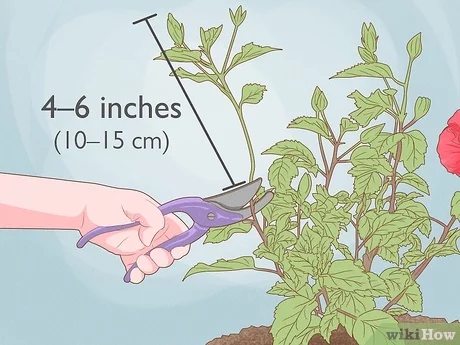
- Length: Opt for stems between 10-12 cm long. This length provides enough material to take cuttings from without being too unwieldy to handle.
- Nodes: Select a stem with few nodes (3-4 nodes). This indicates the area where roots will emerge, and fewer nodes will result in healthier plantlets.
Preparing the Cutting
To prepare the cutting, follow these steps:
- Cut the stem using a sharp, sterilized knife or pruning tool. Make sure to disinfect the cut end with a sterile solution or spray before making the cut.
- Remove the lower leaves and the apical bud (the growing tip). This will help prevent water loss and reduce the risk of fungal infections.
- Trim any damaged or weak segments. Use clean, sharp tools to remove any broken or diseased parts of the stem.
Using Hormones to Stimulate Rooting
You can use rooting hormones to enhance the rooting process. These are available in powder or liquid form and can be applied directly to the cut end of the stem.
- Powdered hormones, such as those containing auxins or gibberellins, can be effective for stimulating root growth.
- Liquid hormones, like those used in commercial propagation kits, may also work well. However, make sure to follow the manufacturer’s instructions for proper application and dosage.
Creating a Rooting Medium
Prepare a rooting medium by mixing together:
- 2/3 terricolo universale (a general-purpose potting soil). This will provide enough nutrients and water retention for optimal root growth.
- 1/3 sabbia (sand). Adding sand will improve drainage and prevent waterlogging in the rooting medium.
Planting the Cutting
Once you’ve prepared your cutting, plant it in a sterile container filled with the rooting medium. Here’s how:
- Remove any remaining leaves from the top two or three nodes.
- Water gently to settle the soil.
- Plant the cutting at an angle, making sure that the node is buried in the soil and the stem is facing upwards.
Maintaining Temperature and Humidity
To promote healthy root development, maintain a consistent temperature of 18-20°C (64-68°F) during the day and no lower than 12°C (54°F) at night. Keep the humidity level around 60-70%.
- Use a humidifier or misting system to increase the humidity in the propagation area.
- Avoid placing plants near heating vents, radiators, or other sources of heat.
Re-potting After Winter
Once your cutting has rooted successfully, you can re-pot it into a larger container filled with a well-draining potting mix. This will give your hibiscus plant more room to grow and support its increased growth.
- Choose a pot that is at least 10-15% larger than the current one.
- Use a potting mix specifically designed for tropical plants, such as a mix containing peat moss or perlite.
- Water thoroughly after re-potting and keep the soil consistently moist but not waterlogged.
Species Selection for Your Region
Some species of hibiscus are better suited to certain climates than others. For example:
- Hibiscus syriacus: A more cold-hardy variety that can thrive in cooler temperatures.
- Hibiscus rosa-sinensis: A delicate species that prefers warmer temperatures and higher humidity.
Flowering Periods and Decorative Leaves
Hibiscus plants produce beautiful flowers throughout the spring and summer months, with some varieties blooming as early as April and continuing until September. The leaves of these plants are also quite decorative, with shades ranging from bright green to vibrant colors.
- Hibiscus sabdariffa: Also known as roselle, this variety produces small, red flowers and has deeply lobed leaves.
- Hibiscus moscheutos: A large, showy variety with large, saucer-shaped flowers in shades of pink, purple, or white.
With proper care and attention, your hibiscus plant will thrive and provide an abundance of colorful blooms for years to come.
Frequently Asked Questions
- Q: What’s the best time to take cuttings from hibiscus plants?
- A: Summer is the ideal time for propagation, when the plants are actively growing.
- Q: How do I prepare a cutting for propagation?
- A: Remove lower leaves, trim damaged segments, and disinfect the cut end with a sterile tool or spray.
- Q: Can I use rooting hormones on my hibiscus plant?
- A: Yes, you can use powdered or liquid rooting hormones to enhance root growth.


