
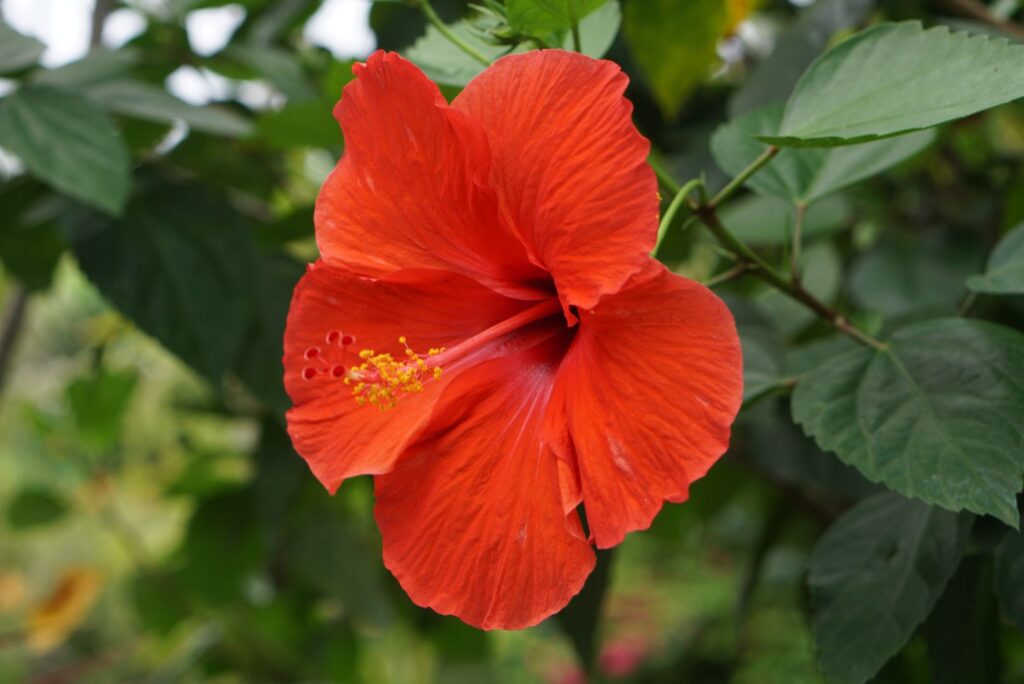
What is Hibiscus?
Hibiscus is the symbol of Malaysia. It belongs to the Malvaceae family and is native to Asia, Africa, and Australia. Today, hibiscus has naturalized in Europe as well.
In Italy, the most popular ornamental species is Hibiscus syriacus (Hibiscus syriacus), a highly appreciated species. In Italy, wild hibiscus species such as Moschuetos palustris, rosa-sinensis, and trionum also grow spontaneously.
History of Hibiscus
The name “hibiscus” is derived from the Greek word “hios,” meaning “flower.” The plant has been used for centuries in traditional medicine, food, and cosmetics. In ancient Egypt, hibiscus was considered a sacred flower and was used to dye fabrics and other materials.
Caring for Hibiscus in Winter
Hibiscus in winter can be at risk of death: not all ornamental varieties tolerate frost well. To protect your plant from frost, place the pot outside or spread a thick layer of mulch on the ground.
If you live in northern Italy and want to grow hibiscus, choose more robust varieties of Hibiscus syriacus. For delicate varieties, the ideal temperature should never drop below 15°C (59°F).
Hibiscus plants require full sun exposure and if you choose a less resistant variety, it’s essential to provide additional care in a pot to move the containers to a sheltered area during winter.
Growing Hibiscus: Tips and Tricks
Irrigation
Water your hibiscus plant during the first hours of the morning or after sunset. During blooming season, you can also feed the plant with a liquid fertilizer at the same time.
Choosing the Right Soil
Hibiscus plants thrive in any soil, even poor and rocky ones. However, when growing in pots, choose a well-draining substrate rich in humus, moisture, and permeability.
Replacing the Potting Mix
When replacing the potting mix every 2 or 4 years, consider choosing a new substrate with the same composition as before. If your plant is young, replace it annually; if mature, you can also repot every 2-4 years.
How to Repot Hibiscus
The ideal time for repotting hibiscus plants is in spring. Choose a slightly larger pot than the previous one. Make sure to use the same soil composition as before.
Water your plant extensively before repotting, making sure the soil is moist during this delicate phase.
Common Diseases and Pests
- Aphids: Use natural remedies like soap solution or garlic-based treatments to prevent infestations.
- Mealybugs: Spray a mixture of 50g of garlic per liter of water on all parts of the plant, including the underside of leaves.
By following these tips, you’ll be well on your way to growing a healthy and thriving hibiscus plant. Whether you’re a seasoned gardener or a beginner, this ultimate guide will provide you with everything you need to know to grow and care for your hibiscus plant successfully.
Frequently Asked Questions
- Q: What is the best time to plant hibiscus?
A: Spring and summer are the best times to plant hibiscus, as the weather is warm and there is ample moisture. - Q: How often should I water my hibiscus plant?
A: Water your hibiscus plant during the first hours of the morning or after sunset, making sure not to overwater. - Q: Can I grow hibiscus in a container?
A: Yes, you can grow hibiscus in a container, but make sure to choose a well-draining substrate and provide adequate sunlight. - Q: How often should I fertilize my hibiscus plant?
A: Feed your hibiscus plant with a liquid fertilizer during blooming season or when the soil is depleted of nutrients. - Q: What are some common diseases that affect hibiscus plants?
A: Hibiscus plants can be susceptible to diseases like aphids, mealybugs, and powdery mildew, which can cause damage to leaves and flowers. - Q: How do I repot my hibiscus plant?
A: Choose a slightly larger pot than the previous one, make sure the soil is moist before repotting, and replace the potting mix every 2-4 years. - Q: Can I grow multiple varieties of hibiscus together?
A: While it’s possible to grow multiple varieties of hibiscus together, choose varieties that are compatible with each other in terms of sun exposure and soil requirements. - Q: How can I prevent pests from infesting my hibiscus plant?
A: Use natural remedies like soap solution or garlic-based treatments to prevent infestations, and inspect your plant regularly for signs of pests.
Hibiscus Varieties
There are over 200 species of hibiscus, each with its unique characteristics and growth habits. Here are some popular varieties:
- Hibiscus syriacus: A highly appreciated ornamental species that grows up to 3 feet tall.
- Hibiscus rosa-sinensis: A tropical variety that can grow up to 10 feet tall.
- Hibiscus coccineus: A perennial variety with bright red flowers and a bushy habit.
- Hibiscus grandiflorus: An annual variety with large, showy flowers.
Benefits of Hibiscus
Hibiscus is not only a beautiful plant, but it also has numerous benefits for our health and the environment. Here are some of the benefits of hibiscus:
- Rich in Vitamins and Minerals: Hibiscus is an excellent source of vitamins A, C, E, and K, as well as minerals like calcium, iron, and magnesium.
- Antioxidant Properties: Hibiscus has high antioxidant properties that can help protect against cell damage and reduce inflammation.
- Anti-Inflammatory Effects: Hibiscus has anti-inflammatory effects that can help alleviate symptoms of arthritis, gout, and other inflammatory conditions.
- Skin and Hair Benefits: Hibiscus is rich in vitamins and minerals that can help promote healthy skin and hair.
Growing Hibiscus in Containers
Hibiscus can be grown in containers, but it requires careful attention to its needs. Here are some tips for growing hibiscus in containers:
- Choose a Large Container: Select a large container that is at least 12 inches deep and has good drainage holes.
- Use a Well-Draining Soil: Use a well-draining potting mix that is specifically designed for tropical plants like hibiscus.
- Provide Adequate Sunlight: Hibiscus requires full sun exposure, so choose a location that receives direct sunlight for at least 6 hours a day.
- Water Regularly: Water your hibiscus plant regularly, but make sure not to overwater. Check the soil moisture by sticking your finger into the soil up to the first knuckle.
Common Problems with Hibiscus
While growing hibiscus can be rewarding, it’s not without its challenges. Here are some common problems that may arise when growing hibiscus:
- Pests: Aphids, mealybugs, and whiteflies are common pests that can infest hibiscus plants.
- Diseases: Hibiscus is susceptible to diseases like powdery mildew, leaf spot, and root rot.
- Overwatering: Overwatering can cause roots to rot and lead to plant death.
Pruning Hibiscus
Pruning is an essential part of hibiscus care. Here are some tips for pruning your hibiscus plant:
- Remove Dead or Damaged Leaves: Remove any dead or damaged leaves to prevent the spread of disease.
- Cut Back Overgrown Stems: Cut back overgrown stems to encourage new growth and promote blooming.
- Prune for Shape: Prune your hibiscus plant regularly to maintain its shape and promote healthy growth.
Harvesting Hibiscus
Hibiscus is a versatile plant that can be used in a variety of ways. Here are some tips for harvesting hibiscus:
- Pick Flowers Regularly: Pick flowers regularly to encourage blooming and prevent the plant from becoming leggy.
- Use Dried Flowers: Use dried flowers to make tea, crafts, or other decorative items.
- Harvest Leaves for Tea: Harvest leaves for use in herbal teas.
By following these tips and guidelines, you’ll be able to grow a healthy and thriving hibiscus plant. Whether you’re a seasoned gardener or a beginner, this ultimate guide will provide you with everything you need to know to grow and care for your hibiscus plant successfully.


