
Understanding and Managing Common Diseases of Foliage Trees
Folliage trees, also known as evergreen trees, are popular choices for landscaping in Italy due to their ability to tolerate heavy pruning and repeated potting. However, these plants are not immune to diseases. In this article, we will discuss the most common diseases that can affect foliage trees, including problems related to nutrient deficiencies, as well as pests such as insects and mites.
Common Diseases Affecting Foliage Trees
In Italy, many of the most common diseases affecting foliage trees can be attributed to a lack of proper care. This includes inadequate watering, insufficient fertilization, and poor pruning practices.
Nutrient Deficiency Problems
One of the most frequent disease problems affecting foliage trees is a lack of iron, known as chlorosis. This condition occurs when water with high calcium content (hard water) is used for irrigation, causing iron deficiency in plants like laurel, fir, pittosporum, and fotinia.
Symptoms of Chlorosis
- Leaves turn yellow
- Older leaves become white and dry
- Plant stops producing flowers and grows slowly
- Eventually, plant dies
Treatment for Chlorosis
The treatment for chlorosis is to provide iron supplements to the tree when the first yellow leaves appear. Iron-based products are widely available at gardening stores, agricultural cooperatives, or online.
Ferro Chelate Fertilizers
Iron chelate fertilizers can be liquid or powdered and are effective in calcium-rich soils. However, they should be applied quickly as light can degrade their effectiveness. Since these products make iron available even in calcareous soils (soils responsible for chlorosis), they are an excellent choice.
Consult Amazon’s Selection
For a comprehensive look at iron chelate fertilizers, we recommend visiting the Amazon page dedicated to these products. The Paese Verde Drin Ferro Chelato Microgranular 200g is an excellent option – it’s approved for organic agriculture and priced at €8.90 with a rating of 4.4/5.
Other Deficiency Problems
If older leaves show yellowing, it may be due to an iron deficiency instead of nitrogen. On the other hand, if the younger leaves are affected first, then there is probably an azotemia problem. Azote (nitrogen) deficiencies typically affect plants like pittosporum, photinia, laurel, and fir.
Fungal Infections
Fungi such as fumagin can attack foliage trees without exception. The most commonly infested trees are those of alloro and pittosporo, but other types can also be affected.
Symptoms of Fungus
- Leaves covered in a black, powdery patina
- Treatment involves eliminating the insect causing the problem
Managing Pests
Parasites like oziromic can cause significant damage to leaves. The parasite is a coleottero measuring 8-10mm long and affects the margins of young leaves.
Biological Control with Nematodes
Biological control methods involving nematodes are recommended for this pest. These entomopathogenic nematodes should be introduced starting from February or March.
Insect Infestations
Besides oziromic, other pests like aphids and cocciniglie can also harm trees.
References:
For more information on aphid treatments, refer to our page: Pidocchi delle piante.
Leaf Dryness Problems
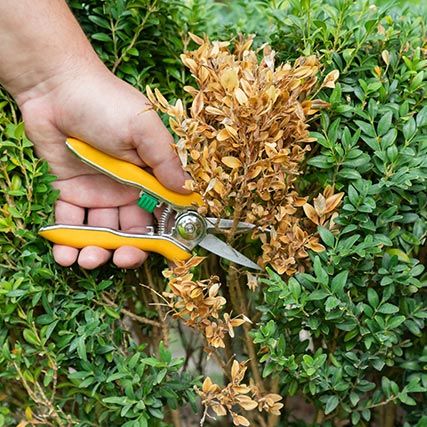
If your tree has leaves that are partially or completely dry, there might be an insect infestation by the Xylosandrus compactus beetle. This pest is just 2-3mm long and the only way to slow down infestations is through immediate destruction (burning).
Common Nutrient Deficiencies
In addition to iron deficiency, other nutrient deficiencies can also affect foliage trees.
- Nitrogen deficiency: causes yellowing of leaves on young plants
- Potassium deficiency: leads to leaf abscission (dropping leaves)
- Magnesium deficiency: results in interveinal chlorosis (yellowing between veins)
Nutrient Deficiency Problems Prevention
Preventing nutrient deficiencies involves maintaining good soil health through proper fertilization and watering practices.
Pest Management
Pest management is crucial for preventing damage to foliage trees. This includes using integrated pest management techniques, such as introducing beneficial insects or nematodes, and eliminating pests causing problems with water and soap.
Biological Control Methods
Biological control methods involve using natural substances to combat pests without harming the tree itself. These can include:
- Introducing beneficial insects (e.g., ladybugs)
- Using nematodes (entomopathogenic) to kill pests
- Spraying plants with soapy water
Organic Pesticides
Organic pesticides are safer for trees and humans compared to synthetic pesticides.
- Pyrethrin: derived from chrysanthemum flowers, it kills insects by disrupting their nervous system.
- Neem oil: obtained from neem seeds, it disrupts insect development and reproduction.
Cultural Controls
Cultural controls involve modifying the growing conditions of foliage trees to prevent pest infestations. This can include:
- Watering deeply but less frequently
- Providing enough space between plants
- Removing weeds that compete with your tree for resources
Physical Barriers
Physical barriers can be used to protect foliage trees from pests.
- Row covers: made of lightweight fabric, they cover the plant and prevent insects from reaching it.
- Copper tape: repels slugs and snails by releasing copper ions that are toxic to them.
Integrated Pest Management (IPM)
Integrated pest management involves combining multiple control methods to manage pest populations. This can include:
- Cultural controls
- Physical barriers
- Biological control methods
- Chemical pesticides
Biological Control of Insect Pests
Biological control involves using natural predators or parasites to kill insect pests.
- Ladybugs: feed on aphids and other small insects.
- Lacewings: prey on a wide range of insects, including aphids and caterpillars.
Chemical Controls
Chemical controls involve using pesticides to kill pests.
- Pyrethroids: synthetic versions of pyrethrin
- Neonicotinoids: insecticides that affect the nervous system
Common Pests Affecting Foliage Trees
In addition to oziromic, other common pests affecting foliage trees include:
- Aphids: small insects that feed on sap.
- Cocciniglie: scale insects that secrete a sticky substance called honeydew.
Preventing Pest Infestations
To prevent pest infestations, it’s essential to maintain good tree health through proper pruning and watering practices.
Conclusion
Understanding common diseases of foliage trees in your garden can save you from unnecessary damage, saving you time and effort. In our next article we will discuss additional tips on garden management.
Frequently Asked Questions (FAQs)
- What are some common diseases that affect foliage trees?
Common diseases affecting foliage trees include nutrient deficiency problems such as chlorosis, fungal infections like fumagin, and pest infestations by insects or mites. - What causes chlorosis in trees?
Chlorosis is caused by a lack of iron due to the use of hard water for irrigation, which damages the plant’s ability to absorb essential nutrients. - How do I treat a chlorosis problem?
Treat chlorosis with iron supplements applied as soon as yellow leaves appear on the tree. - Can I grow foliar trees in urban environments?
Foliage trees are popular choices for landscaping, particularly in cities and towns due to their ability to tolerate heavy pruning and regular watering. - What types of plants are most susceptible to fungal infections?
All types of foliage trees are susceptible to fungal infections like fumagin, but some trees (alloro and pittosporo) are more prone than others. - Can I use organic products for pest control?
Biological control methods involving nematodes can be used as a natural way to combat pests such as oziromic in foliage trees. - How do I prevent damage from pests on my foliar tree?
Prevention involves using biological control methods like introducing entomopathogenic nematodes starting in February or March, and eliminating insects causing problems with water and soap. - What is the best way to remove completely dry leaves from a tree?
Removing completely dry leaves from your tree can be done by burning them immediately, which helps prevent further damage.
By understanding common diseases of foliage trees, gardeners can take steps to prevent infestations and reduce the risk of damage to their trees.


