
As the world shifts towards more sustainable and eco-friendly solutions, choosing the right water heater for your home can be a daunting task. With so many options available in the market, it’s essential to understand the benefits and drawbacks of each type of water heater. In this article, we’ll delve into the world of heat pump water heaters, exploring their functionality, advantages, and disadvantages.
Understanding Heat Pump Water Heaters
A heat pump water heater (HPWH) is a type of electric water heater that uses heat from the air to warm water, rather than relying on traditional electricity. This technology has gained popularity in recent years due to its energy efficiency and environmental benefits.
Alternative Options to Traditional Electric Water Heaters
While HPWHs offer numerous advantages, they may require an initial investment of higher upfront costs compared to traditional electric water heaters. However, the long-term savings on energy bills can make up for this difference. Another alternative is the use of solar thermal systems or geothermal heating systems.
Is a Heat Pump Water Heater Right for You?
Studies suggest that substituting a traditional electric water heater with an HPWH could lead to enormous reductions in energy consumption, estimated at around 75%. This is due to the fact that HPWHs only require minimal electricity to operate, as they harness heat from the air instead of burning fossil fuels. Moreover, these systems are designed to be more environmentally friendly, producing fewer greenhouse gas emissions.
How Heat Pump Water Heaters Work
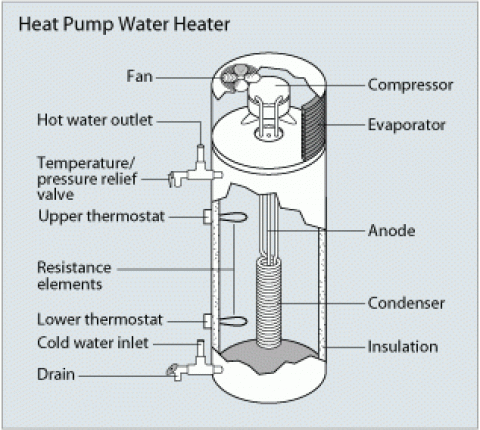
HPWHs operate on a simple principle: extracting heat from the surrounding air and transferring it to water. This process is made possible by a refrigerant that circulates through an evaporator coil, condenser coil, and expansion valve. The system uses minimal electricity to power the compressor, fan, and heating element.
Comparison of Heat Pump Water Heaters with Traditional Electric Water Heaters
When comparing HPWHs to traditional electric water heaters, it’s clear that the latter require more energy to operate. In fact, a study found that an HPWH can provide 3.6 kW of heat for every 1 kW of electricity used. This means that HPWHs can produce significantly more hot water while consuming less energy.
Advantages of Heat Pump Water Heaters
- High efficiency: HPWHs consume up to 75% less energy than traditional electric water heaters
- Environmental benefits: Reduced greenhouse gas emissions and lower carbon footprint
- Long lifespan: HPWHs typically last between 20-30 years, depending on the model and maintenance
- Low maintenance: HPWHs require minimal upkeep compared to traditional water heaters
Disadvantages of Heat Pump Water Heaters
- High upfront costs: HPWHs can be more expensive than traditional electric water heaters
- Limited availability: HPWHs may not be widely available in all areas, making installation challenging
- Noise: Some HPWH models can produce a humming or whirring noise during operation
Installation and Maintenance Considerations
HPWHs are designed to be relatively easy to install, as they often come pre-assembled with the heat pump unit. However, proper maintenance is crucial to ensure optimal performance and longevity. Regular cleaning of the evaporator coil and condenser coil can help maintain efficiency.
Types of Heat Pump Water Heaters
There are several types of HPWHs available in the market, including:
- Split systems: These models consist of a heat pump unit and a hot water tank, which are installed separately.
- Package units: These systems combine the heat pump unit and hot water tank into one compact unit.
- Point-of-use (POU) systems: These HPWHs are designed for individual bathrooms or showers, providing a convenient and space-saving solution.
Benefits of Different Heat Pump Water Heater Models
Different models of HPWHs offer unique benefits, including:
- High-efficiency models: These models provide even higher levels of energy efficiency, often exceeding 90%.
- Low-noise models: These models are designed to operate at a lower decibel level, reducing noise disturbance.
- Compact models: These models are ideal for small spaces or bathrooms, providing a convenient and space-saving solution.
Conclusion
Heat pump water heaters offer numerous benefits, including energy efficiency, environmental sustainability, and cost savings. While the initial investment may be higher than traditional electric water heaters, the long-term advantages make up for this difference. With proper installation and maintenance, HPWHs can provide years of reliable service while reducing your carbon footprint.
Frequently Asked Questions
- What are the benefits of a heat pump water heater?
Heat pump water heaters offer significant energy savings (up to 75%) and environmental benefits, making them an attractive option for eco-conscious homeowners. - How does a heat pump water heater work?
HPWHs use a refrigerant to extract heat from the surrounding air and transfer it to water, requiring minimal electricity to operate. - Are heat pump water heaters more expensive than traditional electric water heaters?
While HPWHs can be more expensive upfront, their long-term energy savings and reduced maintenance costs make up for this difference. - How often do I need to maintain my heat pump water heater?
Regular cleaning of the evaporator coil and condenser coil is essential to ensure optimal performance and longevity. - Can I install a heat pump water heater myself, or should I hire a professional?
It’s recommended that you hire a qualified professional for installation, as improper installation can affect the system’s performance and lifespan. - What are some common issues with heat pump water heaters?
Noise, limited availability, and high upfront costs are some of the potential drawbacks associated with HPWHs. - Can I use a heat pump water heater in areas with extremely cold temperatures?
While most HPWH models can operate effectively in temperatures below 0°C (32°F), it’s essential to consult the manufacturer’s specifications for optimal performance. - Are heat pump water heaters compatible with solar panels or geothermal systems?
Some HPWH models are designed to work seamlessly with solar thermal systems or geothermal heating systems, but compatibility depends on the specific model and installation requirements.
Additional Tips for Choosing a Heat Pump Water Heater
When selecting a HPWH, consider the following factors:
- Energy efficiency: Look for models with high energy efficiency ratings.
- Environmental benefits: Choose a HPWH that produces fewer greenhouse gas emissions.
- Noise level: Consider a low-noise model if you live in an apartment or shared living space.
- Maintenance requirements: Select a model with minimal maintenance requirements to ensure optimal performance and longevity.
- Budget: Set a budget for your purchase and consider the long-term costs of ownership.
By understanding the benefits and drawbacks of heat pump water heaters, homeowners can make informed decisions about their energy-efficient and environmentally friendly solutions.


