
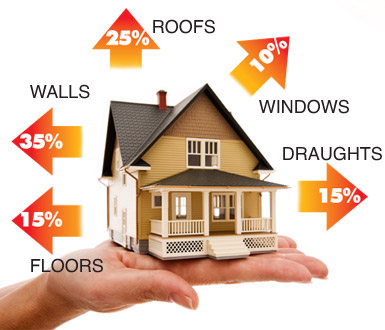
As the winter months approach, it’s essential to consider ways to reduce heat dispersion from your home. In Italy, where the climate can be particularly harsh, this is especially crucial. In this article, we’ll delve into the causes of heat dispersion in homes, discuss methods for reducing them, and explore various interventions that can be taken to minimize energy loss.
Understanding Heat Dispersion in Homes
Heat dispersion in homes refers to the transfer of heat from the interior space to the exterior environment through various means, including windows, doors, chimneys, ventilation systems, and external walls. In order to contrast these heat losses, it’s essential to block every air infiltration and eliminate the so-called “spiffers.”
Calculating Your Home’s Heat Dispersion Needs
In Italy, the calculation of a home’s heat dispersion needs is governed by the UNI 7357-74 standard and the Law of October 1991. When calculating your home’s heat dispersion, it’s crucial to consider the role that heat dispersion plays in determining energy consumption. This involves accounting for both the heat gained during winter and the heat lost during summer.
The Importance of Thermal Insulation
Thermal insulation can significantly reduce heat dispersion by minimizing convection currents and thermal bridges. Properly insulated homes tend to have lower energy bills, especially during the heating season.
Calculating Heat Dispersion: A Theoretical Approach
While a theoretical approach to calculating heat dispersion is possible, it’s not always practical or reliable in practice. Various factors can influence the accuracy of these calculations, including climate, building age, and construction materials. For instance, in Italy, where the climate varies greatly across different regions, one-size-fits-all solutions may not be effective.
Practical Approaches to Measuring Heat Dispersion
A more practical approach to measuring heat dispersion involves using thermal imaging cameras. These devices can detect temperature differences between interior and exterior surfaces, allowing you to identify areas of high heat loss. The correlation between infrared radiation and temperature is well established according to the Stefan-Boltzmann law.
Thermal Imaging Cameras: A Cost-Effective Solution
While thermal imaging cameras can provide accurate results, they can be expensive, with prices ranging from €200 to over €1,000. For those who prefer a DIY approach, thermal imaging camera devices are available for purchase online or through specialized retailers.
DIY Interventions to Reduce Heat Dispersion
Before considering professional assistance, several DIY interventions can help reduce heat dispersion:
- Sealing gaps and cracks around windows and doors
- Installing weatherstripping around doors and windows
- Using caulk to fill gaps in the exterior walls
- Applying thermal insulation to chimneys and flues
Expert Assistance for More Comprehensive Solutions
For more comprehensive solutions, it’s recommended to consult a professional. This may involve installing additional insulation materials, such as spray foam or reflective insulation, or applying specialized coatings to reduce heat transfer.
Conclusion
Reducing heat dispersion in your home is an essential step towards minimizing energy consumption and costs. By understanding the causes of heat dispersion and implementing practical interventions, you can significantly improve the energy efficiency of your home.
Here are 8 FAQs that address key questions related to heat dispersion:
-
What are the primary sources of heat dispersion in homes?
Heat dispersion in homes primarily results from gaps and cracks around windows and doors, chimneys, ventilation systems, and external walls.
* How can I calculate my home’s heat dispersion needs?Homeowners should consider consulting a professional to determine their specific heat dispersion needs based on factors like climate, building age, and construction materials.
* What is thermal insulation, and how does it affect energy consumption?Thermal insulation minimizes convection currents and thermal bridges, leading to lower energy bills and improved comfort levels in homes.
* Can I DIY interventions to reduce heat dispersion?Yes, several simple DIY interventions can help minimize heat loss, including sealing gaps around windows and doors, using caulk, and installing weatherstripping.
* What are the benefits of using thermal imaging cameras to measure heat dispersion?Thermal imaging cameras provide accurate temperature readings and can identify areas with high heat loss.
Additional Strategies for Reducing Heat Dispersion:
In addition to the methods mentioned earlier, there are several other strategies that can be employed to reduce heat dispersion in homes:
- Use energy-efficient windows: Replace old, single-pane windows with energy-efficient, double-pane or triple-pane windows.
- Install storm doors and storm windows: Storm doors and windows provide an additional layer of insulation and protection from the elements.
- Seal air leaks around chimneys: Caulk and weatherstrip around chimneys to prevent heat loss through these common entry points.
- Upgrade your HVAC system: Consider upgrading to a high-efficiency heating, ventilation, and air conditioning (HVAC) system that can provide better insulation and reduced energy consumption.
- Add radiant barrier insulation: Radiant barrier insulation can help reflect heat away from the home during summer months and keep it in during winter months.
Common Mistakes to Avoid:
When attempting to reduce heat dispersion, there are several common mistakes to avoid:
- Don’t underestimate the power of air infiltration: Air infiltration is a significant source of heat loss, so take steps to seal gaps and cracks around windows, doors, and other openings.
- Avoid using window film as a substitute for proper insulation: While window film can provide some insulation benefits, it’s not a suitable replacement for proper insulation materials like foam board or fiberglass batts.
- Don’t neglect the importance of thermal bridging: Thermal bridges occur when there is a gap between two dissimilar materials, causing heat to escape from the home. Addressing these issues with specialized coatings or sealants can help reduce heat loss.
Conclusion
Reducing heat dispersion in your home is an essential step towards minimizing energy consumption and costs. By understanding the causes of heat dispersion and implementing practical interventions, you can significantly improve the energy efficiency of your home.


