
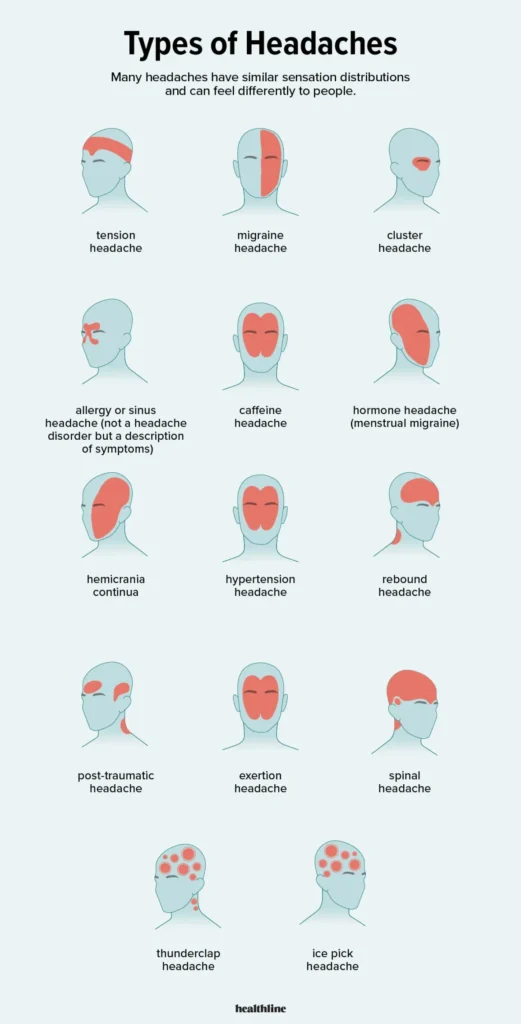
Cephalgia, also known as headache or migraine, is a type of pain in the head that can be felt anywhere on the head, including above the eyes or ears, behind the head (occipital), at the top of the head (coronal), or at the back of the neck. The cephalgia, like back pain or stomach issues, has many causes.
What are the Symptoms of Cephalgia?
In general, most headaches are considered primary or secondary. Primary headaches are not associated with other illnesses. Examples of primary headaches include migraine, tension headache, and cluster headache. Secondary headaches, on the other hand, are caused by another illness, which can be classified as minor or major.
Additionally, cephalgia may be accompanied by symptoms such as nausea, vomiting, eye pain when looking at bright lights (photophobia), dizziness, discomfort in the scalp, or a feeling of pressure in the head. Some people may also experience sensitivity to light and sound, which can make everyday activities challenging.
It is worth noting that there are many different types of headaches. Tension headaches are the most common type of primary headache, experienced by over 90% of adults, with a higher proportion among women than men. Migraine is the second most common type of primary headache, affecting both children and adults. Before puberty, boys and girls are equally affected by migraine, but after puberty, more women than men experience migraines.
Migraine can affect one side of the head or both sides, and its severity can vary from person to person. Some people may experience mild symptoms, while others may have severe pain that can last for hours or even days. Migraines are often accompanied by other symptoms such as nausea, vomiting, and sensitivity to light and sound.
Cluster headaches, on the other hand, are a rare but important type of primary headache that primarily affects men. The average age for people with cluster headaches is 28-30 years old, although they can start in childhood. Cluster headaches are known for their severe pain, which can be described as burning or piercing. They typically occur on one side of the head and can last anywhere from 15 minutes to several hours.
How is Cephalgia Diagnosed and Treated?
The diagnosis and treatment of cephalgia depend on the type and severity of the headache, as well as other factors such as the patient’s age. If you are experiencing frequent or severe headaches, it is essential to consult with your doctor for proper diagnosis and treatment.
To determine the cause of your headache, your doctor may ask questions about your medical history, symptoms, and lifestyle habits. They may also perform a physical examination to check for any signs of pain or discomfort in the head, neck, or scalp.
If you are experiencing migraines, tension headaches, or cluster headaches, your doctor may recommend over-the-counter medications such as ibuprofen, acetaminophen, or aspirin. These medications can help alleviate symptoms and prevent future attacks.
For more severe cases of migraine or cluster headache, your doctor may prescribe prescription medications such as triptans, ergotamines, or corticosteroids. In some cases, your doctor may recommend alternative therapies such as acupuncture, massage, or cognitive-behavioral therapy to manage symptoms and prevent future headaches.
Common Causes of Cephalgia
Cephalgia can be caused by various factors, including:
- Tension: Stress and tension are common causes of headache pain.
- Migraine: Migraines are a type of primary headache that affects both children and adults.
- Cluster Headache: Cluster headaches are a rare but important type of primary headache that primarily affects men.
- Sinus Infection: Sinus infections can cause headaches, especially in the frontal region.
- Temporomandibular Joint (TMJ) Disorder: TMJ disorder is a condition that affects the joint that connects the jawbone to the skull, causing pain and discomfort in the head and neck.
- Neck Injury: Headaches can be caused by injuries to the neck or head, such as whiplash or concussions.
- Sleep Disorders: Sleep disorders such as insomnia, sleep apnea, or restless leg syndrome can cause headaches.
- Medication Overuse: Overusing pain medication can lead to withdrawal symptoms, including headaches.
Common Triggers for Cephalgia
Some common triggers for cephalgia include:
- Stress and Tension: Stress and tension are common causes of headache pain.
- Certain Foods: Foods such as chocolate, cheese, and processed meats can trigger headaches in some people.
- Lack of Sleep: Insufficient sleep or poor quality sleep can lead to headaches.
- Environmental Factors: Bright lights, loud noises, or changes in weather can trigger headaches.
- Hormonal Changes: Hormonal fluctuations during menstruation, pregnancy, or menopause can cause headaches.
Preventing Cephalgia
While it is not possible to completely prevent headaches, there are steps that can be taken to reduce the frequency and severity of episodes. Some common preventive measures include:
- Maintaining a Healthy Lifestyle: Regular exercise, balanced diet, and adequate sleep can help reduce stress and prevent headaches.
- Managing Stress: Practicing stress-reducing techniques such as meditation, yoga, or deep breathing exercises can help alleviate tension.
- Avoiding Triggers: Identifying and avoiding triggers such as certain foods, lack of sleep, or environmental factors can help prevent headaches.
- Staying Hydrated: Drinking plenty of water can help reduce dehydration, which is a common cause of headaches.
- Getting Regular Check-Ups: Regular check-ups with your doctor can help identify underlying medical conditions that may be contributing to your headaches.
Conclusion
In conclusion, cephalgia, or headache, is a common condition that affects millions of people worldwide. While it can be caused by various factors, including tension, migraine, cluster headaches, and other medical conditions, there are steps that can be taken to prevent and manage symptoms.
If you are experiencing frequent or severe headaches, it is essential to consult with your doctor for proper diagnosis and treatment. With the right treatment plan and preventive measures, you can reduce the frequency and severity of episodes and improve your overall quality of life.
Frequently Asked Questions
- What causes cephalgia?
Cephalgia can be caused by various factors, including tension, migraine, cluster headaches, sinus infections, TMJ disorder, neck injuries, sleep disorders, and medication overuse.
2. What are the different types of headaches?
There are several types of headaches, including tension headaches, migraines, cluster headaches, sinus headaches, and more.
3. How can I treat cephalgia?
Treatment for cephalgia depends on the type and severity of the headache, as well as other factors such as age. Over-the-counter medications, alternative therapies, and prescription medications may be used to manage symptoms.
4. What are some common triggers for headaches?
Common triggers for headaches include stress and tension, certain foods, lack of sleep, environmental factors, hormonal changes, and medication overuse.
5. Can cephalgia be prevented?
While it is not possible to completely prevent headaches, there are steps that can be taken to reduce the frequency and severity of episodes. Maintaining a healthy lifestyle, managing stress, avoiding triggers, staying hydrated, and getting regular check-ups with your doctor can help prevent headaches.
- How do I know if my headache is a migraine?
Migraines often involve severe pain, nausea, vomiting, and sensitivity to light and sound. If you experience any of these symptoms, it’s best to consult with your doctor for proper diagnosis and treatment.
7. Can cephalgia be caused by certain medical conditions?
Yes, cephalgia can be caused by various medical conditions, including tension, migraine, cluster headaches, sinus infections, TMJ disorder, neck injuries, sleep disorders, and medication overuse.
- How long does it take to recover from a headache?
Recovery time for headaches varies depending on the type and severity of the episode. In general, headaches can last anywhere from 30 minutes to several hours.


