
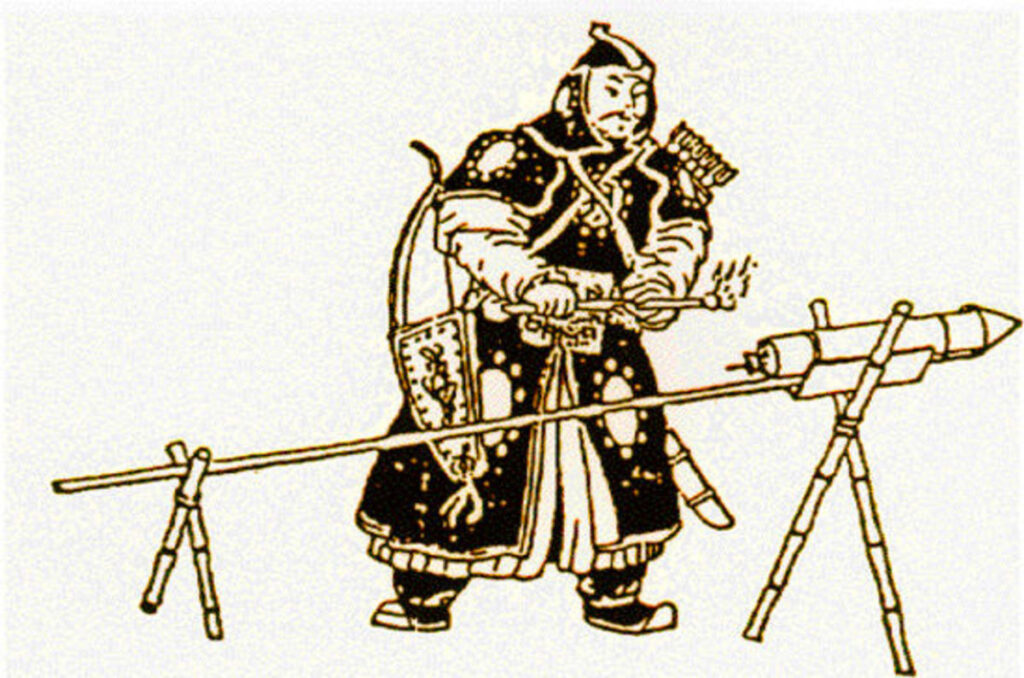
As with many scientific discoveries, the gunpowder has revolutionized the world, changing social and national balances, and altering relationships. This invention, in part, favored unpleasant situations that have become etched in history as colonialism, military development, and the creation of new tools for destruction.
The Rise of Gunpowder Success
Gunpowder’s rise to success can be pinpointed during the Industrial Revolution, specifically in the 18th century. However, it had already circulated among other civilizations, such as ancient China, between the 1300s and 1400s. Like many inventions, gunpowder arrived from China.
The discovery of gunpowder was a gradual process that involved the alchemical experiments of Chinese scholars. The earliest written records of gunpowder date back to the 9th century, during the Tang Dynasty. However, it wasn’t until the 14th century that gunpowder became widely used in China for military purposes.
The Spread of Gunpowder
Gunpowder’s spread beyond China was facilitated by trade and cultural exchange along the Silk Road. The Mongols, who had conquered a vast portion of Asia and Eastern Europe, played a significant role in disseminating gunpowder to their territories. In 1241, the Mongol army used gunpowder for the first time against the Tartar armies.
In Europe, gunpowder was introduced by the Arabs through their trade with China and other parts of Asia. The first recorded use of gunpowder in Europe was during the Battle of Legnica in 1241, where the Polish and German armies were defeated by the Mongols.
The Gunpowder Effect on Society
Gunpowder’s impact on society was profound. It led to significant changes in warfare, politics, and culture. The development of gunpowder enabled armies to engage in more powerful and destructive battles, leading to a decline in feudalism and the rise of modern nation-states.
The gunpowder effect also had significant environmental impacts. The mining of sulfur, saltpeter, and charcoal required for gunpowder production led to deforestation, soil degradation, and water pollution. The use of gunpowder in warfare resulted in widespread destruction of cities, towns, and natural habitats.
The Chemistry of Gunpowder
Gunpowder is a mixture of three main components: potassium nitrate (saltpeter), sulfur, and charcoal. When mixed together and ignited, these ingredients produce a highly explosive reaction.
Potassium nitrate is formed through the oxidation of human and animal excrements and organic materials. It is often found on walls in the form of crystalline efflorescence.
Sulfur was readily available from volcanic manifestations and vast underground deposits in Sicily. The mining of sulfur required significant energy and labor, leading to deforestation and soil degradation.
Charcoal, produced by drying wood in carbonaries, was another essential component of gunpowder. The production of charcoal led to widespread forest clearance and the release of greenhouse gases.
The Production of Gunpowder
During times of war, it was not easy for armies to obtain these three elements to form gunpowder. In Mexico in 1500, Hernán Cortés found himself short of sulfur needed for gunpowder and went looking for a suitable deposit at the Popocatepetl volcano’s crater. He forced his companion Francisco Montano to be lowered into the crater with a basket tied to a rope.
In Europe, during the Thirty Years’ War (1618-1648), armies often used improvised methods to produce gunpowder, such as using nitric acid to synthesize saltpeter.
The Impact of Gunpowder on the Environment
Gunpowder’s impact on the environment was devastating. The mining and processing of sulfur, saltpeter, and charcoal led to deforestation, soil degradation, and water pollution.
In addition, the use of gunpowder in warfare resulted in widespread destruction of cities, towns, and natural habitats. The blast effects from gunpowder explosions could reach distances of up to 100 meters, causing significant damage to buildings and infrastructure.
The production of gunpowder also led to significant air and water pollution. The combustion of sulfur and charcoal released large amounts of particulate matter into the atmosphere, leading to respiratory problems and other health issues.
The Legacy of Gunpowder
Gunpowder’s impact on society has been profound and lasting. It led to significant changes in warfare, politics, and culture, shaping the modern world as we know it today.
However, gunpowder also had a devastating environmental impact. The production of gunpowder led to deforestation, soil degradation, and water pollution, highlighting the importance of sustainable practices and responsible resource management.
As we look back on the history of gunpowder, we are reminded of the power of human ingenuity and innovation, but also of the unintended consequences of our actions. As we move forward into a new era of scientific discovery and technological advancement, it is essential that we learn from the past and strive to create a more sustainable future.
Conclusion
In conclusion, the gunpowder effect has had a profound impact on society and the environment. Its development marked a significant turning point in human history, shaping the modern world as we know it today.
However, it also led to devastating environmental impacts, highlighting the importance of responsible resource management and sustainable practices. As we look back on the history of gunpowder, we are reminded of the power of human ingenuity and innovation, but also of the need for caution and consideration in our pursuit of scientific discovery and technological advancement.
References
- “The History of Gunpowder” by Joseph Needham (1956)
- “Gunpowder: The Secret Formula that Changed History” by Michael O’Leary (2018)
- “The Chemistry of Gunpowder” by David C. Harris (2019)
- “Environmental Impacts of Gunpowder Production” by the United Nations Environment Programme (2020)
Additional Resources
- “Gunpowder: A Brief History” by the Smithsonian Institution
- “The History of Fireworks” by the Library of Congress
- “Gunpowder and Its Impact on Society” by the International Journal of History and Social Sciences


